|
History (tagged articles)
The keyword History is tagged in the following 127 articles.
2022, Vol. 14 No. 04
The 17th and 18th centuries saw a wide proliferation of aesthetic discourse through which the picturesque emerged to capture the type of beauty derived from the exchange of in vivo vigor for the spirit of artistic medium. While the metaphysical... Read Article »
2022, Vol. 14 No. 02
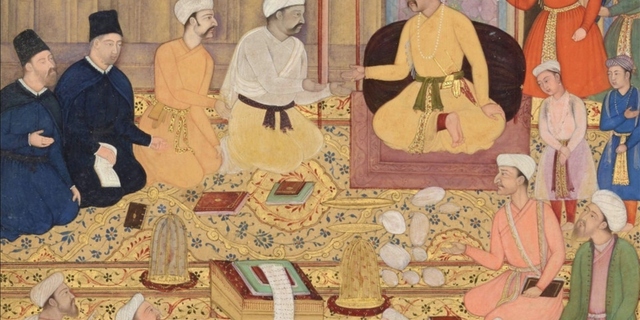
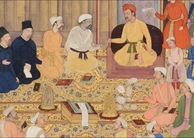
India was ruled by the Timurid-Mughal dynasty from 1526 to 1857. This period is mainly recognised for its art and architecture. The Timurid-Mughals also promoted knowledge and scholarship. Two of the Mughal emperors, Babur and Jahangir, wrote their... Read Article »
2022, Vol. 14 No. 02
The causes of the First World War remains a historiographical topic of contention more than 100 years on from the start of the conflict. With the passing of the centenary in 2014, a new wave of publications has expanded the scope and depth of historians... Read Article »
2021, Vol. 13 No. 12
This thesis explores the inherent conflict between liberty and equality—the twin pillars on which the United States and its Constitution are predicated—and the materialization of this conflict in storm center texts, whose subjects cover... Read Article »
2021, Vol. 13 No. 11
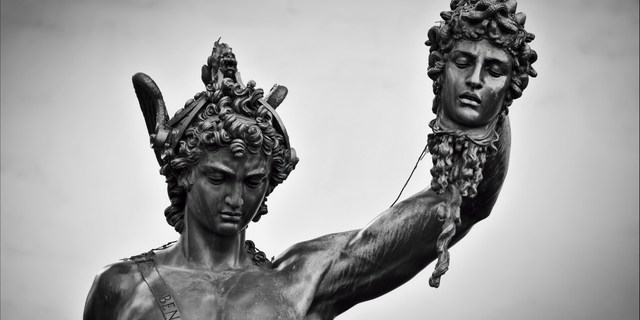
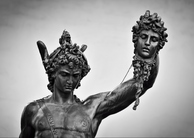
Cast in one piece of bronze in 1554, Benvenuto Cellini'sPerseus with the Head of Medusa representeda monumental feat of artisticvirtuosity. Viewers marvelled at the imposing size of the bronze, the sense of liquid tactility in the blood pouring... Read Article »
2021, Vol. 13 No. 11
While the Cold War is popularly regarded as a war of ideological conflict, to consider it solely as such does the long-winded tension a great disservice. In actuality, the Cold War manifested itself in numerous areas of life, including the various... Read Article »
2021, Vol. 13 No. 10
Early medieval Irish society operated on an elaborate power structure formalized by law, practiced through social interaction, and maintained by tacit exploitation of the lower orders. This paper investigates the materialization of class hierarchies... Read Article »
2021, Vol. 13 No. 05
Foucault raised the concept of biopower in the first volume of The History of Sexuality and placed its emergence in the context of capitalism, but he did not fully tackle the relationship between biopower and capitalism. In this article, the author... Read Article »
2021, Vol. 13 No. 04
While the History of ethnography in Russia dates back to the Kievan Rus era, modern ethnographic production in Russia developed in the 17th century and expanded during the late 18th and early 19th centuries as interest in folktales and in the lives... Read Article »
2021, Vol. 13 No. 03
The transformation of the philosophy of History reveals how and why methodological systems change over time. Methodological systems engage in contemplative action, and strive to assemble a distinguishable pattern of historical study. Though structure... Read Article »
2021, Vol. 13 No. 02
This article explores the way in which Quentin Tarantino’s Inglorious Basterds challenges the myth of the American hero and criticizes the glorification of war cinema by satirizing the viewer directly. The particular focus is on the subtly... Read Article »
2021, Vol. 13 No. 02
Being a worldwide popular icon, the Argentine Marxist revolutionary Ernesto “Che” Guevara has been differently re-appropriated by a variety of movements across the globe; but his reception and symbolization in contemporary China has... Read Article »
2021, Vol. 13 No. 01
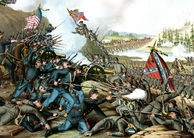
The Civil War was a seminal moment in the historical development in the United States. The American Revolution may have created the U.S. as a sovereign nation, but the Civil War helped to determine what kind of nation America would become. The Reconstruction... Read Article »
2020, Vol. 12 No. 12
While the music of Johann Sebastian Bach is often characterized by elaborate Baroque counterpoint and a relatively conservative set of aesthetic principles, elements of the emergent galant fashion are exemplified in certain mid-to-late career compositions... Read Article »
2020, Vol. 12 No. 12
Oliver Stone's filmography has levied an unprecedented effect on the popular understanding of American History, especially of the turmoil surrounding the Vietnam War and the assassination of John F. Kennedy. His style has been described as highly... Read Article »
2020, Vol. 12 No. 11
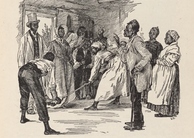
Resistance to oppression is often found in the most unlikely of places. This article investigates the significance that families and partnerships played in fostering the emotional support necessary to sustain enslaved peoples throughout the onslaught... Read Article »
2020, Vol. 12 No. 11
This paper examines the peasantry's response to modernization measures taken by Imperial Russia and the Soviet Union during the late 19th and early 20th centuries. In the pursuit of modernity, the Tsarist Russian and early Soviet regimes altered... Read Article »
2020, Vol. 12 No. 11
This paper explores the spatial expression of the female gender in early Mesopotamian cities from c. 2334-1595 B.C.E. Gender in Mesopotamia has been widely studied socially but not spatially, and here I aim to provide a consideration of gender through... Read Article »
2020, Vol. 12 No. 11
Many natural History museums use the categories of “cultural” and “natural” as a means of separating exhibition content. This article challenges this practice and the inherent paradigm that supports it. By dismissing the... Read Article »
2020, Vol. 12 No. 10
Centuries of subjugation under Spanish and American colonial rule have embedded an idealistic view of white beauty in the minds of Filipinos. It continues to be deeply rooted in Philippine culture due to the constant exposure of Filipina bodies... Read Article »
2020, Vol. 2020 No. 1
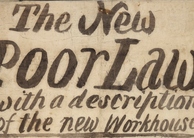
The 19th century, a tumultuous period which saw a momentous change to a way of life, also saw the implementation of the Poor Law Amendment Act of 1834, a decisive change in England’s relationship with its poor. The local parish based poor... Read Article »
2020, Vol. 12 No. 10
The fifteenth-century Middle English romance "The Sultan of Babylon" partakes in the Orientalist literary tradition through the poet's linguistic economy of the Other. The paradoxical shortages and surpluses of ethnic descriptors of East female... Read Article »
2020, Vol. 12 No. 09
When finally, … Richard dashes the mirror to the ground, there shatters not only Richard’s past and present, but every aspect of a super-world … The features as reflected by the looking glass betray that he is stripped of &hellip... Read Article »
2020, Vol. 12 No. 09
Over 30 million people in the US are plagued by eating disorders (EDs), with at least one ED-related death occurring every 62 minutes.[1] These serious illnesses, which have the greatest mortality rate of any psychological disorder, are characterized... Read Article »
2019, Vol. 11 No. 10
Depicting the rugged reintegration of Ichiro Yamada, a no-no boy imprisoned during WWII, Japanese American author John Okada presents a traumatized and conflicted Japanese American community during the mid-1940s in his novel No-No Boy (1957). Applying... Read Article »
2019, Vol. 11 No. 10
The status of women and their role in Late Antiquity has been a topic of inquiry among historians. It is a particularly challenging study to achieve a degree of certainty because of the biases present in historical evidence. This paper shall explore... Read Article »
2019, Vol. 11 No. 01
Until the outbreak of civil war, the United States would continually try and fail to subdue the existential threat of slavery, with each attempt exacerbating the sectional tensions between slave and free states. In 1830, Massachusetts Senator Daniel... Read Article »
2017, Vol. 9 No. 11
A subset of Alexandrian scholarship which has garnered long-held fascination does not center upon a success, but rather a failure: that is, the divide in his court which emerged during his Asiatic campaigns. Such a divide, though incited by a number... Read Article »
2017, Vol. 9 No. 10
Chocolate is a foodstuff that many people in the modern world take for granted; the sweet treat can today be found plentifully and cheaply in practically any store all across the globe, especially in the Euro-American world. Despite its commonplace... Read Article »
2017, Vol. 9 No. 10
This article provides a brief historical overview of the development of mental health services in Australia. It commences with the establishment of the first public asylum, Bethlem Royal Hospital, London, in 1247, the arrival of the First Fleet... Read Article »
2017, Vol. 9 No. 10
During the periods of the Agrarian Revolt and the 1920s, farmers were unhappy with the economic conditions in which they found themselves. Both periods witnessed the ascent of political movements that endeavored to aid farmers in their economic... Read Article »
2017, Vol. 10 No. 2
It is often thought that great military strategists do not engage in simple, frontal assaults, but instead devise complex plans meant to deceive, manipulate, and surprise their enemies. However, do such strategies always lead to victory? If not,... Read Article »
2017, Vol. 9 No. 03
In October of 1962, the United States and Soviet Union’s arms race in ballistic missiles escalated to an unnerving confrontation that lasted thirteen days, while both world leaders waited on opposite sides of the world for the other to say... Read Article »
2017, Vol. 9 No. 03
Is there a goal or purpose to History? And if so, how is one to determine its starting point, the ways in which it develops, and how it achieves its aim? Luckily, one philosopher, Hegel, analyzed History philosophically and tried to answer these... Read Article »
2017, Vol. 9 No. 03
World War II ranks among the deadliest military conflicts in History. From 1939-1945, the estimated number of casualties worldwide exceeded 60 million.[1] The United States suffered military fatalities in excess of four hundred thousand, and the... Read Article »
2017, Vol. 9 No. 03
Philosophers have long debated the meaning of virtuousness and the role that reason plays in achieving it. According to the Stoic philosophers Epictetus and Marcus Aurelius, virtue comes through a proper understanding of nature, its processes, as... Read Article »
2017, Vol. 9 No. 02
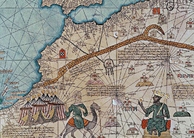
The ancient civilization of Ethiopia has captivated the West and served, across centuries, as an inspiration for much of Africa. As a regional power in Eastern Africa, the nation is a strategic pathway into the Horn of Africa and guiding force in... Read Article »
2017, Vol. 9 No. 02
To briefly set the scene, the fourth century was a complex period for Christianity. It moved from being a persecuted sect to being supported by a new Christian Emperor, to vying with Constantine’s successors over unorthodox beliefs, to being... Read Article »
2016, Vol. 8 No. 11
Following the end of the American Revolutionary War of 1776 to 1783, the U.S. government adopted an aggressive and expansionistic policy towards Native Americans on its frontiers. From the closing years of the 18th century to the end of the 19th... Read Article »
2016, Vol. 8 No. 11
In Federalist No. 34 Alexander Hamilton, arguing for the ratification of the United States Constitution, claimed that the Roman Republic had “attained to the utmost height of human greatness.”[1] The Roman Republic, at least an idealized... Read Article »
2016, Vol. 8 No. 10
In the annals of warfare, what often matters most is the simple question of who won. As a general rule of thumb, the winners are often the ones to have their perceptions and ideology recorded in our collective History, while the other side&rsquo... Read Article »
2016, Vol. 8 No. 09
Solomon Northup’s Twelve Years a Slave (1853) provides a comprehensive first-hand account of slavery that both corroborates and challenges Eugene Genovese’s argument in his later analysis of the institution of slavery in The World the... Read Article »
2016, Vol. 8 No. 09
Afro-Pessimism forwards a crucially important foundation with which anyone concerned with forming Black resistance strategy should navigate. It accurately understands that Black life exists outside of the traditional humanist metric, and Blackness... Read Article »
2016, Vol. 2015/2016 No. 3
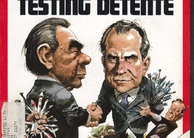
Détente is generally understood as a relaxation of international tension. However, there are many conceptions and characteristics of détente: superpower détente (such as ‘Nixinger's, Leonid Brezhnev's or Mao Zedong/ Zhou... Read Article »
2016, Vol. 8 No. 07
The modern world has made incredible bounds towards generating social movements to support disenfranchised groups. When thinking of social movements, people tend to conjure the image of visibly alienated groups that have become vocal in order to... Read Article »
2016, Vol. 8 No. 05
There have been plenty of greater revolutions in the History of the modern world, and certainly plenty of more successful ones. Yet there has been none which spread more rapidly and widely, running like a bushfire across frontiers, countries and... Read Article »
2016, Vol. 8 No. 05
This paper examines two influential slave uprisings and the treatment these received by both the abolitionist movement and the press. The first section explores the country’s reaction to John Brown’s raid on Harper’s Ferry, as... Read Article »
2016, Vol. 8 No. 04
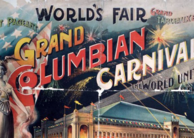
In May 1893, the gates to the World’s Columbian Exposition in Chicago officially opened to visitors. The event was a grand celebration, commemorating four hundred years since Christopher Columbus’ arrival in North America. Often referred... Read Article »
2015, Vol. 12 No. 1
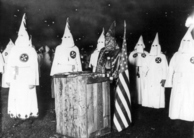
This is the first line from the Ku Klux Klan's (KKK) "Objects and Character of the Order" (Horn, 1939, p. 38). Although these are not words that most modern Americans would ascribe to the Klan, one will find descriptions that depict the Klan as "... Read Article »
2016, Vol. 8 No. 03
The ideas of Adam Smith have remained relevant well beyond his lifetime. He is remembered as the father of modern-day economics and the author of the still widely read Wealth of Nations, known for his formulation of the invisible hand and consequent... Read Article »
2016, Vol. 8 No. 03
Ab'ul Hasan Yamīn ud-Dīn Khusrau (1253-1325) is one of the most celebrated poets of medieval India, writing both in Persian, the courtly language of Muslims of the Sultanate period, and Hindavī, the vernacular language of the Delhi area. Also... Read Article »
2016, Vol. 8 No. 02
With the fall of the Tokugawa Shogunate in the late 1860s, there emerged (or re-emerged) a new center for power in Japan—the Emperor Meiji. With a long drawn restoration of the imperial stronghold, a complete restructuring of the economy,... Read Article »
2016, Vol. 8 No. 01
Jalaluddin Mohammad Akbar is placed among the elite few in History; he is amongst the “Great”[1]. Popularly known for his liberal policies and just administration, he is remembered widely as an ideal ruler. It is almost dangerous, thus... Read Article »
2016, Vol. 8 No. 01
While the overall focus of most scholarships related to the 32-month War of 1812 concentrates on the war’s political and military History, it is also imperative to examine how scholars and historians framed its economic contexts. In particular... Read Article »
2016, Vol. 8 No. 01
If the mainspring of popular government in peacetime is virtue, the mainspring of popular government in revolution is both virtue and terror: virtue, without which terror is disastrous; terror, without which virtue is powerless. Terror is nothing... Read Article »
2015, Vol. 7 No. 10
The catastrophic demise of the Oscan-Roman city of Pompeii in 79 A.D. left its mark on our collective psyche. Its remains have long been a staple of archaeology and ancient History curricula while its demise is described in countless books and has... Read Article »
2015, Vol. 7 No. 06
The present study explores the portrayal of women in ancient Greek literature within the context of warfare. More specifically, this work focuses on Classical Period Greek literature, particularly between 450 and 350 BCE, written by Athenian men... Read Article »
2015, Vol. 7 No. 06
In his work The Idea of History, philosopher and historian Robin Collingwood outlines the development of historiography by leading his audience on a European cross-continental journey through time. He identifies the early modern period as a point... Read Article »
2015, Vol. 7 No. 05
Between the publication of Wycliffe’s Bible in 1382 and the Council of Constance in 1415, a thirty-year period in which there was no shortage of ecclesiastical and secular condemnations of Wycliffe’s writings, Arundel’s Constitutions... Read Article »
2015, Vol. 7 No. 03
The Roosevelt Corollary, outlined in Theodore Roosevelt’s 1904 and 1905 State of the Union addresses, proclaimed a new imperialist doctrine for American foreign policy in the western hemisphere and represents the culmination in the evolution... Read Article »
2015, Vol. 7 No. 02
During World War II, the black press and several prominent black leaders called for a “Double V” victory against fascism abroad and against Jim Crow at home. With such a slogan, many historians regarded this campaign as the groundwork... Read Article »
2015, Vol. 7 No. 02
Our contemporary global public sphere is made up of a tiny proportion of the world’s population. Affluent, exclusive, and concerned only with perpetuating its own economic advancement, this contemporary global public sphere is an anachronism... Read Article »
2015, Vol. 2014/2015 No. 1
In October 1950, Chinese troops under the name of the Chinese People’s Volunteer Army (CPV) crossed the Yalu River to assist North Korean armies, and engaged in the Korean War in an offensive manner after the U.S. troops crossed the 38th parallel... Read Article »
2015, Vol. 2014/2015 No. 1
The role of personal property in our lives is one that to a very great extent we take for granted. We, in a crowded country such as the UK, all clearly understand that some things are ‘ours’, some things ‘others’ and some... Read Article »
2014, Vol. 6 No. 10
For scholars of gender and sexuality, the publication of Joan Wallach Scott’s acclaimed essay “Gender: A Useful Category of Historical Analysis” in the 1970s was a remarkable moment. The essay, although specifically directed toward... Read Article »
2014, Vol. 6 No. 09
Up until the 19th century, China held a position as a great world power. However, for the last two hundred years the West has dominated the world technologically, economically, and politically. The point at which the West began its relative dominance... Read Article »
2014, Vol. 6 No. 06
The First World War is largely thought of as a conflict where the majority of the significant operations took place almost exclusively on mainland Europe with the exception of a handful of naval clashes fought throughout the world's oceans. This... Read Article »
2014, Vol. 6 No. 04
In 1914 Russia was a powerful empire. It constituted a fundamental part of the European balance of power. However, years of bloody and costly war changed the nation by bringing to boil all the inequities and discontent built up under the Tsarist... Read Article »
2014, Vol. 6 No. 04
On August 15, 1918, American doughboys landed in Siberia to begin one of the more contentious episodes in U.S.-Soviet relations. The over seven thousand troops of the American Expeditionary Force were to remain for more than eighteen months, playing... Read Article »
2014, Vol. 6 No. 04
Just eight months after Gandhi's assassination, Rustin arrived in India to give a series of lectures to pacifist organizations. Between 1947 and 1952, Rustin made several important trips to Africa and India where he met and exchanged ideas with... Read Article »
2014, Vol. 6 No. 03
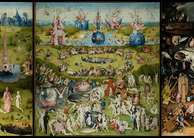
In one of his most famous triptychs, the Garden of Earthly Delights, Hieronymus Bosch uses a linear and chronological order to represent a gradual fall of man into sin. In a world where ‘bad’ has existed in small amounts since the creation... Read Article »
2014, Vol. 2013/2014 No. 1
Today political philosophy is generally conducted in the light of the perceived triumph of liberalism. That is, it typically proceeds from the assumption that it is unreasonable, if not irrational or pathological, to resist liberalism whether as... Read Article »
2013, Vol. 5 No. 11
As the lights dropped and I sank into my seat, I thought I was ready for 12 Years a Slave, the 2013 film adaptation of Solomon Northup's 1853 slave narrative. I was expecting a movie, a story told with images, music and sound. But, what I witnesssed... Read Article »
2013, Vol. 5 No. 08
There is ample evidence of sexual relations, from rapes to what appear to be relatively symbiotic romantic partnerships, between white slave masters and black women in the Antebellum South. Much rarer were sexual relations between white women and... Read Article »
2013, Vol. 5 No. 06
In the penultimate scene of Fritz Lang’s M (1931), mentally-disturbed child murderer Hans Beckert (Peter Lorre) falls to his knees before a kangaroo court and cries out, “I have to roam the streets endlessly, always sensing that someone... Read Article »
2012, Vol. 4 No. 10
Since his death in 1142 CE, Yue Fei of the Song Dynasty (960-1279) has been revered by the Chinese as a national hero. His skill as a military leader, bravery in battle, and Chinese national pride have made him one of the most popular figures in... Read Article »
2012, Vol. 4 No. 09
The Emancipation Proclamation was arguably the United States’ first step away from hypocrisy and toward true racial equality. However, commentators often obscure its pivotal role in bringing the Civil War to a close by inferring that it was... Read Article »
2012, Vol. 4 No. 09
“There are in Europe many good generals, but they see too many things at once; as for me I see only one thing, namely the enemy’s main body. And I try to crush it, confident that secondary matters will settle themselves” - Napoleon... Read Article »
2012, Vol. 4 No. 09
Ibn Khaldun highlighted that societies in their natural state exist in the rural countryside, where the struggle of daily life binds kinsmen together (Abdullah, 2012a). Defining this strong familial bond as “asabiyya,” he stated that... Read Article »
2012, Vol. 4 No. 07
The Song of Songs is a unique book in the Bible. There is no plot and no mention of God, but the piece says a lot about early Hebrew traditions surrounding marriage and love, using elaborate descriptions and complex relationships. The overall message... Read Article »
2012, Vol. 4 No. 02
The English language is constantly changing. More and more editions of the Webster’s Dictionary are being published every decade, more vernacular is being considered as “standard English,” and more and more leniency is being advocated... Read Article »
2012, Vol. 4 No. 01
Industrial Psychology is almost as old as Psychology itself. Psychology came about in 1879 in the laboratory of Wilhelm Wundt in Germany and William James at Harvard. Both of them were philosophers and physicians fascinated with the mind-body debate... Read Article »
2011, Vol. 5 No. 1
Over the past thirty years, China has moved from a communist to a capitalist economy. This change has pushed millions of young, rural women to migrate to the cities in order to begin working in its many booming factories. These women, if they manage... Read Article »
2011, Vol. 5 No. 1
As of September 2011, the United States was involved, at different levels, in military operations in Afghanistan, Iraq, Libya, Yemen and Somalia. America has more than 700 military installations overseas , and its military expenses account for almost... Read Article »
2011, Vol. 3 No. 08
The development of motion picture complexity has been driven by a continuing technological evolution, ignited and manipulated by human initiative and inventiveness, which has afforded filmmakers the opportunity to practice a more complex craft to... Read Article »
2011, Vol. 3 No. 07
Perhaps for no group of people were ‘the dark ages’ so aptly named as for the Jews. Over the span of one thousand years life changed wildly for the Jewish people and not in a positive way. At the start of the 5th Century the future looked... Read Article »
2011, Vol. 3 No. 06
“The Worst Mistake in the History of the Human Race” is the embodiment of anti-progressivist theory. Jared Diamond challenges the claim “that human History over the past million years has been a long tale of progress,” with... Read Article »
2011, Vol. 3 No. 05
During most of the 16th and 17th centuries, fear of heretics spreading teachings and opinions that contradicted the Bible dominated the Catholic Church. They persecuted scientists who formed theories the Church deemed heretical and forbade people... Read Article »
2011, Vol. 3 No. 05
Insurgency is not a new phenomenon for the United States, in fact by definition the American's built an insurgency during the Revolutionary War. But it was not until the Vietnam War that America faced an insurgency that it could not defeat. Because... Read Article »
2011, Vol. 3 No. 04
Modernism first emerged in the early twentieth century, and by the 1920s, the prominent figures of the movement – Le Corbusier, Walter Gropius, and Ludwig Mies van der Rohe - had established their reputations. However it was not until after... Read Article »
2011, Vol. 3 No. 02
It is universally accepted that a poem, at least a “good” poem, should be able to stand by itself, to be able to strike a chord with its audience, whether this impact is immediate or more subtle and gradual. However, even the best-written... Read Article »
2011, Vol. 3 No. 02
Early American society experienced moments of great change, politically, economically and socially. With the signing of the Declaration of Independence, Americans shattered previous paradigms of political thought, providing the opportunity for a... Read Article »
2011, Vol. 3 No. 02
Christianity has not gained a large number of adepts in China, if compared, for example, with Japan. But Christianity in China, in the late Imperial Era, had a number of particularities. Moreover, Christianity sometimes influenced Chinese women&... Read Article »
2011, Vol. 3 No. 02
Fifty years after their daring signing of the Declaration of Independence, absolving political ties with England, John Adams and Thomas Jefferson, revolutionaries, presidents, and intellectuals, lay on their respective deathbeds. Having feuded in... Read Article »
2011, Vol. 3 No. 02
Andrei Rublev (c. 1360-1430) is a mysterious figure, whose biography is not well known, although he is historically considered the best-known painter of Russian icons and frescoes. Early in his life he joined the Trinity-Sergei Lavra Monastery,... Read Article »
2011, Vol. 3 No. 01
Peter the Great inherited a score of problems in the administration of his empire. Of course, through his well-known zest and ambition, he tried to solve most of them, and made steps in that direction. However, his actions did not always have the... Read Article »
2011, Vol. 3 No. 01
Yevgheny Yevtushenko’s poetry spans time and space when relating to Russia and its History. His poetry, as he himself, declares, is intended to teach the conscience of anyone who reads it. And indeed, his poetry, whether political or romantic... Read Article »
2010, Vol. 2 No. 11
Dissatisfied with the results of the reformation of the Church of England, a group of extreme separatists known as the Puritans desired nothing less than the total elimination of any trace of Roman Catholicism in their church. This devotion to their... Read Article »
2010, Vol. 2 No. 09
Sled dogs have been acclaimed for their heroism, athleticism, and their unconditional affection through numerous books, movies, and other media outlets. This legacy has aided the formation of a romanticized perspective on dog sledding. Sled dogs... Read Article »
2010, Vol. 2 No. 09
The role of women in ancient Japan elicits inconsistencies due to different influences that were integrated at various time periods. The primary influence that contributed to these inconsistencies was religion. Integration of the two major religions... Read Article »
2010, Vol. 2 No. 09
The limitlessly varied personalities of human beings have fascinated both scientists and fellow members of society throughout the existence of humankind. Of particular interest has been what happens when man’s mind turns against him, and what... Read Article »
2010, Vol. 2 No. 05
Under the rule of the Sultan Abdul Hamid II in the late nineteenth century the concept of Pan-Islamism, the concept that all Islamic peoples should unite under the Caliphate, was used as a means of supporting the declining power of the Ottoman ruler... Read Article »
2010, Vol. 2 No. 05
In the past two-hundred or so years, vampires have transformed from a sort of worst nightmare into the charming hero of our dreams. Flashback to 1734, Oxford English Dictionary’s first record of the word vampire: they were generally and, depending... Read Article »
2010, Vol. 2 No. 04
The first line of Plautus’ epitaph reads: “Postquam est mortem aptus Plautus, comoedia luget, scaena est deserta,” or roughly translated, “since Plautus is dead, comedy mourns, deserted is the stage” (Garrod, 531).&... Read Article »
2010, Vol. 2 No. 03
The Musée du Quai Branly opened under the long shadow of the Eiffel Tower in 2006 to spectacular criticism. Initiated primarily at the behest of then-President Jacques Chirac (b. 1932, held office from 1995-2007), the museum possesses an... Read Article »
2010, Vol. 2 No. 03
German cinema from 1927 to 1945 was affected drastically by the political environment that grew within the nation. After Germany suffered drastically at the hands of the Versailles treaty and its reparations clause, Adolph Hitler, the Fuhrer of... Read Article »
2010, Vol. 2 No. 03
"Western civilization was feeling the need for a reassessment, a redefinition of some of its basic principles regarding the nature of man, his place and function in creation, his social organization and responsibilities, his proper conduct in all... Read Article »
2010, Vol. 2 No. 02
“You have created a Museum; carefully assemble here every masterpiece which the Republic [of France] already possesses…and the entire world will be eager to deposit its treasures, its singularities, its accomplishments; and the documents... Read Article »
2010, Vol. 2 No. 01
Frederick Douglass’ statement about slavery concisely defines the effect that such an institution had on the entire shape of a nation: Without slavery, how does one understand freedom? For hundreds of years, the United States thrived economically... Read Article »
2010, Vol. 2 No. 01
Jean-Paul Marat, notorious for his inspiring yet aggressive publications during the French Revolution, was one of the most influential characters of the late 18th century. Indeed, his radical publications helped induce the violent manner of the... Read Article »
2010, Vol. 2 No. 01
The French Revolution marks a stain in History, notorious for one of the bloodiest periods in modern civilization. Whether this infamous violence existed at the birth of the Revolution or only during the Terror has been the topic of debate between... Read Article »
2010, Vol. 2 No. 01
Shakespeare was a man surrounded by controversy. He, himself, has a biography filled with holes and question marks. Some have even held that the great English Bard could not have been one man. Although the idea that Shakespeare was... Read Article »
2010, Vol. 2 No. 01
“Yesterday, December 7th, 1941 -- a date which will live in infamy…” is one of the most recognized speeches in United States History.[1] Franklin Delano Roosevelt spoke firmly and directly on December 8, 1941 of a Japanese &ldquo... Read Article »
2010, Vol. 2 No. 01
The legacy of the American Civil War with which we are left is one that emphasizes a participatory American populace, overwhelmingly enthused over and invested in the conflict. Particularly in the North, we are likely to think of a cooperative culture... Read Article »
2010, Vol. 2 No. 01
‘WHO WERE THOSE PEOPLE?’ historian Howard Zinn asked a member of the Sacco and Vanzetti Commemoration Society in November 2008. Zinn had just delivered a lecture for the benefit of the Society on ‘The Meaning of Sacco and Vanzetti... Read Article »
2010, Vol. 2009/2010 No. 1
From Heraclitus to Marx, intellectuals have often recognised changes in the flow of History. Certain periods tend to be more dynamic than others but, in the end, all things move. Just as the past ninety years have been some of the most memorable... Read Article »
2009, Vol. 1 No. 12
A great deal is known about Nikola Tesla’s origins—namely, his country and people, to which and of whom he attributed so great a deal. The inventor recognized that he came from an extremely conflicted area in the Balkans, full of strife... Read Article »
2009, Vol. 1 No. 12
Written language is one of the greatest human accomplishments; its formation signifies a breakthrough in human progress. The development of a standardized writing system seems to be a somewhat natural occurrence in the evolution of any given advanced... Read Article »
2009, Vol. 1 No. 12
Art Nouveau is the so-called “modern style” developed at the turn of the 19th century. Although it is dated roughly between 1890 and 1910, its first true recognition as an important new movement in art and design occurred at the Universal... Read Article »
2009, Vol. 1 No. 12
Film critic Andre Bazin had very strong feelings on the subject of montage and realism. In his article “The Evolution of the Language of Cinema”, he explains his theory that montage, although necessary in many cases to make a film work... Read Article »
2009, Vol. 1 No. 12
When considering historical literature that is based upon people who once lived, readers often ask where the details are taken directly from historical accounts, and where they differ. This is a perfectly valid lens through which to view the work... Read Article »
2009, Vol. 1 No. 12
What critical evolutionary events does the span of human progression include? Anthropologists agree that decisive transitions such as sedentism, domestication, the use of language, and the arrival of culture and complex societies are associated... Read Article »
2009, Vol. 1 No. 11
By the time 1921 came around, Russia’s economy had been maimed by the effects of War Communism. Socialism had not begun on a good note, and Vladimir Lenin was becoming concerned with the unfortunate state of the economy. His response to the... Read Article »
2009, Vol. 1 No. 11
Hurricanes will always be a way of life for many Texans. Young Texan schoolchildren learn about the Galveston Hurricane of 1900 in their classes; they hear their grandparents discuss Hurricane Carla. Every summer, a flurry of maps, supply lists,... Read Article »
2009, Vol. 1 No. 11
Within the cultural framework of America, the systemic structure is characterized by White male patriarchy that allows for Black males to have the ability to negotiate the way in which they have been socialized and institutionalized to think, act... Read Article »
2009, Vol. 1 No. 10
Whether you noticed it or not, in 2008 Daylight Saving Time ended a bit later than normal. Though this is in fact the second year of the new Daylight Saving Time, or DST, schedule, many Americans are still not used to the new timeframe. DST now... Read Article »
2009, Vol. 1 No. 10
The end of World War II was not just the end of a war, but also the beginning of a tense and dynamic period that affected society on all levels. This “postwar” period, as it became known, shaped the world as we know it today; likewise... Read Article »
Expedited Article Review
Submit an article and get a decision fast.
If you need a fast decision, INQUIRIES Journal offers expedited processing of your submission for a small fee. Depending on the expedited review option you choose, you can receive a decision in as few as 5-days.
In addition to a shorter review period, the fee supports the journal's continued operation and open-access publishing model. Standard submissions are always free. Submit Now » - Submit an Article to Inquiries Journal -
|