|
World War II (tagged articles)
The keyword World War II is tagged in the following 24 articles.
2021, Vol. 13 No. 11
This article analyzes the role of musical works in the United States during World War II. It chronologically examines how the social and therapeutic functions of music evolved due to the developments of the war. This article uses the lyrics of wartime... Read Article »
2021, Vol. 13 No. 02
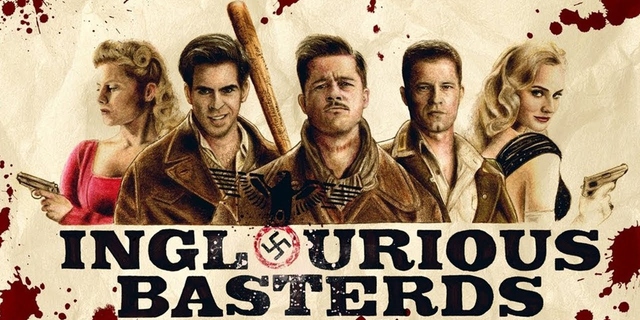
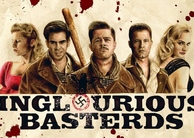
This article explores the way in which Quentin Tarantino’s Inglorious Basterds challenges the myth of the American hero and criticizes the glorification of war cinema by satirizing the viewer directly. The particular focus is on the subtly... Read Article »
2020, Vol. 12 No. 02
In the opening of J. M. Richards’s post-war account of suburbia, The Castles on the Ground, the author's commentary is unusually sympathetic to a phenomenon that throughout the twentieth-century had either been critically neglected or judged... Read Article »
2017, Vol. 9 No. 04
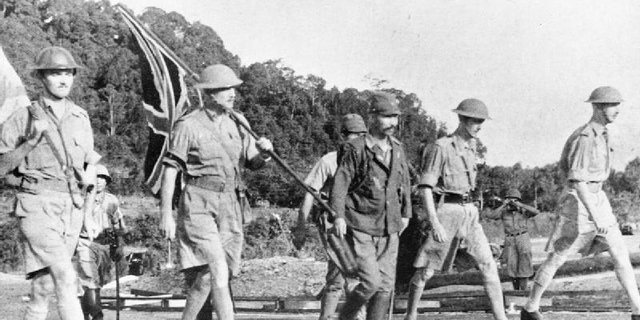
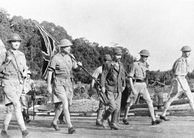
Since the end of the Second World War, scholars of British military history have busied themselves with attempts to explain the British defeat at Singapore to Japan in February 1942. Research reveals that there existed what Peden has called an &... Read Article »
2017, Vol. 9 No. 03
World War II ranks among the deadliest military conflicts in history. From 1939-1945, the estimated number of casualties worldwide exceeded 60 million.[1] The United States suffered military fatalities in excess of four hundred thousand, and the... Read Article »
2016, Vol. 8 No. 12
First language attrition (L1) studies are a comparably young and theoretically unspecified field of research in bilingualism. Young, because the first scientifically acclaimed, related article, Andersen’s “Determining the linguistic... Read Article »
2015, Vol. 6 No. 2
In an effort to understand how Americans regarded Adolph Hitler's influence in Germany and beyond as he navigated the country's political landscape, and ultimately established the Third Reich, this research examines his portrayal in American media... Read Article »
2015, Vol. 7 No. 11
The controversy surrounding the origins of the Nazi-Soviet War in 1941, namely over the issue of whether or not Stalin intended to launch an offensive against Nazi Germany that year, has produced a contentious debate between revisionist (i.e. those... Read Article »
2015, Vol. 7 No. 03
Haruki Murakami’s Hard-Boiled Wonderland and the End of the World is a conscious mix of genres and themes combined to present an engaging story. Subconsciously, the focus of this piece is the trauma of World War II and the Holocaust. The entire... Read Article »
2015, Vol. 7 No. 02
During World War II, the black press and several prominent black leaders called for a “Double V” victory against fascism abroad and against Jim Crow at home. With such a slogan, many historians regarded this campaign as the groundwork... Read Article »
2014, Vol. 6 No. 12
Marshal Ion Antonescu,[2] military dictator of Romania from 1940-1944, advocated a policy of ethnic cleansing to purify the Romanian nation no less radical than Hitler’s own racial ideology. Unlike most of Hitler’s erstwhile allies,... Read Article »
2014, Vol. 7 No. 2
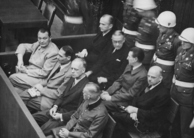
The creation of the Nuremberg Court following World War II exemplified international cooperation, particularly between the Great Powers: the United States, France, the Soviet Union, and Great Britain. Expounding the benefits of justice and the rule... Read Article »
2013, Vol. 9 No. 2
The relationship between Japan and Western Civilization has often been one of ambivalence. Little characterizes this relationship better than the conflict between traditional Japanese values, principles and sensibilities, identified as animistic... Read Article »
2011, Vol. 3 No. 10
On November 21, 1945, Robert H. Jackson, the Chief Prosecutor for the United States of America opened the prosecution’s case against German defendants in Nuremberg, Germany. The war in Europe had ended only six months earlier, many of the... Read Article »
2011, Vol. 3 No. 06
As WWII ended, and the Cold War began, America began to strengthen its national defense against the Soviet Union. Alliances were created resulting in the formation of NATO and the Warsaw Pact. The United States began to create an arsenal of nuclear... Read Article »
2011, Vol. 3 No. 03
"Britain can take"[1] it refers to a film produced by the Ministry of Information in 1940, which had been originally titled “London can take it”[2] and produced for the American public. The film portrays a rather happy go lucky picture... Read Article »
2011, Vol. 3 No. 01
An artist, especially one who works with the visual media, is bound to come across obstacles in his creation of a work that represents or recollects images of the Shoah (i.e., the Holocaust). Precisely how does one represent an almost industrial... Read Article »
2010, Vol. 2 No. 12
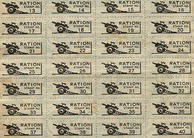
During World War II, a key aspect of almost every country’s wartime strategy focused heavily on limiting domestic consumption. One method governments employed to enforce control was to forcibly reduce their citizens’ consumption through... Read Article »
2010, Vol. 2 No. 11
Fascism cannot adapt to, and exist under, certain prominent, contemporary conditions. Specifically, it cannot adapt to the strong democracies in which extreme right parties operate, nor to the ideology of radical Islamic groups. This paper begins... Read Article »
2010, Vol. 2 No. 09
The morality of every person dictates the innate wrongness of genocide, and yet the world stood by as the Nazis sent millions to the gas chambers during the Holocaust. Historians and social scientists often attribute this moral failure to the blissfully... Read Article »
2010, Vol. 2 No. 03
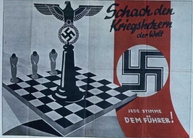
German cinema from 1927 to 1945 was affected drastically by the political environment that grew within the nation. After Germany suffered drastically at the hands of the Versailles treaty and its reparations clause, Adolph Hitler, the Fuhrer of... Read Article »
2010, Vol. 2 No. 01
Omer Bartov’s essay from Intellectuals on Auschwitz expresses the author’s dismay with the postwar and postmodern representations of, and discourses on, the Holocaust. He breaks down larger concepts on memory and history into five segments... Read Article »
2010, Vol. 2 No. 01
“Yesterday, December 7th, 1941 -- a date which will live in infamy…” is one of the most recognized speeches in United States history.[1] Franklin Delano Roosevelt spoke firmly and directly on December 8, 1941 of a Japanese &ldquo... Read Article »
2009, Vol. 1 No. 10
The end of World War II was not just the end of a war, but also the beginning of a tense and dynamic period that affected society on all levels. This “postwar” period, as it became known, shaped the world as we know it today; likewise... Read Article »
Expedited Article Review
Submit an article and get a decision fast.
If you need a fast decision, INQUIRIES Journal offers expedited processing of your submission for a small fee. Depending on the expedited review option you choose, you can receive a decision in as few as 5-days.
In addition to a shorter review period, the fee supports the journal's continued operation and open-access publishing model. Standard submissions are always free. Submit Now » - Submit an Article to Inquiries Journal -
|