|
Film (tagged articles)
The keyword Film is tagged in the following 54 articles.
2021, Vol. 13 No. 03
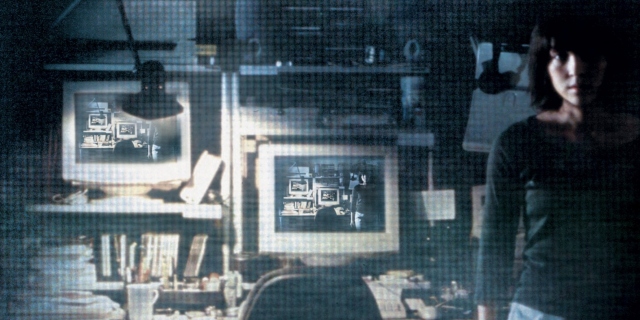
Techno-horror is a sub-genre of horror defined by the use of science or technology as the source of horror, and often, this genre is used to critique modern technology. However, due to the intertwined nature between techno-horror and contemporary... Read Article »
2021, Vol. 13 No. 02
The Virgin Suicides written by Jeffrey Eugenides, as well as Sofia Coppola’s Film adaptation, utilize the literary and cinematic tropes of suicide to explore female suicides as romantic notions and assertions of agency within the teenage world... Read Article »
2021, Vol. 13 No. 02
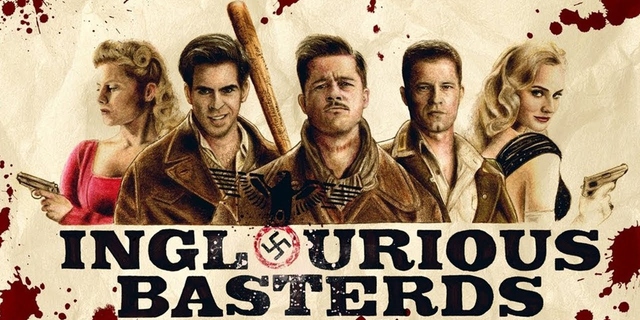
This article explores the way in which Quentin Tarantino’s Inglorious Basterds challenges the myth of the American hero and criticizes the glorification of war cinema by satirizing the viewer directly. The particular focus is on the subtly... Read Article »
2020, Vol. 12 No. 12
Oliver Stone's Filmography has levied an unprecedented effect on the popular understanding of American history, especially of the turmoil surrounding the Vietnam War and the assassination of John F. Kennedy. His style has been described as highly... Read Article »
2020, Vol. 12 No. 10
This paper argues that Film is a medium defined by its relationship to memory. Building upon aesthetician György Lukács's temporal theory of cinema, I contrast Film's inherent relationship to memory with the “eternal present&rdquo... Read Article »
2020, Vol. 12 No. 10
In this essay, I provide a content analysis of commercially and critically successful Films that perpetuate popularized Islamophobia, which is often masked as irreconcilable religious and cultural difference although it has in fact been consistently... Read Article »
2020, Vol. 12 No. 09
Often regarded as the glorious palace showcasing contemporary world cinema (“Press Conference”), the Cannes Film Festival epitomizes the roles of an accreditor, an archaeologist, and a political activist. It jumpstarts the careers of... Read Article »
2020, Vol. 12 No. 07
At Disneyland’s Magic Kingdom, light cascades across the night sky before spiraling down through the stars. The castle that towers within the dark shines bright amongst the fireworks’ sparkling ceruleans and violets. Once the night show... Read Article »
2020, Vol. 12 No. 02
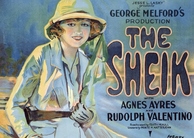
The 1921 Hollywood Film The Sheik tells the story of Lady Diana Mayo, a spirited English peeress who, on a trip to the French Sahara, is kidnapped by and eventually falls in love with the Arab sheik Ahmed Ben Hassan. The Film made Rudolph Valentino... Read Article »
2019, Vol. 11 No. 10
Jean Baudrillard’s essay ‘The Precession of Simulacra’ from Simulacra and Simulation (1981) is a key postmodern text to understanding the contemporary technological Western world. ‘The Precession of Simulacra’ explores... Read Article »
2017, Vol. 9 No. 11
“Disney perpetuated a male myth through his fairy-tale Films,” argues Jack Zipes (1995, p. 37). He writes that Walt Disney framed “women’s lives through a male discourse” in his Films (p. 36), and that he reinforced... Read Article »
2016, Vol. 8 No. 12
The sheer number of distinct dialects present within the country has long complicated Chinese language standardization and language policy. Furthermore, China’s history with colonial powers throughout the past three centuries has led to a... Read Article »
2016, Vol. 8 No. 10
Pride and Prejudice, the work of nineteenth century novelist Jane Austen, has been celebrated for over two-hundred years since its first publication. It has been adapted, reinvented and re-imagined over and over again to the delight of both loyal... Read Article »
2016, Vol. 8 No. 10
Hong Kong is standing at a crucial social and political juncture in its history. A former British colony, it has retained its unique legal system, electoral system, and political democracy. These systems have worked together to create a society... Read Article »
2016, Vol. 8 No. 09
The evolution of the moving image from the seemingly simplistic Edison/Dickson shorts of the late 19th century to the technically complex CGI infused blockbusters flashing on multiplex screens today is certainly one propelled by opposition. Technological... Read Article »
2016, Vol. 8 No. 09
A doorbell rings. Off screen, we hear a sing-songy “Coming!” A woman dressed in a cerulean track suit rushes to the door, expecting to find her daughter home from school. Instead, she finds another woman, blonde and leather jacket-clad... Read Article »
2016, Vol. 8 No. 06
By and large, today’s Western audience is unlikely to be roused by the story told in The Danish Girl (2015, directed by Tom Hooper), although it is based on true events. The artist Einar Wegener is in gender trouble:[1] he was born in a male... Read Article »
2016, Vol. 7 No. 1
Due to Filmmakers focusing on violence, traumatic events, and hallucinations when depicting characters with schizophrenia, critics have scrutinized the representation of mental disorders in contemporary Films for years. This study compared previous... Read Article »
2015, Vol. 6 No. 2
Filmmaker Wes Anderson has developed a distinct aesthetic style that is easily recognizable through his use of striking color palettes. The purpose of this research was to draw conclusions about social stratification, social construction and the... Read Article »
2015, Vol. 6 No. 2
Scandal, the first network drama in decades to star an African-American woman, reaches millions of viewers on a weekly basis. This study examined if main character Olivia Pope is a reflection of popular AfricanAmerican female stereotypes in television... Read Article »
2015, Vol. 6 No. 1
This paper explored the role of Native Americans in the Hollywood Film industry and their actions to establish authentic representations of their population and culture in the media. Using academic literature, Film analyses, and contemporary Film... Read Article »
2015, Vol. 7 No. 03
Through the late 1960s the French New Wave became a pronounced and significant factor in the creation and development of Hollywood Films. Such movements had gained popularity through an ability to engage with a younger audience by means of a more... Read Article »
2014, Vol. 6 No. 10
In her seminal essay "Visual Pleasure and Narrative Cinema" Laura Mulvey (1975) connects psychoanalytic concepts of scopophilic desire1 and Jaques Lacan's theory of the Mirror Stage2 (1966), to the cinema spectator's gaze. Mulvey limits her argument... Read Article »
2014, Vol. 6 No. 09
Yes, they still have prizes in Cracker Jack boxes. Beneath the glossy surface of this timeless commodity lies a variable that provides fodder for the consumer’s imagination. Marketed as “candy coated popcorn, peanuts and a prize,&rdquo... Read Article »
2014, Vol. 5 No. 1
The author examined the significance of production design in Film. This paper reviewed scholarly articles on the evolution of production design and applied her findings to analysis of Baz Luhrmann’s 2013 rendition of The Great Gatsby. This... Read Article »
2014, Vol. 6 No. 03
The need for individuals to categorize themselves and others based on gender has guided the way individuals interact with one another throughout history. The construction of gender, particularly when it comes to young males, has led to the amplification... Read Article »
2013, Vol. 3 No. 1
MacGillivray Freeman Films was founded over forty years ago by Greg MacGillivray and the late Jim Freeman. In 2011, the company launched “the world’s largest ocean media campaign, a 10-year global initiative called One World One Ocean... Read Article »
2013, Vol. 4 No. 2
Film authorship has been a topic of debate in Film theory since the Cahiers du Cinema critics first birthed auteur theory. Andrew Sarris used this theory to categorize directors based on their level of artistic authorship, solidifying the idea that... Read Article »
2008, Vol. 5 No. 1
A pesar de la variación en material sujeto, las películas largometrajes del Pedro Almodóvar contienen elementos que contribuyen similares al fórmula del éxito que lo ha sostenido Almodóvar como al cineasta... Read Article »
2013, Vol. 5 No. 06
In the penultimate scene of Fritz Lang’s M (1931), mentally-disturbed child murderer Hans Beckert (Peter Lorre) falls to his knees before a kangaroo court and cries out, “I have to roam the streets endlessly, always sensing that someone... Read Article »
2012, Vol. 4 No. 10
Jürgen Habermas - a prominent German philosopher and critical social theorist - offers a theory of language use that identifies and analyzes the rationality potential of communicative understanding between two parties. Habermas champions this... Read Article »
2012, Vol. 4 No. 07
In his essay, “An Aesthetic Reality,” Andre Bazin writes, “Let us agree, by and large, that Film sought to give the spectator as perfect an illusion of reality as possible within the limits of logical demands of cinematographic... Read Article »
2012, Vol. 4 No. 07
Set in the city of Casablanca, Morocco, Nabil Ayouch’s Moroccan Film Ali Zaoua: Prince of the Streets (2000) drifts between reality and fantasy to depict the realistic experiences and animated dreams of four young street urchins, Ali, Kwita... Read Article »
2012, Vol. 4 No. 05
In his 1988 documentary, The Thin Blue Line, Errol Morris explores the 1976 murder case of police officer Robert Wood and the man convicted for the murder, Randall Dale Adams. Having originally stumbled upon the subject, Morris chose to make the... Read Article »
2012, Vol. 4 No. 05
Directed by Louie Psihoyos, The Cove (2009) is an Oscar-winning documentary that follows Psihoyos and a crew of devoted dolphin activists as they fight to stymie and bring attention to dolphin hunting in the small coastal village of Taiji, Japan... Read Article »
2011, Vol. 3 No. 08
The development of motion picture complexity has been driven by a continuing technological evolution, ignited and manipulated by human initiative and inventiveness, which has afforded Filmmakers the opportunity to practice a more complex craft to... Read Article »
2011, Vol. 3 No. 02
If you’re looking for another all-American cross-country love story, you’d be better off browsing movie aisles far, far away from the likes of Badlands. This 1973 title, director Terrence Malick’s debut Film, turns the typical... Read Article »
2010, Vol. 2 No. 07
The myth of American exceptionalism has existed since early on in our nation’s history. As early as the mid 1830s, Alexis de Tocqueville proclaimed that the United States held remarkable place in the world, as a nation of immigrants living... Read Article »
2010, Vol. 2 No. 04
Baz Luhrmann’s kaleidoscopic Film adaptation of Romeo and Juliet, while often leaving much to be desired from the two main actors in the way of delivery, presents a fascinating modern interpretation of the 16th century drama. David Ansen,... Read Article »
2010, Vol. 2 No. 04
Peter Kubelka’s 1966 Film “Unsere Afrikareise” or “Our Trip to Africa” is a remarkably unique bit of Filmmaking. Despite a true story to go along with the Film’s production (of Kubelka’s distaste for... Read Article »
2010, Vol. 2 No. 04
Throughout history has existed a prevalent theme of men and women being reliant on one another, despite the significant—though changing, and usually artificial—inequalities in areas such as education, career power, and political influence... Read Article »
2010, Vol. 2 No. 04
Since soon after the invention of sound Films, directors have been turning popular—and sometimes not so popular—books into motion pictures. Many a critique, either positive or negative, has been written about the editorializing... Read Article »
2010, Vol. 2 No. 04
A popular Film genre in Britain and the United States during the late 1950s and early 1960s was the rock and roll musical. As Susan Hayward points out, this type of Film came about as Hollywood and record companies sought to cash in on the musical... Read Article »
2010, Vol. 2 No. 03
On its simplest level, Jasmila Zbanic’s 2006 Film Grbavica examines how the Yugoslav wars of the 1990s still shape life in post-conflict Sarajevo. The Film’s protagonist, Esma, is struggling to cope with the aftermath of being a victim... Read Article »
2010, Vol. 2 No. 03
In America, the years from 1946 to 1962, labeled the “post classical era” of cinema, were years in a state of transition. American culture was simply unstoppable and alive, constantly changing and growing toward a more open society.... Read Article »
2010, Vol. 2 No. 03
At the University of Southern California Film School, there are two main goals: to foster creativity and encourage technical growth. As the Cinema-Television School website states, “This is an environment in which the flow of creativity... Read Article »
2010, Vol. 2 No. 03
German cinema from 1927 to 1945 was affected drastically by the political environment that grew within the nation. After Germany suffered drastically at the hands of the Versailles treaty and its reparations clause, Adolph Hitler, the Fuhrer of... Read Article »
2010, Vol. 2 No. 03
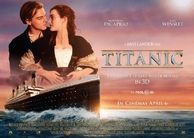
Twentieth Century Fox was right to question the likelihood of box-office success for James Cameron’s $200 million Film Titanic: “an Edwardian period piece, a costume Film, a romance, a story whose ending was known – and a &lsquo... Read Article »
2010, Vol. 2 No. 03
The scene is set for another take: the actors and extras are in costume and in place; the set decorator has set the stage just as the vision of the Film entails; the director of photography has the lights and cameras ready to capture the action.... Read Article »
2010, Vol. 2 No. 02
Film is a highly collaborative medium. Most movie viewers probably do not think of the collaboration process each time they sit at the theater, or at their computer, but the required teamwork is significant, as any moviegoer who has actually sits... Read Article »
2010, Vol. 2 No. 02
Within the first ten minutes of Twilight of the Golds, it is clear that both Judaism and homosexuality play a role in the Gold family. The family is at least culturally Jewish, if not more, and the son David (Brendan Fraser), is portrayed to be... Read Article »
2009, Vol. 1 No. 12
A giant hole is ripped in the side of a skyscraper. Smoke and flames pour out and debris tumbles into the street. Clouds of smoke billow upwards and burning embers rain down. Plumes of dust and smoke blot out the sun, darkening the city skyline.... Read Article »
2009, Vol. 1 No. 12
In her article “Visual Pleasure and the Narrative Cinema”, Laura Mulvey describes a way of analyzing and understanding cinema from a feminist and psychoanalytic perspective. A very similar approach is taken by Molly Haskell in her review... Read Article »
2009, Vol. 1 No. 12
Film critic Andre Bazin had very strong feelings on the subject of montage and realism. In his article “The Evolution of the Language of Cinema”, he explains his theory that montage, although necessary in many cases to make a Film work... Read Article »
Expedited Article Review
Submit an article and get a decision fast.
If you need a fast decision, INQUIRIES Journal offers expedited processing of your submission for a small fee. Depending on the expedited review option you choose, you can receive a decision in as few as 5-days.
In addition to a shorter review period, the fee supports the journal's continued operation and open-access publishing model. Standard submissions are always free. Submit Now » - Submit an Article to Inquiries Journal -
|