Featured Article:Richard Lester, The Beatles, and the Rock Musical Revised
By
2010, Vol. 2 No. 04 | pg. 1/1
Lester’s films with the Beatles were revisionist rock musicals for several reasons. While they clearly sprang from earlier rock musicals, the two films also broke with generic convention in terms of their portrayal of the Beatles and their filmmaking style. In order to appreciate the revolutionary aspects of Lester’s films with the Beatles, it is important to define some of the major characteristics of the two types of rock musicals. In addition, Richard Lester was a fitting director for a new type of rock musical. The collaboration between Lester and the Beatles succeeded in creating a pair of films with a profound and lasting importance for rock musicals and, perhaps more broadly, film and music in combination. A Hard Day’s Night and Help! were extremely popular and critically successful in their own time, and the films continue to be visually quoted and significant today. As stated above, before the Beatles there were two types of rock musicals. The first kind is what is referred to by Alan Betrock as the “personality rock musical” (29). Two of the most famous personalities to star in rock musicals in the late 1950s and early 1960s were Elvis Presley and Cliff Richard. Like all rock musicals, this type was designed to promote the artist and sell records. Film companies counted on the popularity of the singing star to generate box office profits and record companies counted on the success of the film to sell more records by their artist, in particular the soundtrack albums. It should be noted that rock musicals were not the first films to employ rock music—that was arguably accomplished by the film The Blackboard Jungle (1955, dir. Richard Brooks) and its use of Bill Haley’s song, “Rock Around the Clock” (Betrock 34)—but the rock musical would make the most extensive use of the music and its artists. One of the first major personality rock musicals was Love Me Tender (1956, dir. Robert D. Webb), a western starring Elvis Presley. Oddly, the only song that originated from the story’s late-1800s western period-setting was the title track. The fans did not care. The film was a major box-office hit, grossing $9 million worldwide, and giving the personality rock musical a foundation. Elvis’s next role was in Loving You (1957, dir. Hal Kanter), a film with a contemporary setting and it more fully developed many of the personality rock musical’s characteristics.One of these traits was that the starring artists rarely, if ever, played themselves, but instead they played thinly veiled versions of themselves. In Loving You, Elvis played Deke Rivers, a struggling musician who gains fame after conquering inner demons. Britain’s answer to Elvis, Cliff Richard, played a character named “Bongo” Herbert in Bongo Expresso (1959, dir. Val Guest) who rises to musical prominence with the help of a scheming, small-time showbiz manager. In the personality films, the musicians’ characters were almost always the heroes of the films, essentially good at heart in spite of moments of angst and rebellion, and they reinforced heterosexual male roles usually by ending up in a committed relationship with the lead female character. These films featured the artists in a variety of guises, but nearly always as the main character and almost uniformly in a musical context to sell the artist’s image and his records. Just as the artists did not play themselves in these films, the credits of the films indicate the songs they sang were not original compositions, either. While Elvis does share songwriting credit for several of his early hits, almost all of the songs in his films, including title tracks such as “Loving You” and “Jailhouse Rock,” were written by professional songwriters such as Jerry Lieber and Mike Stoller. Most of the songs sung by Cliff Richard in his films were written by songwriters like Robert Farnon, Norrie Paramor, and Ronald Cass. As sales figures showed, the fans again did not seem to care that the artists did not write the music performed in the film. By playing characters that were not explicitly themselves and singing songs they did not write, two of the personality rock and roll film’s characteristics were established. Creative freedom and ownership for the artist was a non-issue. The artist was a carefully controlled product to be marketed and sold. These principles would change somewhat with the films starring the Beatles as they would break both of these conventions and assert a considerable amount of creative independence. Another prominent convention of the personality rock musical was its use of music for narrative functions. Most of the songs in the personality films were not only diegetic, but like the traditional Hollywood musical, they served to reveal character and/or drive the plot forward. For example, near the end of Jailhouse Rock (1957, dir. Richard Thorpe), rock star Vince (Elvis Presley) has recovered from throat surgery but is unsure if his singing voice will be the same. He sings “Young and Beautiful” to his female love interest and his performance of the song not only wins her heart but also confirms that his singing voice is undamaged. In Expresso Bongo, the Cliff Richard character’s first number occurs in a coffee bar in the presence of his soon-to-be manager. The performance sparks the idea to exploit “Bongo” Herbert. In Summer Holiday (1963, dir. Peter Yates), Richard sings a song entitled “Bachelor Boy” to explain his lack of romantic attachments; the song also sets up his romantic goals which are accomplished by the end of the film resulting in a committed heterosexual relationship. The Beatles films directed by Lester would also defy the convention of diegetic and narrative-supporting music. The second type of rock musical in the era before the Beatles was what I will refer to as the “ensemble rock musical” (Alan Betrock calls them rock and roll films). These films were notable for their inclusion of many musical acts. They often contain extremely thin plots involving a charity benefit many of the artists perform at, a group of teenagers’ struggles against the older generation’s ignorance of rock and roll, or a “new act” on the rise in showbiz. Two examples of the rock musical are The Girl Can’t Help It (1956, dir. Frank Tashlin) and Richard Lester’s It’s Trad, Dad! (1962). This type of rock musical was also a venue for real-life artists and their rock songs, but in a much less concentrated form than the personality rock musical. A key trait of the ensemble rock musical was that many of the artists appeared in the films as themselves. In The Girl Can’t Help It, numerous popular rock acts were featured for a short amount of screen time, including Little Richard and Eddie Cochran. Chubby Checker, Gene Vincent, and Del Shannon made appearances in It’s Trad, Dad!. These artists were introduced in the films as themselves, but rarely did they have many speaking lines. These short performances in the ensemble rock musicals were akin to the one-song-and-done type of treatment in television variety shows. The intent was to promote several artists and several songs at once, and each artist’s screen time was severely limited. Due to this limited amount of exposure, audiences were and are unable to get much of a sense of the musicians’ personalities or traits beyond a one song performance. Like the personality rock musical, the multitude of artists in the ensemble films were not allowed to show their audience much of their real personae beyond musical performance. One convention of the ensemble rock musical that may have given an advantage to the artists was the fact that many of the songs performed by the groups in these films were original compositions. Little Richard really did write “Long Tall Sally,” which he performed in The Girl Can’t Help It, and Eddie Cochran was the co-writer of “Twenty-Flight Rock;” which was the song he performed in the same film. In Richard Lester’s It’s Trad, Dad!, the Brook Brothers, Geoff and Ricky, wrote the song they performed entitled, “Double Trouble.” While not all of the musicians in the ensemble rock musicals wrote the songs they performed, there was definitely more of an opportunity for artists to showcase their original compositions than in the personality rock musicals. It is quite likely that film and record companies were more willing to allow artists to perform original material in the ensemble films because there were so many acts in the film. If one particular song or artist was a dud, the next one would perform a few minutes later and the previous one would be forgotten. Even the traditionally small budgets of the rock musical were too much of a risk to place on any one act’s original music. The solution was to dilute the risk by creating an ensemble piece, or to fill the personality film with songs by professional songwriters approved by the producers. The two types of rock musicals shared many traits as well, including cinematographic techniques. The visual framing of the artists during their performance was unremarkable in most cases. The typical musical sequence from an Elvis film or ensemble piece like The Girl Can’t Help It featured a static, long shot of the singer with a few close ups edited in intermittently. If the act was a band, the lead singer would be shown in many more shots than the other members. For example, during Eddie Cochran’s performance of “Twenty Flight Rock” in The Girl Can’t Help It, there are thirteen shots in just under two minutes. All of the shots are static. Cochran is shown in eight of the thirteen shots with three long, one medium close up, and four close ups. The other five shots are reaction shots of characters watching his performance on television. There are no unusual camera angles or compositions within the shots. Interestingly, the musicians playing the other instruments are never shown. This example is very typical of how rock and roll was presented in rock musicals before the Beatles. It is important to note this relatively un-experimental visual style when contrasting the rock musical from its early period with Lester’s films and the films that would come after. By the time Richard Lester would direct the Beatles in their first film, the conventions of the rock genre were well established. A review of his biography indicates that he was an ideal candidate to not only direct the Beatles in their film debut, but also create a pair of revisionist rock musicals. Lester, an American, was born in Philadelphia in 1932. He was only fifteen when he entered the University of Pennsylvania. He graduated four years later with a degree in clinical psychology and proceeded to get a job at a TV station where he became television director after a very short period of time (Sinyard viii). According to Neil Sinyard, Lester soon left his stable career to travel abroad. He supported himself by writing, tuning pianos, and busking. When he ran out of money, he fled to England and quickly got a job in television in 1955 (viii). His three years of television experience made him a seasoned veteran in comparison to the workers in the brand new English television industry. While working in television in England, Lester made contact with Alun Owen, and the “Goons” Peter Sellers and Spike Milligan. Lester’s biggest break came from collaboration with Peter Sellers when he was nominated for an Academy Award for the surrealistically humorous short, “The Running, Jumping & Standing Still Film.” Lester’s next major project was the feature length musical, It’s Trad, Dad (Sinyard 4-5). While largely a conventional ensemble rock musical, its use of a variety of camera angles and expressive editing foreshadows Lester’s musicals with the Beatles. It was these early works, in combination with his work on “The Goon Show,” that caught the eyes of the Beatles and film producer Walter Shenson. This led to Lester’s assignment to direct the Beatles in their feature film debut. One key reason why Richard Lester was a likely person to direct a revisionist rock musical was that he was only 32 years-old when he directed A Hard Day’s Night, and thus not far removed from being a youth himself. Lester’s age is important as, according to Sinyard, the average age of Hollywood directors making films for the youth at the time was 65.6 years old (22). Sinyard concludes that Lester’s relatively youthful age made him sympathetic with the young (22). Lester was also willing to try new things and defy the conventions of the genre, a characteristic probably less likely to be found in a director 65.6 years old. While a strong case can be made that Richard Lester’s films with the Beatles are revisionist rock musicals, it must be noted that these films share many characteristics with the genre, too. Perhaps the most important trait that they share with most rock musicals before 1964 is their original purpose. The films were intended, above all, to market and sell the Beatles. A Hard Day’s Night had a quick, eight-week shooting schedule in early 1964 intended to rush production because there was a real fear that Beatlemania could die out before the film’s completion (Rolston 24). This is a characteristic A Hard Day’s Night shared with many other rock musicals of the time as film producers and record companies were in constant fear of their featured artist(s) becoming passé. Like many rock musicals and exploitation films, A Hard Day’s Night also had a fairly low budget of 200,000 pounds, or $350,000. The film recovered its production cost before its release due to advance sales of its soundtrack, creating the highly unusual scenario in which the film was profitable before its release. Eventually, the film would earn over $11 million at the box office, a 3,100% return on the investment (Rolston 24-5). A study of A Hard Day’s Night and Help! show Lester as a filmmaker undeterred by fast shooting schedules and low budgets. The Beatles films were breaks with the rock musical conventions in a number of ways. The first two important differences are that the Beatles played themselves in both A Hard Day’s Night and Help!, and they were the only musical acts featured in the films. Previously, if a film had only a single act, like Elvis or Cliff Richard, the musicians did not play themselves. While each band member was playing something of a caricature written by the screenwriter, Alun Owen, some of the Beatles’ personal traits, especially their humor, were allowed to bubble to the surface onscreen. As Rolston and Murray point out with regard to A Hard Day’s Night: “The writer, Alun Owen, wanted the film quite simply to be about the Beatles and their lifestyle. He was keen to represent their reality as faithfully as he could” (28). This perceived accessibility to the Beatles through the film was a major break from Elvis or Cliff Richard movies in which the real Elvis or Richard was concealed by the fictional character they played. It was also a break from the ensemble musicals in which the featured musical acts were extremely limited in their amount of screen time and speaking lines. All of the songs performed in the films A Hard Day’s Night and Help!, and all but two of the songs on the soundtrack album for Help! were written by the Beatles. This wealth of original material created a new possibility for the rock musical—a single act could write the entirety of the music for a film. Even several of the artists in the ensemble rock musicals did not write the one or two songs they performed. The films’ financial success proved that a rock musical could be solvent featuring a single band’s original material. This would pave the way for other bands and other artists like the Dave Clark Five, Prince, and more to star in films featuring their original music. As Stephen Glynn asserts, A Hard Day’s Night and Help! feature the Beatles upholding white male heterosexuality, but with a twist (44). Glynn also notes that “the film (A HardDay’s Night) ensures that each member of the Beatles is shown to be interested in girls” (44). During his solo scenes in A Hard Day’s Night, Ringo stops to talk to a young girl. John and Paul are constantly stealing off with the dancers and performers at the television studio. During the performance of “You’ve Got to Hide Your Love Away” in Help!, George seductively (and humorously) strums his guitar in the direction of Ahme (played by Eleanor Bron). Where the films go against convention is through the lack of romantic resolution for any of the band members. Elvis films usually ended with a committed heterosexual relationship, but the Beatles films have no such resolution. Even though there is not a lead female romantic interest, Glynn writes that sexuality has a “burst out” in the Beatles films (44). Evidence for this is seen during the climactic television performance at the end of A Hard Day’s Night which displays several teenage girls’not-so-platonic enthusiasm. The dialog is racy at times like when Paul’s grandfather mentions to a well-endowed woman: “I bet you’re a good swimmer.” The Beatles are interested in girls, but not in any one particular girl. Unlike personality rock musicals and unlike some ensembles, the songs in the Beatles films largely do not serve any narrative function. They are also often non-diegetic. As Glynn notes, the performance of “I Should Have Known Better” in A Hard Day’s Night is both non-diegetic and diegetic (68). The song begins with the Beatles playing cards in a boxcar, then the cards are replaced with instruments, and by the last chorus of the song the cards are back. When the Beatles romp in an open field later in the film, the non-diegetic “Can’t Buy Me Love” plays over their running and jumping. There is no visible source of the music, and the lyrics of the song do not serve a narrative purpose. The up-tempo number serves mainly to provide a sense of youthful exuberance and freedom instead of adding to the story. In Help!, the song “Ticket to Ride” is both non-diegetic and serves no narrative purpose. The song plays over shots of the Beatles skiing and playing in the snow. In a few shots they are gathered around a piano, but there is no piano in the recording of the song. The song also does not drive the plot forward or reveal character in any way. The sequence could stand on its own as what would later be known as a music video, or if it were cut from the film there would be no loss in the narrative. The filmmaking styles and techniques used in A Hard Day’s Night and Help! set a new course for rock musicals. According to Rolston and Murray, the kitchen sink films, the French New Wave, and documentary films were the most important influences on A Hard Day’s Night (49). Like films of the French New Wave, A Hard Day’s Night featured natural light, hand-held cameras, and location shooting. In Help!, it could be argued that some techniques of the French New Wave and surrealism dominated, while the kitchen sink and documentary influences were no longer present. However, location shooting was extensive in Help!, as are jump cuts and natural lighting; these techniques showed the continued influence of the French New Wave on Lester. Overall, both films defied the standard techniques of earlier rock musicals, of which the strongest influences were pre-rock Hollywood musicals and exploitation films. Those films were mainly shot on sound stages, used artificial light, and featured unobtrusive filmmaking techniques with regard to camera placement and movement. Rock musicals after 1964 would more often than not shun the styles and techniques of the pre-Beatles musicals. Lester’s direction of the musical sequences resulted in highly varied and visually vibrant scenes. Developing the playful techniques that he began with “The Running, Jumping & Standing Still Film,” Lester made a point to shoot the musical sequences in a way that is as visually interesting as they are aurally. Lester’s work on the Beatles films was preceded by It’s Trad, Dad!, which featured surprisingly interesting cinematography. In that film, the musical performances contain extreme low angles, Dutch angles, extreme close-ups, and varied lighting. As Sinyard points out, the musical sequences were “wittily and exhilaratingly put together” (6). The Beatles musical sequences contained helicopter shots (“Can’t By Me Love”), film sped up and slowed down (“Can’t Buy Me Love” and the reprise at the end of “A Hard Day’s Night”), diffused lighting (“You’re Gonnna Lose That Girl” in Help!), and unusual camera positions (behind Ringo’s back during “And I Love Her”). Lester’s direction of the Beatles songs often look like a catalog of camera angles and cinematographic techniques. These musical sequences are far different visually than earlier rock musicals. As has been shown in rock musicals like The Girl Can’t Help It and the Cliff Richard films, the singer dominates the number of shots allocated for most musical performances in the pre-Beatles films. This also changed. As Glynn notes, A Hard Day’s Night does not heavily favor the singer during the musical sequences (68). During “I Should Have Known Better,” “all four Beatles receive equivalent group and solo exposure. Vocalist John is privileged for seven shots during the song, but Paul, Ringo and George are each seen in close-up three times” (68). The effect of this is to emphasize that the Beatles are a single unit, four individual musicians making up a single whole. Each band member also gets a chance to sing in each film, except for Ringo in Help!. The filmmaking emphasizes this plurality within the group through its selection of the main subjects of the shots during the musical numbers. The Beatles films defied genre conventions in many ways and because of that, or in spite of it, they were also reviewed positively. Beyond their success at the box office and with the press, the films’ popularity with fans and musicians influenced many subsequent rock musicals, television shows, and music videos with regard to style and content. Somewhat surprisingly, Lester’s films with the Beatles were well received by the critics, especially A Hard Day’s Night. Andrew Sarris, in the August 27, 1964 Village Voice, called the film “the Citizen Kane of jukebox musicals” (Brackett 175). Bosley Crowther said in his review in the New York Times: “it’s a wonderfully lively and good-natured spoof of the juvenile madness called ‘Beatlemania,’ the current spreading craze of otherwise healthy young people for the four British lads with the shaggy hair.” Crowther’s review of Help! called it: “90 crowded minutes of good, clean insanity.” Sight and Sound said of A Hard Day’s Night: “works on a level at which most British films…don’t manage to get going at all” (Rolston 5). It appears that the critics were able to recognize the fresh and divergent path the films took from rock musicals at the time they were released, even if those breaks were not articulated in the reviews. One way to test if a film is revisionist is to research its influence on subsequent films in the same genre. In spite of the Beatles films’ success, personality rock musicals such as the Elvis films did not change much, if at all, after 1964 as a result of the Beatles films. There were fewer of them, though. Perhaps the Beatles helped to kill this type of musical in Britain as Cliff Richard made only one more personality rock musical after 1964, Finders Keepers (1966, dir. Sidney Hayers). The ensemble rock musicals also appeared to die out somewhat after the Beatles success as executives sought to cash in on films about single groups, rather than bunching several together in one film. The breaks the Beatles and Lester made with convention became the norm and their films were also highly influential in terms of style on subsequent generations of rock musicals and music videos. Lorraine Rolston and Andy Murray point out that after A Hard Day’s Night and Help!, a number of rock bands released films that were more similar to the Beatles films than films featuring musicians prior to 1964. Immediately after the Beatles films, the Dave Clark Five starred in their own feature, Catch Us If You Can (1966, dir. John Boorman), and Gerry and the Pacemakers were featured in Ferry Cross the Mersey (1965, dir. Jeremy Summers) (65). Other examples of subsequent rock and roll musicals included The Who’s (much darker) Tommy (1975, dir. Ken Russell), the Rolling Stones’ Rock and Roll Circus (1968, dir. Michael Lindsay-Hogg), and The Ramones’ Rock and Roll High School (1975, dir. Allan Arkush). These films were centered on a single artist or group (except for Rock and Roll Circus), did not necessarily heed classical Hollywood techniques, let alone the conventions of rock musicals prior to 1964. Lester’s films even more directly influenced “The Monkees” television series (1966-1968). This particular show was a huge hit in the United States, and the Monkees themselves were manufactured American imitations of the Beatles set to capitalize on Beatlemania (Rolston 65-66). The surrealism and experimental techniques used in this television series, such as speeding up the film and jump cuts, are clearly lifted from the Lester’s work. The series also uses non-diegetic music that provides no narrative function. The musical performances also mimic Lester’s style in that they often do not privilege the singer with regard to shot selection, and each of the Monkees sang several songs. A case can be made that Lester’s work with the Beatles has had an influence on more recent films. Rolston and Murray argue that British pop quintet, the Spice Girls, released their film Spice World (1997, dir. Bob Spiers) with more than a slight nod to A Hard Day’s Night. The film features the girls’ misadventures leading up to a very important concert, all the while highlighting the group’s humor (68). Glynn asserts that 1997’s Austin Powers: International Man of Mystery closely copies the opening of A Hard Day’s Night by having “the eponymous celebrity spy run from his screaming fans down a narrow car-lined pavement, then sport a false beard and hide behind a magazine and in a telephone box” (94). Most recently Jonas Brothers: The 3D Concert Experience (2009, dir. Bruce Hendricks) was released featuring a concert by the Jonas Brothers and “documentary” footage of their backstage lives. A few scenes in the film appear to directly quote A Hard Day’s Night as the boys negotiate swarms of screaming girls. The fact that the members of the group dress alike, look alike, and make girls scream lends itself to comparisons with the Beatles. The film owes some of its look to the iconic imagery Lester created in his films with the Beatles. The cinema verite style of A Hard Day’s Night can be found in another recent musical film with a more serious plot entitled Once (2006, dir. John Carney). This independent film is about two struggling, but talented musicians. The grainy, digital recording reminiscent of black and white 16mm film, hand-held camera shots, and the location-only shooting are very similar to the cinematography in A Hard Day’s Night. In another nod to Lester’s influence, some of the music in the film is non-diegetic. When pop musicians are portrayed in musicals today, their films seem to consciously, or possibly unconsciously, tip their hat to the Beatles films, if only because Lester’s redefinition of the genre was so powerful. Lester’s work on the Beatles films has another lasting resonance in the form of the music video. These short films promoting songs and their artists have had a huge impact on the shape of popular music. Many music videos have paid direct homage to the Beatles films. Nirvana, for instance, with the video for “In Bloom” (1992) does a send up of the Beatles’ early television performances and their performance at the end of A Hard Day’s Night. Hip-hop duo Outkast does the exact same thing with their video for “Hey Ya” (2003), complete with screaming girls in a television studio set. Numerous music videos employ surreal images and sequences, also. For example, the White Stripes’ music videos directed by Michel Gondry are famous for this. Many music videos from the early 1980s to today often either directly quote Lester’s images from the Beatles films, or they make use of the filmmaking techniques employed in those films. Lester’s Beatles films are still widely praised today. Numerous books on the Beatles and their films continue to be published. Roger Ebert gives A Hard Day’s Night top marks in a review from 1996: “After more than three decades, it has not aged and is not dated; it stands outside its time, its genre and even rock. It is one of the great life-affirming landmarks of the movies.” Help! is widely viewed as the lesser of the two films, but still excellent. Many of Lester’s images, and the music that goes with those images, are still part of the collective conscious, as shown by recent works that borrow from those iconic images or closely replicate them. While nearly everyone is familiar with the iconography created by Richard Lester in his films with the Beatles, Lester himself remains nowhere near as well-known as the Beatles or many other film directors. This is unfortunate because nearly every rock musical and music video since 1964 owes a debt to Lester’s innovation and influence stemming from his films with the Beatles.
Works Cited A Hard Day’s Night. Dir. Richard Lester. Perf. John Lennon, Paul McCartney, George Harrison, and Ringo Starr. 1964. DVD. Miramax, 2002. Betrock, Alan. The I Was A Teenage Juvenile Delinquent Rock ’n’ Roll Horror Beach Party Movie Book: A Complete Guide to the Teen Exploitation Film, 1954-1969. New York: St. Martin’s, 1986. Crowther, Bosley. “Screen: The Four Beatles in ‘A Hard Day’s Night.’” New York Times 12 August 1964, 41. Crowther, Bosley. “Singers Romp Through Comic Adventures.” New York Times 24 August 1965, 25. Ebert, Roger. Review of A Hard Day’s Night. Oct. 27, 1996. <http://rogerebert.suntimes.com/>. Accessed 10 Apr. 2009. Expresso Bongo. Dir. Val Guest. Perf. Cliff Richard, Laurence Harvey, Sylvia Sims. 1959. DVD. Kino Video, 2001. Glynn, Stephen. Turner Classic Movie British Film Guide: A Hard Day’s Night. New York: I.B. Taurus & Co Ltd, 2005. Hayward, Susan. Cinema Studies: The Key Concepts (Second Edition). New York: Routledge, 2000. Help!. Dir. Richard Lester. Perf. John Lennon, Paul McCartney, George Harrison, and Ringo Starr. 1965. DVD. Capitol, 2007. Jailhouse Rock. Dir. Richard Thorpe. Perf. Elvis Presley, Judy Tyler, Dean Jones. 1957. DVD. Warner Home Video, 2007. Jonas Brothers: The 3D Concert Experience. Dir. Bruce Hendricks. Perf. Kevin Jonas, Joe Jonas, and Nick Jonas. 2009. Disney. Love Me Tender. Dir. Robert D. Webb. Perf. Elvis Presley, Richard Egan, Debra Paget. 1956. DVD. 20th Centruy Fox, 2006. Loving You. Dir. Hal Kanter. Perf. Elvis Presley, Kenneth Becker, Wendell Corey. 1957. DVD. Lions Gate, 2003. Once. Dir. John Carney. Perf. Glen Hansard and Marketa Irglova. 2006. DVD. 20th Century Fox, 2007. Rolston, Lorraine and Andy Murray. A Hard Day’s Night. London: York Press, 2001. Sarris, Andrew. “Bravo Beatles!” Rev. of A Hard Day’s Night. “Village Voice.” Aug. 27, 1964, p. 13. Reprinted in The Pop, Rock, and Soul Reader. Ed. David Brackett. New York: Oxford UP, 2005. 174-176. Sinyard, Neil. The Films of Richard Lester. Totowa, NJ: Barnes & Noble Books, 1985. Spice World. Dir. Bob Spiers. Perf. Melanie Brown, Emma Bunton, Melanie Chisholm, Geri Halliwell, and Victoria Beckham. 1997. DVD. Sony Pictures, 1998. Summer Holiday. Dir. Peter Yates. Perf. Cliff Richard, Lauri Peters, Melvyn Hayes. 1963. DVD. Starz/Anchor Bay, 2002. The Girl Can’t Help It. Dir. Frank Tashlin. Perf. Jayne Mansfield, Tom Ewell. 1956. DVD. 20th Century Fox, 2006. The Running, Jumping & Standing Still Film. Dir. Richard Lester and Peter Sellers. Perf. Peter Sellers, Leo McKern. 1960. VHS. MPI, 1995. * Additionally, extensive use of the Internet Movie Database (http://www.imdb.com) was used for date and name checking. 
From the Inquiries Journal Blog   Monthly Newsletter SignupThe newsletter highlights recent selections from the journal and useful tips from our blog. Suggested Reading from Inquiries Journal
Inquiries Journal provides undergraduate and graduate students around the world a platform for the wide dissemination of academic work over a range of core disciplines. Representing the work of students from hundreds of institutions around the globe, Inquiries Journal's large database of academic articles is completely free. Learn more | Blog | Submit Follow IJ


Latest in Film & Media |

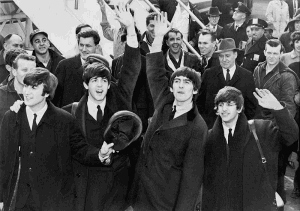 A popular film genre in Britain and the United States during the late 1950s and early 1960s was the rock and roll musical. As Susan Hayward points out, this type of film came about as Hollywood and record companies sought to cash in on the musical phenomenon known as rock and roll (248). Many of rock and roll’s legendary and not-so-legendary acts appeared in films created mainly for the record-buying youth. Prior to 1964 there were essentially two types of rock musicals. The first were films that focused on a single personality such as Elvis Presley, or in Britain, Cliff Richard. The other type was an ensemble musical featuring many musicians for a brief amount of screen time. Each type had several characteristics that were well established by the time the genre would experience a revision caused by A Hard Day’s Night (1964) and Help! (1965); both were directed by Richard Lester and featured the Beatles.