Lessons of Darkness in the Context of Carroll's Erotetic Narrative
By
2012, Vol. 4 No. 07 | pg. 1/1
KEYWORDS:
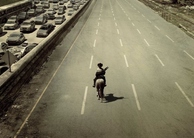
In his essay, “An Aesthetic Reality,” Andre Bazin writes, “Let us agree, by and large, that film sought to give the spectator as perfect an illusion of reality as possible within the limits of logical demands of cinematographic narrative” (Bazin, 26). Noel Carroll does not “agree, by and large” with Bazin’s realism-based (or medium essential) proposal, nor is he satisfied with ascribing the power of film to Wilson’s semiotics or Langer’s dream-medium theories. Instead, Carroll attributes the central source of cinematic power to its use of an erotetic narrative, specifically through imagery. Warner Herzog’s 1992 documentary, “Lessons of Darkness,” satisfactorily serves as sufficient work to disprove Carroll’s overstated claim and suggests the documentary genre is the weakest example of such a model. In his words, Carroll’s thesis “holds that the power of movies—their capacity to evoke unrivaled widespread and intense response—is, first and foremost, at least a result of their deployment of pictorial representation, variable framing, and the erotetic narrative” (Carroll, 101). This blatantly tells us Carroll’s definition of power as well as his placement of power in cinema. Carroll’s erotetic narrative can be described most generally be translated as question-and-answer storytelling. Particularly, stresses Carroll, the moving pictures onscreen are the way in which macro and micro questions are raised and, by the end of the film, answered. This may be best exemplified by a whodunit story wherein the audience is hopefully intrigued by—and invested in—how the mystery is solved. In the case of “Lessons of Darkness,” it would be a surprise to hear of a viewer’s attention relying on questions and answers. Moreover, if they were, Herzog uses a variety of devices to explain any sequence he deemed in need of explanation. Any main interpretation of the overall film, or macro question in Carroll’s world, is already suggested before images appear and have the chance. Over a black screen, a Blaise Pascal quote tells us, “The collapse of the stellar universe will occur – like creation – in grandiose splendor.” Though abstract, it is highly hinted (via language in titles) we are about to witness a grandiose splendorous documentation of a collapse. If this was not explicit enough, a narrator tells us instantly (via oral language) “impending doom” is coming to this capital city (a setting we were already aware of due to Herzog’s revealing chapter titles, such as “Capital City, After War”). As seen with this segment, removal of narration and titles would just barely change the film, as images of a tall city followed by green footage of explosions followed by a smoke-filled city in ruins documents an obvious story already. Though it is true—such as the half hour segment of firefighters putting out giant flames—that we need little comprehension of culture or conventions to understand what is happening and why, there are few questions that can be asked, let alone answered. An imaginable micro question might be “what is about to happen next in this film?” but any form of narrative can replace “film” and remain accurate—which at minimum speaks to the invalidity of Carroll’s power placement.Though it would be equally invalid to centralize another component of cinema and marginalize the rest, the most power (with respect to Carroll’s definition) in this non-fiction genre comes from Carroll’s concept of “presumptive assertion,” in which we view a non-fiction film (“Lessons of Darkness”) with the assumption that the filmmakers (Herzog) are telling the truth (Carroll, 162). This would explain the strong emotional reactions from the war testimony segment with a mother and son; the images help us connect to the individuals, and their dialogue is what moves us. It is neither semiotics—the way in which some see “movie shots as statements which are iconically encoded”—nor the dreamlike nature in Herzog’s canted angles and aerial views (Wilson, 197). But it most certainly does not derive from Carroll’s narrative model—as an hour of narration, titles, epic music, and clear images hardly feel like a cinematic question-and-answer session at all. In documentaries such as “Lessons of Darkness,” moving pictures and language are extremely powerful in showing us the realism and truth of the events. Still, just as Carroll acknowledges the role of culture but does not concur that the power of cinema is therefore wholly conventional, it is vital for us to acknowledge the role of erotetic narrative without placing primary power therein. ReferencesBazin, Andre, and Timothy Barnard. "An Aesthetic of Reality." What Is Cinema? Montreal: Caboose, 2009. 26. Print. Carroll, Noel. "The Power of Movies." Daedalus 114.4 (1985): 79-103. Print. Carroll, Noel. "The Film of Presumptive Assertion." Philosophy of Film and Motion Pictures: an Anthology. Malden, MA: Blackwell, 2006. 162. Print. Wilson, George M. "The Primitive Basis of Film Narration." Philosophy of Film and Motion Pictures: an Anthology. Malden, MA: Blackwell, 2006. 197. Print. 
From the Inquiries Journal Blog   Monthly Newsletter SignupThe newsletter highlights recent selections from the journal and useful tips from our blog. Suggested Reading from Inquiries Journal
Inquiries Journal provides undergraduate and graduate students around the world a platform for the wide dissemination of academic work over a range of core disciplines. Representing the work of students from hundreds of institutions around the globe, Inquiries Journal's large database of academic articles is completely free. Learn more | Blog | Submit Follow IJ


Latest in Film & Media |