|
Television (tagged articles)
The keyword Television is tagged in the following 29 articles.
2022, Vol. 14 No. 03
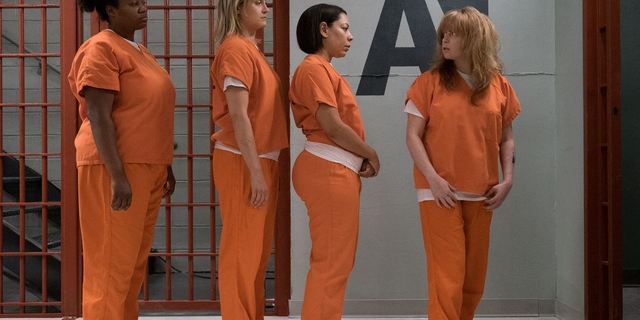
Using content analysis, this article focuses on the portrayal of female prisoners in the first two seasons of the Netflix show Orange is the New Black (OITNB). There are two main findings. First, the word "lesbian" frequently signals homophobia... Read Article »
2022, Vol. 14 No. 02
This article explores the expression of the Gothic romance genre in the 21st century, by examining Mike Flannagan’s The Haunting of Bly Manor. Very little literature focuses on contemporary expressions of this genre. The Gothic reflects the... Read Article »
2021, Vol. 13 No. 03
AMC's The Walking Dead (TWD) has maintained a dedicated viewership since its premiere in 2010 and serves as a well-known example of zombie media in today’s culture. The zombie genre has long been recognized for its subversive potential, but... Read Article »
2019, Vol. 11 No. 10
Jean Baudrillard’s essay ‘The Precession of Simulacra’ from Simulacra and Simulation (1981) is a key postmodern text to understanding the contemporary technological Western world. ‘The Precession of Simulacra’ explores... Read Article »
2016, Vol. 8 No. 12
The sheer number of distinct dialects present within the country has long complicated Chinese language standardization and language policy. Furthermore, China’s history with colonial powers throughout the past three centuries has led to a... Read Article »
2016, Vol. 7 No. 1
Reality Television has been around for more than a half-century, dating back to the hidden cameras in Candid Camera in 1948. Today, one of the most popular reality Television shows is Keeping Up with the Kardashians, an inside look at a celebrity... Read Article »
2016, Vol. 7 No. 1
Preadolescence is a pivotal time for individuals as they develop their own set of values, attitudes, and beliefs. With children ages 11 to 14 reportedly watching nearly three hours a day of Television, TV programming can be enormously influential... Read Article »
2015, Vol. 6 No. 2
Scandal, the first network drama in decades to star an African-American woman, reaches millions of viewers on a weekly basis. This study examined if main character Olivia Pope is a reflection of popular AfricanAmerican female stereotypes in Television... Read Article »
2015, Vol. 8 No. 2
On August 20, 2013, Al Jazeera America televised its first official broadcast amidst a frenzy of speculation about the Qatari-backed news channel’s viability in the American media market. Scores of media commentators, ranging from reporters... Read Article »
2015, Vol. 7 No. 03
Beyond merely claiming to represent 'reality,' reality Television shows also inherently operate as “powerful ideological source[s] containing multiple sites of meaning... that help viewers to make sense of their social, political, economic... Read Article »
2014, Vol. 5 No. 1
This study interviewed journalists across the United States in 2013 to find out how online and mobile technologies have changed Television journalism in the past decade and what new technologies and trends they expect in the future. Interviews with... Read Article »
2012, Vol. 3 No. 2
This study examined the scope of influence that Japanese anime had on American people born in the '80s and '90s. Relying on secondary research and a survey using a convenience sample of 107 students and young adults, this study found that anime... Read Article »
2013, Vol. 4 No. 2
The reality Television genre has been increasingly at the forefront of media and cultural studies and a subject of critique across the disciplines of communications, anthropology and visual studies. While reality Television programs have been analyzed... Read Article »
2013, Vol. 9 No. 2
One may contend that attaining unadulterated awareness of one’s existence is, in present society, idealistic. Specifically, such achievement is unlikely if, in the midst of oppressive forces, one rests in a state of what sociologists Karl... Read Article »
2013, Vol. 4 No. 1
This is a case study looking at how the legal system is portrayed on prime time network Television crime dramas in respect to suspect treatment, the case building process and trial length. Through content analysis, it compared the exaggerations... Read Article »
2013, Vol. 4 No. 1
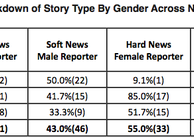
This study, conducted during a two-week period leading up to the 2012 Presidential Election, analyzed three prime time news broadcasts to determine whether male journalists reported more hard news stories than female journalists throughout a segment... Read Article »
2013, Vol. 4 No. 1
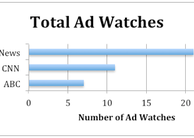
In today’s election atmosphere, Americans are inundated with campaign advertisements during the election cycle. Much research has been done on campaign advertisements, but not much about ad watches. Ad watches are critiques or commentary of... Read Article »
2013, Vol. 5 No. 08
The Sopranos (1999-2007) opens with its lead character, Tony Soprano (James Gandolfini), unenthusiastically meeting his therapist, Dr. Jennifer Melfi (Lorrain Bracco) for the first time. He is reluctant to trust a female analyst; nevertheless, he... Read Article »
2013, Vol. 5 No. 03
Showtime's Television show The L Word (2004-2009) follows a fictional group of lesbian, bisexual and transgender women living in Los Angeles, including Bette Porter (Jennifer Beals) and Tina Kennard (Laurel Holloman), who decide to have a baby together... Read Article »
2013, Vol. 5 No. 02
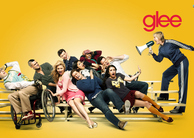
The popular Television show Glee (2009-current) features a fictional glee club, the New Directions, which – in the words of the choir director character – is made up of students from “just about every race, religion, sexual orientation... Read Article »
2012, Vol. 4 No. 09
Throughout the past decade, The Daily Show with Jon Stewart has expanded its depth of analysis and impacted the political process and national discourse in multiple ways. It has established itself as a source of legitimate critical examination of... Read Article »
2012, Vol. 4 No. 07
“Reality Television” programs attempt to portray normal people in everyday situations. In recent years, the genre has boomed and essentially changed the landscape of Television networks.[1] As reality programming continues to dominate... Read Article »
2012, Vol. 4 No. 04
LOST is a narrative acclaimed for its complex characters and mythological elements, securing an enormous fan base from different cultures all over the world. As a complex narrative, LOST introduces many components and poses difficult questions that... Read Article »
2011, Vol. 3 No. 11
Dollhouse received mixed critical reviews and a fairly low number of viewers, but it is reasonable to argue that there has never been anything quite comparable to it before. Dollhouse combined elements of dystopian science fiction, fast paced action... Read Article »
2011, Vol. 3 No. 09
Within the milieu of American Television, the vigilante serial killer, Dexter, stands alone with one of the largest audiences. Why should a violent antihero, who stalks and kills other serial killers, be so appealing to Americans with a democratic... Read Article »
2011, Vol. 3 No. 01
As children, we idolize the relationship of our parents. We watch their love and affection and assume that such relationships are easy to find−that love comes naturally. This naïveté is portrayed on the Television sitcom &ldquo... Read Article »
2010, Vol. 2 No. 01
In 1961, nearly a decade after the “Golden Age” of Television had passed, commercial Television was still changing the American lifestyle, from living rooms to bars. It was then that Federal Communications Commission (FCC) chair Newton... Read Article »
2010, Vol. 2 No. 01
Mass media is perhaps the most powerful tool in the world for creating, changing or perpetuating society’s ideas about an issue or group of people. It works both overtly and subconsciously: deciding which issues are important, how to frame... Read Article »
2009, Vol. 1 No. 11
News is more likely to be reported if meets one of the following characterisitics: It concerns elite personalities; It is negative; It is recent; Or it is surprising (Fiske 96). The story of the Bush Administration’s “regrouping... Read Article »
Expedited Article Review
Submit an article and get a decision fast.
If you need a fast decision, INQUIRIES Journal offers expedited processing of your submission for a small fee. Depending on the expedited review option you choose, you can receive a decision in as few as 5-days.
In addition to a shorter review period, the fee supports the journal's continued operation and open-access publishing model. Standard submissions are always free. Submit Now » - Submit an Article to Inquiries Journal -
|