|
Government (tagged articles)
The keyword Government is tagged in the following 25 articles.
2020, Vol. 12 No. 11
“Just-war theory,” as it is called, aims to guide action during warfare, so that states and individuals can act ethically. Because warfare is often analogized to epidemics, this paper will argue that just-war theory can recommend how... Read Article »
2016, Vol. 8 No. 10
Hong Kong is standing at a crucial social and political juncture in its history. A former British colony, it has retained its unique legal system, electoral system, and political democracy. These systems have worked together to create a society... Read Article »
2016, Vol. 7 No. 1
In 2014, Greenpeace launched an attack on a 50-year brand partnership between Danish toy company LEGO and Royal Dutch Shell, an oil and gas corporation. Through the analysis of Greenpeace's campaign and LEGO's responses over a three-month period... Read Article »
2016, Vol. 8 No. 03
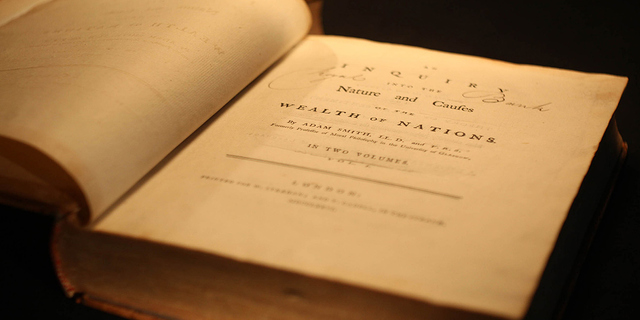
The ideas of Adam Smith have remained relevant well beyond his lifetime. He is remembered as the father of modern-day economics and the author of the still widely read Wealth of Nations, known for his formulation of the invisible hand and consequent... Read Article »
2015, Vol. 7 No. 03
When politicians attempt to communicate their views in the public forum, the practice can be seen as a perquisite of the democratic process. This can prove to be an ideal environment for public relations, as the industry can identify and clarify... Read Article »
2015, Vol. 7 No. 02
Much has been said in regards to Barack Obama’s revolutionary use of technology during both his 2008 and 2012 campaigns for President of the United States. Yet, during his administration, that groundbreaking tactic suddenly disappeared. In... Read Article »
2013, Vol. 5 No. 10
This article highlights the European Commission’s role within the European Union (EU), which has been weakened over time. Through this essay various aspects of the Commission’s power in relation to the structure and procedures of comitology... Read Article »
2012, Vol. 4 No. 09
Limits lie at the heart of the American political system. No Governmental body or figure has unlimited authority—all are checked by the others. However, beyond this, political thinkers are divided over how best to mitigate majoritarian influence... Read Article »
2012, Vol. 1 No. 1
Despite a proliferation of non- Governmental organizations (NGOs) and community-based organizations (CBOs) in Kibera, the largest informal settlement in Kenya, conditions for residents remain bleak. CBOs are uniquely positioned to catalyze change... Read Article »
2011, Vol. 3 No. 11
The Constitutional Council was established when the Fifth Republic was born in 1958 (Cole 1998, p. 63). Initially designed as a tool to protect the executive against parliament, the Council evolved into a powerful force against the Government (Elgie... Read Article »
2011, Vol. 5 No. 1
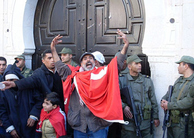
Elyès Jouini is the vice-president for research of Université Paris-Dauphine and former Minister for the Economic and Social Reforms of the Tunisian transition Government. He currently serves as the President of the Fondation Paris... Read Article »
2011, Vol. 3 No. 04
This case study asks the following question: given the symbol of the European Union as the ultimate supranational, rights-based, compliance-inducing international organization, why have member states France and Italy escaped punishment for their... Read Article »
2011, Vol. 4 No. 2
When a country undergoes the process of decentralization, it requires a transfer of authority, responsibility, and/ or resources from the national to lower levels of Government, with the purpose of creating good governance. If successful, decentralization... Read Article »
2011, Vol. 3 No. 03
It is widely recognized that state security is no longer contingent upon a balance of power or the threat of conquering states, but global stability is now instead jeopardized by weak or fragile states. Fragile states represent chaos, disorder,... Read Article »
2010, Vol. 2 No. 12
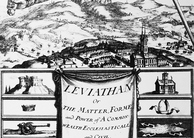
In his seminal text, Leviathan, the philosopher Thomas Hobbes offers what was then a radically novel conception of the origins of civil Government. Hobbes’ ideas of the commonwealth are predicated upon his views of human nature and the state... Read Article »
2010, Vol. 2 No. 11
There are few Government policies disheartening enough to make me lose sleep at night. But of those few, the subsidization of the corn industry is one big one, and the way in which the Government continues to squander billions of dollars on a senseless... Read Article »
2010, Vol. 2 No. 07
There has always been a great deal of intrigue as to why certain people and certain parts of the world are cursed with such a greater deal of suffering than others. Over time certain societies have developed through a series of phases of modernity... Read Article »
2010, Vol. 2 No. 03
Democracy is based on the core principle that the power to govern should be in the hands of the people. In the United States, the people exercise that power by casting their vote for the candidate they see as most fit to lead. This right is... Read Article »
2009, Vol. 1 No. 12
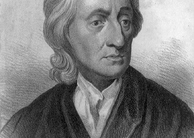
Political philosopher and social psychologist, John Locke was an outspoken supporter of equal rights within a governed society. He espoused the natural rights of man, namely the right to life, liberty and property, and he articulated that every... Read Article »
2009, Vol. 1 No. 11
Procurement in Government, as well as in industry, is going through a tremendous change as a result of globalization, technological breakthroughs, and the surge in outsourcing services to outside vendors (Giallourakis, 2008, p. xiii, Preface). ... Read Article »
2009, Vol. 1 No. 10
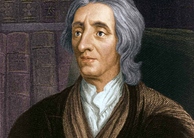
In 1688, King James II was overthrown by a group of Parliamentarians. This was the result of what is now known as the Glorious Revolution, or the Revolution of 1688. Naturalist and political philosopher John Locke was present to witness these events... Read Article »
2000, Vol. 1999/2000 No. 1
New Labour’ has committed itself to giving each division of the United Kingdom a parliament or assembly of its own. Already we have a Scottish Parliament and a Welsh Assembly (just because Wales is a principality does it not deserve a parliament... Read Article »
1999, Vol. 1998/1999 No. 2
On the 23rd of February, I casted my vote at around 11:00 am in the morning at the Student Union. For some, voting is just a routine exercise but somehow, I do feel that the candidates that are running for this election is really at the... Read Article »
1997, Vol. 1996/1997 No. 2
This article is based on a paper presented at the workshop on Understanding Security and Development in Africa, University of Wales, Aberystwyth, 8th March 1997. Let me begin by briefly explaining what NGOs are. NGOs are Non- Governmental Organisations... Read Article »
1997, Vol. 1996/1997 No. 1
In one of the more memorable moments of the otherwise dull BBC coverage of US election night, veteran political commentator Charles Wheeler pointed out that President Clinton had just been re-elected by American voters who had little if any idea... Read Article »
Expedited Article Review
Submit an article and get a decision fast.
If you need a fast decision, INQUIRIES Journal offers expedited processing of your submission for a small fee. Depending on the expedited review option you choose, you can receive a decision in as few as 5-days.
In addition to a shorter review period, the fee supports the journal's continued operation and open-access publishing model. Standard submissions are always free. Submit Now » - Submit an Article to Inquiries Journal -
|