|
Sub-Saharan Africa (tagged articles)
The keyword Sub-Saharan Africa is tagged in the following 43 articles.
2018, Vol. 10 No. 03
On February 14th, 1965, just one week before he was assassinated, Malcolm X delivered a speech in Detroit. He spoke about his beliefs concerning segregation and civil rights, and made a point of contextualizing the civil rights movement globally... Read Article »
2017, Vol. 11 No. 1
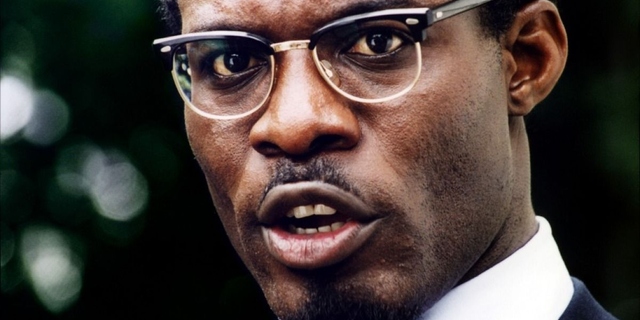
As with much of the African continent, the Congo endured a harsh colonial past. What trailed, after its 1960 independence from Belgium, also followed a similar trend of its continental neighbors – continued foreign meddling. At the outset,... Read Article »
2017, Vol. 9 No. 11
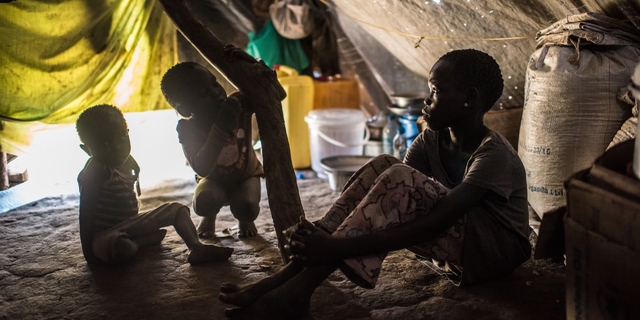
South Sudan is the youngest and one of the most volatile nations in the world. After two decades of war, it gained its independence from Sudan in 2011. Peace, however, was short-lived. As oil prices plummeted and competition intensified, an ill-... Read Article »
2017, Vol. 9 No. 02
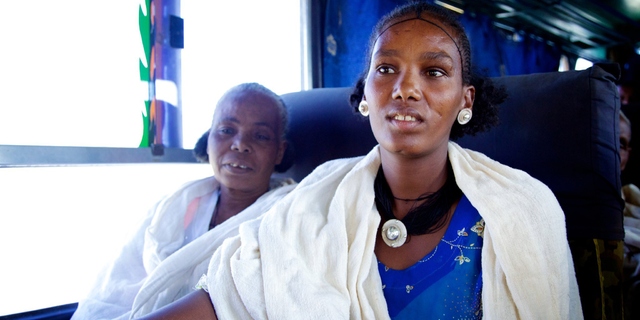
The ancient civilization of Ethiopia has captivated the West and served, across centuries, as an inspiration for much of Africa. As a regional power in Eastern Africa, the nation is a strategic pathway into the Horn of Africa and guiding force in... Read Article »
2017, Vol. 9 No. 02
Following the failure of Structural Adjustment Programmes (SAPs) in the 1980s, and the liberal triumphalism caused by the end of the Cold War, development discourse underwent a significant transformation. Key to the new development paradigm was... Read Article »
2016, Vol. 10 No. 1
"One thing governments have got is legislation. Legislation has an impact. It affects millions of people in a country just by a stroke of a pen." – Executive Director of UN Women, Dr. Phumzile Mlambo-Ngcuka, "Gender and Violence... Read Article »
2016, Vol. 6 No. 1
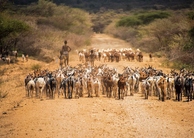
For the past four decades, pastoralist activities have been pushed to marginal areas in several regions of Ethiopia. This change was initiated by the Agrarian Land Reform Proclamation of 1974. Pastoralist activities prior to the agrarian reforms... Read Article »
2016, Vol. 8 No. 06
In their search for a new development paradigm, many African governments and international organizations have reverted to cooperatives, a distinct business model that manifest a turbulent history ranging from pre-colonial to colonial and post-independence... Read Article »
2016, Vol. 9 No. 2
Four decades after independence from Portugal, Angola remains a country with significant barriers to good governance and social development. Although the state's constitution established a multiparty democracy in the early 1990s, measures of high... Read Article »
2016, Vol. 8 No. 03
Developing states with large natural resource industries have an inclination to become over-reliant on one source of capital, causing other industries to fail, promoting corruption, and stimulating crime. Nigeria is one such case, as their booming... Read Article »
2015, Vol. 6 No. 1
Acquired Immune Deficiency Syndrome (AIDS) has ravaged Sub-Saharan Africa in the decades since its first recorded case. The disease has reached epidemic levels in many regions, with millions of new cases diagnosed each year. This paper examines... Read Article »
2015, Vol. 7 No. 10
This paper address two overarching research questions: first, what is the role of religion in transitional justice? Second, does the religious approach to transitional justice differ from the secular approach, and if so, how? In a theoretical section... Read Article »
2015, Vol. 7 No. 07
Between 1991 and 2002, the small West African coastal state of Sierra Leone was rocked by a brutal civil war, which killed, injured, displaced, and traumatized millions of men, women, and children. In the aftermath of the conflict, local political... Read Article »
2014, Vol. 2014 No. 1
On May 18th, 2000, the United States enacted the African Growth and Opportunity Act (AGOA), dramatically expanding trade between itself and Sub-Saharan Africa over the following decade. Yet whereas previous studies in the literature have often sought... Read Article »
2014, Vol. 6 No. 11
Rural populations in Sub-Saharan Africa often suffer from a lack of access to transportation. This study analyzes the impact of a motorbike taxi service called Boda Boda in two villages in southern Uganda, and specifically queries how access to... Read Article »
2014, Vol. 8 No. 1
The formation and expansion of the U.S. Africa Command (USAFRICOM) signals the increasing strategic importance of Africa to U.S. security interests, especially in light of the 2014 U.S.-Africa Leaders Summit on strategic relations. USAFRICOM is... Read Article »
2014, Vol. 6 No. 06
UNAIDS reports the antenatal HIV prevalence rate—the prevalence of HIV in unborn children—to be approximately 38% in Swaziland, Africa (UNAIDS 2012), the highest rate in the world (Root 2010). Diagnosed through an HIV antibody test or... Read Article »
2013, Vol. 7 No. 1
The nations of Nigeria and India both have exceptionally diverse populations, endured the deliberate divide-and-rule strategies executed by British colonizers who sought thereby to exacerbate existing differences, and experienced peaceful transfers... Read Article »
2013, Vol. 7 No. 1
Why did Sierra Leone experience such a protracted civil war between 1991 and 2002? Sierra Leone has been beset with challenges since achieving independence from Britain in 1961, in particular its brutal civil war that resulted in tens of thousands... Read Article »
2013, Vol. 6 No. 2
"In addition to the disturbing influence of racial friction, the nationalist movement in Africa is further harassed by the machinations of international Communism, forever seeking to turn fluid situations to advantage for the Communist bloc." &ndash... Read Article »
2012, Vol. 4 No. 12
In May 1991, Somaliland emerged as a self-declared independent state in the aftermath of the failure and subsequent collapse of Siyad Barre’s Somalia. Although ethnically and linguistically Somalilanders are undifferentiated from their counterparts... Read Article »
2012, Vol. 6 No. 1
With the recognition that sex workers constitute a key population at higher risk for the acquisition and dissemination of sexually transmitted infections (STIs) has come an appreciation of the central role that they might assume in policy solutions... Read Article »
2012, Vol. 1 No. 1
Despite a proliferation of non-governmental organizations (NGOs) and community-based organizations (CBOs) in Kibera, the largest informal settlement in Kenya, conditions for residents remain bleak. CBOs are uniquely positioned to catalyze change... Read Article »
2012, Vol. 5 No. 2
For roughly a decade, Côte d'Ivoire has been bitterly divided by a civil war between its dry Muslim north and its fertile Christian south. Many commentators have attempted to ascribe cultural or social origins to this war, casting it as an... Read Article »
2012, Vol. 5 No. 2
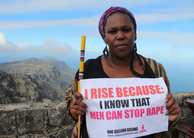
"I rape because of the need. After that I feel like a man." These are the words of a rebel soldier who ruthlessly roams the forests of the Democratic Republic of Congo (DRC) in search of his next victims. Rape has been used in the past during warfare... Read Article »
2011, Vol. 3 No. 09
Since the early 1990s, rampant piracy off the coast of Somalia has become a major issue for global trade and security, prompting strong responses from the international community. In 2010 alone, the collective cost of ransom money, military protection... Read Article »
2011, Vol. 3 No. 08
Somalia is home to roughly 9 million people, the overwhelming majority of whom are ethnic Somalis (UN Statistics Division 2010). The country has been plagued with conflict and disorder beginning just years after it attained independence. Following... Read Article »
2011, Vol. 3 No. 07
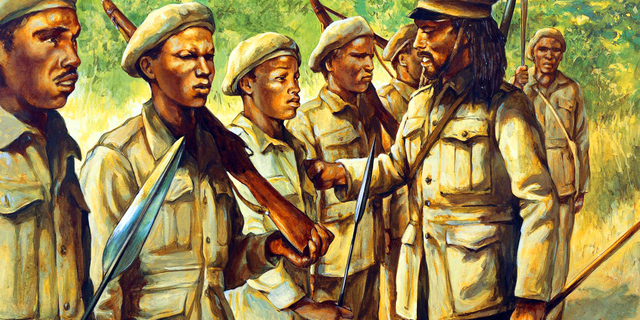
This proverb sadly encapsulates the reality of existence for the Zulu people in the last two centuries. Ripped from their positions of power and tossed into the pits of despair, life as they once knew it changed drastically. Nelson Mandela once... Read Article »
2011, Vol. 3 No. 04
The problems associated with democratic reform in the Democratic Republic of the Congo (DRC) are manifold. While the name of the country surely lends itself to an assumption of regime type, in actuality, this area has experienced great civil unrest... Read Article »
2011, Vol. 3 No. 03
Violence undermines an inclusive national identity that considers those of other races, classes and creeds as compatriots, for as Mirowsky and Ross (1983: 238) note, “When other people in one’s life have become a hostile army, social... Read Article »
2011, Vol. 3 No. 01
Dealing with the issue of healthcare is no small challenge for any country, either rich or poor. For Ethipoia, health issues represent a major challenge. Tuberculosis, malaria, mental illnesses, and especially HIV/AIDS are health issues with which... Read Article »
2011, Vol. 3 No. 01
Although peace and pacifism are familiar ideas to most students today, for much of human history these concepts have been relegated to the religious domain and excluded from the study and practice of politics.[1] At the same time, war--organized... Read Article »
2010, Vol. 4 No. 1
The Niger Delta conflict is one created and exacerbated by the oil and natural gas riches of the region. Great hydrocarbon wealth has been extracted over the past decades, yet Delta residents continue to live in underdeveloped and polluted circumstances... Read Article »
2010, Vol. 2 No. 09
A country of approximately 37 million people, Kenya has struggled to build a health system that can effectively deliver quality health services to its population. Access to health care varies widely throughout the country and is determined on numerous... Read Article »
2010, Vol. 2 No. 09
Postcolonial Kenya has seen a significant amount of development, both politically and economically, since its independence in 1963. Starting with the presidency of Jomo Kenyatta, the nation prospered -- experiencing economic growth of at least 5... Read Article »
2010, Vol. 2 No. 06
Conflict management in the Horn of Africa has been relatively unsuccessful. Foreign colonialism created boundaries that have yet to be resolved, and newly independent nations engaged in conflicts responsible for human rights atrocities, child conscription... Read Article »
2010, Vol. 2 No. 05
There is a growing consensus that the prevalence of a large youth population is not conducive to peace and that such a ‘youth bulge’ can even increase the risk of civil conflict and political violence.[1] Richard Cincotta and Elizabeth... Read Article »
2010, Vol. 3 No. 2
In 1980, Robert Mugabe became the first leader of a free Zimbabwe after fighting a bitter and ultimately successful struggle against white minority rule in Rhodesia. Independence and the country's role as the "breadbasket" of southern Africa brought... Read Article »
2010, Vol. 2 No. 04
Angola today is framed by a history of violent conflict that has left the population far behind on all major indicators. Lacking a democratic culture, the country faces two significant challenges: first, the challenge of completing a long-stalled... Read Article »
2010, Vol. 2 No. 01
In 1994 South Africa's regime of apartheid, under which the black majority was suppressed and discriminated against by the white minority, came to an end.1The African National Congress (ANC) won the first free elections in the same year, and the... Read Article »
2009, Vol. 3 No. 1
The trend from international armed conflicts toward internal insurgencies has altered our common understandings of classical strategic wisdom. While traditionally under the politics of imperialism, wars were settled with the winning state’... Read Article »
2009, Vol. 1 No. 10
The Human Immunodeficiency Virus (HIV) originated in Africa. According to current estimates, the disease first infected humans in the 1930s, spreading outward in its formative years to the world beyond.6:1 It was nevertheless not until 1983 that... Read Article »
2009, Vol. 2 No. 2
Regionalism—the efforts of a group of nations to enhance their economic, political, social, and cultural interaction—can assume various forms, including regional integration/cooperation, market integration, development integration, with... Read Article »
Expedited Article Review
Submit an article and get a decision fast.
If you need a fast decision, INQUIRIES Journal offers expedited processing of your submission for a small fee. Depending on the expedited review option you choose, you can receive a decision in as few as 5-days.
In addition to a shorter review period, the fee supports the journal's continued operation and open-access publishing model. Standard submissions are always free. Submit Now » - Submit an Article to Inquiries Journal -
|