John Locke on Equality, Toleration, and the Atheist Exception
By
2009, Vol. 1 No. 12 | pg. 1/2 | »
KEYWORDS:
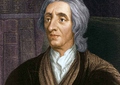
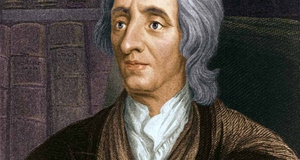
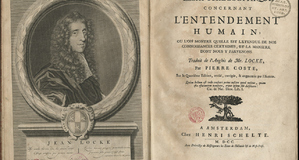
Political philosopher and social psychologist, John Locke was an outspoken supporter of equal rights within a governed society. He espoused the natural rights of man, namely the right to life, liberty and property, and he articulated that every government’s purpose is to secure these rights for its nationals. He was a social contract theorist, believing that the legitimacy of government relies on consent from its citizens which is given on the basis of equality. Locke’s view of equality was not limited to the political realm; he also promoted religious toleration, with atheism being the one notable exception. He supported general toleration of alternative religious beliefs but encouraged the ex-communication of non-believers. In order to understand both the progressive areas of Locke’s philosophy and the dogmatic ones, it is necessary to analyze his political and religious understanding of life, for these things inform his moral code and explain the seemingly contrary ideas of his philosophy. The analysis of Locke’s theory follows a kind of chronology, beginning with the presence of equality in the ‘state of nature’.This idea of natural equality transitions into the state as men leave the ‘state of nature’ and enter into society. Then once a government is established, the role of equality can be analyzed from a social perspective, which is when the idea of religious toleration comes into play. Before there is a government and a nation, man lives in a state of nature where he is guided by the laws of nature as God intended. Locke begins his Second Treatise of Government establishing truths of nature mainly that God is the creator and he did not grant superiority to any individuals in modern day society, as was often argued in the past. Locke states, “In races of mankind and families of the world, there remains not to one above another, the least pretence to be the eldest house” (Locke, Treatise, 7). Here he discards the notion of royal or noble superiority that reigned supreme in his day and, more importantly, he establishes general equality of all. Thus the importance of equality comes from its existence in the state of nature. The basis of the social contract lies in mutual consent, and man, coming from a state of “perfect freedom” (Locke, Treatise, 8) and equality would not be willing to settle for less when he leaves the state of nature. Locke describes the state of nature as one “of equality, wherein all the power and jurisdiction is reciprocal, no one having more than another; there being nothing more evident, than that creature of the same species and rank, promiscuously born to all the same advantages of nature, and the use of the same faculties, should also be equal one amongst another without subordination or subjection” (Locke, Treatise, 8). Because man is free and equal in the state of nature, he must be assured that he will still be so when he enters society, thus for Locke the establishment of the state occurs on the basis of assured equality without which there would be no incentive to enter into society. Equality is the driving force of Locke's political theory because it is the basis for our consensual participation in society, a requisite for the establishment of any state. As such, equality is not just necessary in the establishment of government but is also a requisite in maintaining a safe and stable nation. Locke describes the responsibility of the government (specifically the legislative power) as “the preservation of the society, and of every person in it” (Locke, Treatise, 69), showing his belief that the obligations of the government are to provide safety and protection to all its citizens equally. Locke further articulates this point when he discusses his view on slavery. To be enslaved is to be put “under the absolute, arbitrary power of another” (Locke, Treatise, 17) which puts those involved into a ‘state of war’. His definition of slavery is not traditional, particularly because of its connection to the ‘state of war’ which is one of “enmity, malice, violence and mutual destruction” (Locke, Treatise, 15) for all involved which is in the disinterest of society and contrary to the goals of the state. More importantly, “when the actual force is over, the state of war ceases between those that are in society, and are equally on both sides subjected to the fair determination of the law” (Locke, Treatise, 15). So we see that for Locke, equality must exist in punishment as it does in protection, at all levels of society, in all aspects of government. It should also be noted that Locke’s interpretation of freedom and liberty are directly associated with equality. In his discussion of slavery, Locke describes freedom as “not to be subject to the inconstant, uncertain, unknown, arbitrary will of another man” (Locke, Treatise, 17) This describes an equal distribution of power. Liberty is described as the following; “my own will in all things, where the rule prescribes not” (Locke, Treatise, 17). Both liberty and freedom only exist in a state where they are applied evenly, or else they exist for a tyrant(s) in a state of war. Most importantly, upon entering society individuals are required to alienate a modicum of freedom and liberty, but full equality can (theoretically) never be compromised. In spite of legislation protecting each individual, conflict will inevitably erupt, if not between a government and its people then among the people themselves. This of course will impact the state and inevitably require response. It is in this perspective that Locke writes A Letter Concerning Toleration, addressing the issue of religious intolerance, a problem that permeated 17th century English society. He was extremely critical of the fervent behavior of people concerning their religious beliefs, particularly of those with “intemperate zeal” (Locke, Toleration, 9) who would attempt to convert others to their faith. He states; “That any man should think fit to cause another man — whose salvation he heartily desires — to expire in torments, and that even in an unconverted state, would, I confess, seem very strange to me, and I think, to any other also. But nobody, surely, will ever believe that such a carriage can proceed from charity, love, or goodwill” (Locke, Toleration, 2) Locke suspects that many missionaries and evangelizing magistrates are doing so for personal gain. As Black points out “it is a consequence of his mitigated skepticism that Locke advocates a duty of religious toleration” (473). Moreover, the violent tactics that were used and the punishments inflicted on those unwilling to convert were wholly unchristian and would lead to a state of war between the parties involved. Locke articulates this concern clearly in A Letter Concerning Toleration when he says; “No one…neither single persons nor churches, nay, nor even commonwealths, have any just title to invade the civil rights or worldly goods of each other on pretence of religion. Those that are of another opinion would do well to consider with themselves how pernicious a seed of discord and war, how powerful a provocation to endless hatreds, rapines, and slaughters they thereby furnish to mankind. No peace and security, no, not so much as common friendship, can ever be established or preserved amongst men so long as this opinion prevails, that dominion is founded in grace and that religion is to be propagated by force of arms” (Locke,8). Locke is adamant in his criticism of religious fanaticism and forcefulness and goes onto advocate a separation between Church and State; one of the first, if not the first, modern philosophers to do so. In support of this severance he says; “I esteem it above all things necessary to distinguish exactly the business of civil government from that of religion and to settle the just bounds that lie between the one and the other” (Locke, Toleration, 2). This philosophy is in fact the basis for modern democracy and a cornerstone of the American constitution. The term ‘separation of Church and State’ was coined by Thomas Jefferson, who was greatly influenced by Locke’s writings. Locke feared, as is still a concern today, that without a clear distinction between the two, the care of the commonwealth will be distorted by personal beliefs and will not be the priority, as it should be. Every member of the commonwealth, regardless of affiliation, merits equality under the law. Everyone that is, except for atheists, according to Locke. It seems odd, given his strong belief in toleration that Locke would encourage any exceptions. The irony is that it is his devout religious beliefs that lead him to the exclusion of atheists from societal favor. Locke believed that there is a distinct and inseparable connection between religion and morality. Without the acceptance of God, or any supreme and omnipotent being, as a basic truth, one’s morals and ethics were questionable at best. In Locke’s Essay Concerning Human Understanding, he discusses the progression of man’s thought process; how we develop opinions and ideas, as well as the role religion plays in our general understanding of life. Locke sees the human mind as a sort of blank slate at birth that develops over time through the use of our senses (sight, sound, taste), through the comparison of ideas and experiences (he uses the example of tasting something sweet and something bitter) and through lessons taught by our superiors and the society we live in. These variables create for each of us our individual experience, which informs our belief system. This is, in fact, one reason Locke advocates toleration. “He reckons that human beings should, as a general rule, enjoy freedom of the understanding” and that “the state has a duty to respect freedom of the understanding on matters of religion” (Black, 473). Our understanding is a direct result of our personal experiences and according to Locke we should all have the freedom of our minds. However, because Locke believes that there are no innate beliefs, morals have to be acquired through experience which for most people happens through religious teachings. As has already been established, the main priority of the state is security/protection for the members of the commonwealth. For Locke, morality must be present among the people to maintain the functioning of the state; and he does not view morality as subjective but as something that one must become enlightened to. Locke explains this clearly in his Essay Concerning Human Understanding; “They [morals] lie not open as natural characters engraved on the mind; which, if any such were, they must needs be visible by themselves, and by there own light be certain and known to everybody. But this is no degradation to there truth and certainty; no more than it is to the truth and certainty of the three angles of a triangle being equal to two right ones because it is not so evident as ‘the whole is bigger than a part,’ not so apt to be assented to at first hearing. It may suffice that these moral rules are capable of demonstrating: and therefore it is our own faults if we come not to a certain knowledge of them. But the ignorance wherein many men are of them, and the slowness of assent wherewith others receive them are manifest proofs that they are not innate, and as such offer themselves to their view without searching” (Locke, Essay, 26). Morals are clearly not a matter of pre-existing ideas, but this does not take away from their legitimacy. They must be learned like the function and application of mathematics. Morals are truths which are revealed to us once we are intellectually capable of comprehending them. Those who do not recognize the validity of certain morals are ignorant, but more importantly they are a threat to the stability of the state. Locke uses an interesting example to prove this point in saying; “even outlaws and robbers, who break with all the world besides, must keep faith and rules of equity amongst themselves; or else they cannot hold together” (Locke, Essay, 27). Social groups develop similar moral/ethical codes, just like society does, out of practicality. As Locke points out, this is even true among criminals, because society requires a certain level of predictability to function.Continued on Next Page » 
From the Inquiries Journal Blog   Related ReadingMonthly Newsletter SignupThe newsletter highlights recent selections from the journal and useful tips from our blog. Suggested Reading from Inquiries Journal
Inquiries Journal provides undergraduate and graduate students around the world a platform for the wide dissemination of academic work over a range of core disciplines. Representing the work of students from hundreds of institutions around the globe, Inquiries Journal's large database of academic articles is completely free. Learn more | Blog | Submit Follow IJ


Latest in Political Science |