|
Africa (tagged articles)
The keyword Africa is tagged in the following 95 articles.
2022, Vol. 14 No. 01
This article explores the political relationship between nation-building, ethnicity, and democracy in the context of Ethiopia. It traces Ethiopia's poltical history, explores the consequential role ethnicity has played in the formation of the modern... Read Article »
2022, Vol. 14 No. 01
Despite the focus of scholars on the repressive elements of Mobutu’s Reign, “The rumble in the Jungle,” abacost jackets and the return to “authenticité” instead form the core of the 32-year reign of dictator... Read Article »
2021, Vol. 13 No. 02
Traditional slave narratives follow a set of conventions that helped abolitionists recognize them as factual and trustworthy stories. Previously enslaved authors subverted those conventions to take control of their narratives and expose white abolitionists... Read Article »
2021, Vol. 13 No. 01
The postsecular turn of the late 1990’s refers to the emergence of a critical theory which challenges an important modern assumption: that secular ideologies are inherently more valid and truthful than religious ideologies. Other developments... Read Article »
2020, Vol. 12 No. 11
The African National Congress is widely credited as the institutional body that effectuated the fall of Apartheid in South Africa. While the formal actions of the ANC enfeebled the National Party, the political party only represents one source of... Read Article »
2018, Vol. 10 No. 03
On February 14th, 1965, just one week before he was assassinated, Malcolm X delivered a speech in Detroit. He spoke about his beliefs concerning segregation and civil rights, and made a point of contextualizing the civil rights movement globally... Read Article »
2017, Vol. 11 No. 1
As with much of the African continent, the Congo endured a harsh colonial past. What trailed, after its 1960 independence from Belgium, also followed a similar trend of its continental neighbors – continued foreign meddling. At the outset,... Read Article »
2017, Vol. 11 No. 1
By using an incentives/disincentives model to map the divergent behaviors of multinational corporations (MNCs) confronted by a sanctioned economy, I explain why some economic sanctions work better than others at achieving their desired political... Read Article »
2017, Vol. 9 No. 11
The period of time from the Bebop era to the present—mid-1940s onwards—has been an era of great cultural evolution in the United States, and in few groups more so than the African American community. A factor particularly significant... Read Article »
2017, Vol. 9 No. 11
South Sudan is the youngest and one of the most volatile nations in the world. After two decades of war, it gained its independence from Sudan in 2011. Peace, however, was short-lived. As oil prices plummeted and competition intensified, an ill-... Read Article »
2017, Vol. 9 No. 10
“As Roman imperialism laid the foundations of the modern civilization, and led the wild barbarians of these islands along the path of progress, so in Africa today we are repaying the debt, and bringing to the dark places of the earth, the... Read Article »
2017, Vol. 9 No. 04
Music functions as a source of healing in Toni Morrison’s Jazz, both to the bird who is inexplicably sad and for the broken relationship between Violet and Joe, the novel’s two main adult characters. The bird cheers up and regains its... Read Article »
2017, Vol. 9 No. 02
The ancient civilization of Ethiopia has captivated the West and served, across centuries, as an inspiration for much of Africa. As a regional power in Eastern Africa, the nation is a strategic pathway into the Horn of Africa and guiding force in... Read Article »
2017, Vol. 9 No. 02
Following the failure of Structural Adjustment Programmes (SAPs) in the 1980s, and the liberal triumphalism caused by the end of the Cold War, development discourse underwent a significant transformation. Key to the new development paradigm was... Read Article »
2016, Vol. 10 No. 1
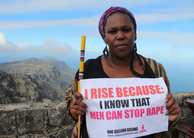
"One thing governments have got is legislation. Legislation has an impact. It affects millions of people in a country just by a stroke of a pen." – Executive Director of UN Women, Dr. Phumzile Mlambo-Ngcuka, "Gender and Violence... Read Article »
2016, Vol. 6 No. 1
For the past four decades, pastoralist activities have been pushed to marginal areas in several regions of Ethiopia. This change was initiated by the Agrarian Land Reform Proclamation of 1974. Pastoralist activities prior to the agrarian reforms... Read Article »
2016, Vol. 8 No. 06
In their search for a new development paradigm, many African governments and international organizations have reverted to cooperatives, a distinct business model that manifest a turbulent history ranging from pre-colonial to colonial and post-independence... Read Article »
2016, Vol. 8 No. 05
This paper examines two influential slave uprisings and the treatment these received by both the abolitionist movement and the press. The first section explores the country’s reaction to John Brown’s raid on Harper’s Ferry, as... Read Article »
2016, Vol. 9 No. 2
Four decades after independence from Portugal, Angola remains a country with significant barriers to good governance and social development. Although the state's constitution established a multiparty democracy in the early 1990s, measures of high... Read Article »
2015, Vol. 2 No. 1
This paper seeks to address one of the most common critiques of Asian firms doing business in Africa: that low levels of corporate governance and poor managerial practices have undermined anti-corruption efforts throughout the continent. The paper... Read Article »
2016, Vol. 8 No. 03
Developing states with large natural resource industries have an inclination to become over-reliant on one source of capital, causing other industries to fail, promoting corruption, and stimulating crime. Nigeria is one such case, as their booming... Read Article »
2015, Vol. 6 No. 1
Acquired Immune Deficiency Syndrome (AIDS) has ravaged sub-Saharan Africa in the decades since its first recorded case. The disease has reached epidemic levels in many regions, with millions of new cases diagnosed each year. This paper examines... Read Article »
2015, Vol. 6 No. 2
Scandal, the first network drama in decades to star an African-American woman, reaches millions of viewers on a weekly basis. This study examined if main character Olivia Pope is a reflection of popular AfricanAmerican female stereotypes in television... Read Article »
2015, Vol. 7 No. 11
The traditional mourning and burial rituals common in West Africa played a key role in the recent Ebola epidemic focused in Liberia, Sierra Leone and Guinea. One issue that arose during the height of the outbreak was misunderstanding of burial practices... Read Article »
2015, Vol. 7 No. 10
People love a good story. A good story can be intriguingly informative, a good story can well up deep emotions and a good story can carry culture, history and tradition. It was through storytelling that many ancient cultures preserved and passed... Read Article »
2015, Vol. 7 No. 10
This paper address two overarching research questions: first, what is the role of religion in transitional justice? Second, does the religious approach to transitional justice differ from the secular approach, and if so, how? In a theoretical section... Read Article »
2015, Vol. 7 No. 09
In Media Representations and the Global Imagination, Orgad (2012) addresses the division between content and interpretative analyses of media representations in critical theory research (36). This paper attempts a marriage of structural and cultural... Read Article »
2015, Vol. 7 No. 07
Between 1991 and 2002, the small West African coastal state of Sierra Leone was rocked by a brutal civil war, which killed, injured, displaced, and traumatized millions of men, women, and children. In the aftermath of the conflict, local political... Read Article »
2015, Vol. 7 No. 03
Violence against women has recently become well recognized as a violation of human rights that holds worldwide significance. Unfortunately, violence against women outside of North America has gone largely unnoticed among the academic community and... Read Article »
2015, Vol. 7 No. 02
During World War II, the black press and several prominent black leaders called for a “Double V” victory against fascism abroad and against Jim Crow at home. With such a slogan, many historians regarded this campaign as the groundwork... Read Article »
2015, Vol. 7 No. 02
The presidential campaign of Barack Obama was met with enthusiasm and controversy. If you were alive and cognizant at the time, you understood the importance and historic value of the 2008 election no matter your position. Barack Obama, the Hawaii... Read Article »
2014, Vol. 2014 No. 1
On May 18th, 2000, the United States enacted the African Growth and Opportunity Act (AGOA), dramatically expanding trade between itself and Sub-Saharan Africa over the following decade. Yet whereas previous studies in the literature have often sought... Read Article »
2014, Vol. 6 No. 11
Rural populations in sub-Saharan Africa often suffer from a lack of access to transportation. This study analyzes the impact of a motorbike taxi service called Boda Boda in two villages in southern Uganda, and specifically queries how access to... Read Article »
2014, Vol. 8 No. 1
The formation and expansion of the U.S. Africa Command (USAFRICOM) signals the increasing strategic importance of Africa to U.S. security interests, especially in light of the 2014 U.S.- Africa Leaders Summit on strategic relations. USAFRICOM is... Read Article »
2014, Vol. 6 No. 06
As an African American author, Toni Morrison is acutely aware of the pain that is intertwined with the history of her history. She articulates the debilitating physical and psychological strain that slavery, prejudices, and discrimination placed... Read Article »
2014, Vol. 6 No. 06
UNAIDS reports the antenatal HIV prevalence rate—the prevalence of HIV in unborn children—to be approximately 38% in Swaziland, Africa (UNAIDS 2012), the highest rate in the world (Root 2010). Diagnosed through an HIV antibody test or... Read Article »
2014, Vol. 6 No. 03
The creation of western-style government institutions has been unsuccessful in Somalia. This is a direct result of colonial administrations not laying the proper foundation for western government institutions to achieve legitimacy in a culture of... Read Article »
2013, Vol. 4 No. 1
This study provides an overview of the international development field's attention to urbanization. Despite cities being proven the largest hubs of development for the industrializing world, patterns in urban areas often behave much differently... Read Article »
2013, Vol. 4 No. 1
The rise of Islamist militant groups and their propensity towards violence has perplexed researchers and policy-makers and lead to debate about how to handle this evolving asymmetric threat. However the general focus of past research has been on... Read Article »
2013, Vol. 4 No. 1
This article compares the media's framing of five groups in response to a societal catalyst that propelled them into the public and media spotlight: Native Americans during the Indian Wars; women during the suffrage movement; African Americans during... Read Article »
2013, Vol. 7 No. 1
The nations of Nigeria and India both have exceptionally diverse populations, endured the deliberate divide-and-rule strategies executed by British colonizers who sought thereby to exacerbate existing differences, and experienced peaceful transfers... Read Article »
2013, Vol. 7 No. 1
Why did Sierra Leone experience such a protracted civil war between 1991 and 2002? Sierra Leone has been beset with challenges since achieving independence from Britain in 1961, in particular its brutal civil war that resulted in tens of thousands... Read Article »
2013, Vol. 5 No. 10
The Second Boer War (1899‑1902) was costly for Great Britain and the semi‑independent South African Republic (Transvaal). It strained political relations between the British and the Boers, who did not gain independence from the United... Read Article »
2013, Vol. 6 No. 2
"In addition to the disturbing influence of racial friction, the nationalist movement in Africa is further harassed by the machinations of international Communism, forever seeking to turn fluid situations to advantage for the Communist bloc." &ndash... Read Article »
2013, Vol. 6 No. 2
"If you wish to fault the administration, it's that we didn't have a clear picture, and we probably didn't do as clear a job explaining that we did not have a clear picture, until days later, creating what I think are legitimate questions." U.S.... Read Article »
2013, Vol. 5 No. 03
This essay examines the first black winner in 2012 on Idols SA, Khaya Mthethwa (Appendix 1), the TV format of the Idol brand, and the social construction of racialized vision in the context of South Africa as a post-colonial nation from a visual... Read Article »
2012, Vol. 4 No. 12
In May 1991, Somaliland emerged as a self-declared independent state in the aftermath of the failure and subsequent collapse of Siyad Barre’s Somalia. Although ethnically and linguistically Somalilanders are undifferentiated from their counterparts... Read Article »
2012, Vol. 6 No. 1
With the recognition that sex workers constitute a key population at higher risk for the acquisition and dissemination of sexually transmitted infections (STIs) has come an appreciation of the central role that they might assume in policy solutions... Read Article »
2012, Vol. 1 No. 1
Despite a proliferation of non-governmental organizations (NGOs) and community-based organizations (CBOs) in Kibera, the largest informal settlement in Kenya, conditions for residents remain bleak. CBOs are uniquely positioned to catalyze change... Read Article »
2012, Vol. 4 No. 05
Zora Neale Hurston is the author of the acclaimed short story Sweat. The story was published in 1926, an incredible accomplishment considering the obstacles faced by black female authors at the time. Viewing the piece through the lens of feminist... Read Article »
2012, Vol. 5 No. 2
For roughly a decade, Côte d'Ivoire has been bitterly divided by a civil war between its dry Muslim north and its fertile Christian south. Many commentators have attempted to ascribe cultural or social origins to this war, casting it as an... Read Article »
2012, Vol. 5 No. 2
"I rape because of the need. After that I feel like a man." These are the words of a rebel soldier who ruthlessly roams the forests of the Democratic Republic of Congo (DRC) in search of his next victims. Rape has been used in the past during warfare... Read Article »
2012, Vol. 4 No. 02
In James Kirkup and Ernest Jones’ English translation of Camara Laye’s 1953 autobiography, The Dark Child, there is a significant stylistic decision in the final sentence. Kirkup and Jones’ version reads: “Later on I felt... Read Article »
2012, Vol. 2011/2012 No. 2
During the armed conflict to topple Muammar Gaddafi in Libya, a common question for observers was “who are the Libyan opposition?” Indeed, for one scholar this was the ‘billion dollar question’,1 and, in the United States... Read Article »
2011, Vol. 3 No. 10
Domestic fiction reigned in women’s literature during the nineteenth-century. These narratives defined ”True Womanhood,” where the female exemplified four pillars: piety, purity, domesticity, and submissiveness. They are meant... Read Article »
2011, Vol. 3 No. 09
Since the early 1990s, rampant piracy off the coast of Somalia has become a major issue for global trade and security, prompting strong responses from the international community. In 2010 alone, the collective cost of ransom money, military protection... Read Article »
2011, Vol. 3 No. 09
In the era since the removal of the monarchy in Egypt, a distance seems to have developed between the Egyptian people and the African aspect of their identity. This kind of sentiment has also been corroborated by Egypt’s elite such as Isma... Read Article »
2011, Vol. 3 No. 08
Somalia is home to roughly 9 million people, the overwhelming majority of whom are ethnic Somalis (UN Statistics Division 2010). The country has been plagued with conflict and disorder beginning just years after it attained independence. Following... Read Article »
2011, Vol. 3 No. 07
This proverb sadly encapsulates the reality of existence for the Zulu people in the last two centuries. Ripped from their positions of power and tossed into the pits of despair, life as they once knew it changed drastically. Nelson Mandela once... Read Article »
2011, Vol. 3 No. 06
To assume the task of narrating the history of an overtly oppressed race is a daunting responsibility. Nonetheless, Edward Kennedy Ellington undertook this task in composing the multi-movement jazz suite Black, Brown, and Beige. Originally debuted... Read Article »
2011, Vol. 3 No. 06
Jazz is not a solitary art. Its form does not only reveal itself in the music. Jazz finds manifestation in many other forms of expression, including the powerful narratives encompassing jazz literature. In all of its modes, jazz narrates a people... Read Article »
2011, Vol. 3 No. 05
The historic 1962 conference at Makerere University in Kampala, Uganda brought together scholars and writers from various parts of the continent to discuss the state of African literature: who should write it, what it should depict, and –... Read Article »
2011, Vol. 3 No. 04
The problems associated with democratic reform in the Democratic Republic of the Congo (DRC) are manifold. While the name of the country surely lends itself to an assumption of regime type, in actuality, this area has experienced great civil unrest... Read Article »
2011, Vol. 3 No. 04
Following a successful war of liberation in 1962, Algeria successfully gained independence from France and an authoritarian social regime took power. The success of this government lasted into the 1980s, when Algeria's oil reserves began to decline... Read Article »
2011, Vol. 3 No. 03
Violence undermines an inclusive national identity that considers those of other races, classes and creeds as compatriots, for as Mirowsky and Ross (1983: 238) note, “When other people in one’s life have become a hostile army, social... Read Article »
2011, Vol. 3 No. 01
For many decades, scholars have debated the importance of religion in helping slaves cope with the horrible experience of slavery in the antebellum South. However, the way they treated the subject differs and the conclusions they reached are varied... Read Article »
2011, Vol. 3 No. 01
Dealing with the issue of healthcare is no small challenge for any country, either rich or poor. For Ethipoia, health issues represent a major challenge. Tuberculosis, malaria, mental illnesses, and especially HIV/AIDS are health issues with which... Read Article »
2011, Vol. 3 No. 01
August Wilson represents the experiences of African-Americans in each decade of the 20th century in his Pittsburgh Cycle, a collection of ten plays. Throughout this canon, language is used not just as an important form of communication amongst... Read Article »
2011, Vol. 3 No. 01
Although peace and pacifism are familiar ideas to most students today, for much of human history these concepts have been relegated to the religious domain and excluded from the study and practice of politics.[1] At the same time, war--organized... Read Article »
2010, Vol. 4 No. 1
The Niger Delta conflict is one created and exacerbated by the oil and natural gas riches of the region. Great hydrocarbon wealth has been extracted over the past decades, yet Delta residents continue to live in underdeveloped and polluted circumstances... Read Article »
2010, Vol. 2 No. 09
A country of approximately 37 million people, Kenya has struggled to build a health system that can effectively deliver quality health services to its population. Access to health care varies widely throughout the country and is determined on numerous... Read Article »
2010, Vol. 2 No. 09
Postcolonial Kenya has seen a significant amount of development, both politically and economically, since its independence in 1963. Starting with the presidency of Jomo Kenyatta, the nation prospered -- experiencing economic growth of at least 5... Read Article »
2010, Vol. 2 No. 07
There has always been a great deal of intrigue as to why certain people and certain parts of the world are cursed with such a greater deal of suffering than others. Over time certain societies have developed through a series of phases of modernity... Read Article »
2010, Vol. 2 No. 06
“A song is something that we communicate to those people who otherwise would not understand where we are coming from. You could give them a long political speech – they would still not understand. But I tell you: when you finish that... Read Article »
2010, Vol. 2 No. 06
Conflict management in the Horn of Africa has been relatively unsuccessful. Foreign colonialism created boundaries that have yet to be resolved, and newly independent nations engaged in conflicts responsible for human rights atrocities, child conscription... Read Article »
2010, Vol. 2 No. 05
There is a growing consensus that the prevalence of a large youth population is not conducive to peace and that such a ‘youth bulge’ can even increase the risk of civil conflict and political violence.[1] Richard Cincotta and Elizabeth... Read Article »
2010, Vol. 2 No. 04
“You don’t do any singing, you’re too busy swinging”[i]. Thus spoke Malcolm X. He promulgated the new paradigm of anti-nonviolence[ii] he helped popularize during the 1960s. It had been around a decade since Brown v. Board... Read Article »
2010, Vol. 3 No. 2
In 1980, Robert Mugabe became the first leader of a free Zimbabwe after fighting a bitter and ultimately successful struggle against white minority rule in Rhodesia. Independence and the country's role as the "breadbasket" of southern Africa brought... Read Article »
2010, Vol. 2 No. 04
Peter Kubelka’s 1966 film “Unsere Afrikareise” or “Our Trip to Africa” is a remarkably unique bit of filmmaking. Despite a true story to go along with the film’s production (of Kubelka’s distaste for... Read Article »
2010, Vol. 2 No. 04
Angola today is framed by a history of violent conflict that has left the population far behind on all major indicators. Lacking a democratic culture, the country faces two significant challenges: first, the challenge of completing a long-stalled... Read Article »
2010, Vol. 2 No. 02
In the days of past, the clarion call and mission of the black church was two-fold: it served as a beacon of hope for the lost-soul seeking grace and mercy, but it also functioned as an oasis for all issues affecting the community. The black church... Read Article »
2010, Vol. 2 No. 01
After the wave of liberalization of many African states in the late twentieth-century, the world has seen a rise in the amount of international and internal conflicts that have taken thousands of human lives. Ethnic tensions and economic hardships... Read Article »
2010, Vol. 2 No. 01
In 1994 South Africa's regime of apartheid, under which the black majority was suppressed and discriminated against by the white minority, came to an end.1The African National Congress (ANC) won the first free elections in the same year, and the... Read Article »
2009, Vol. 1 No. 12
The autobiography Black Boy, by Richard Wright, is a tale of hope and determination. It catalogues Wright’s life growing up as an African-American in Jim Crow South, depicting the economic and social struggles that were stereotypical for African... Read Article »
2009, Vol. 1 No. 11
In less than one year, South Africa will be the proud host of the 2010 World Cup. To many, this privilege is a mere formality of the Cup. Indeed, hosting the World Cup is an honor, but for South Africa it symbolizes a far more complex idea. A history... Read Article »
2009, Vol. 1 No. 11
Derek Walcott’s “A Far Cry from Africa” expresses how Walcott is torn between “ Africa and the English tongue [he] love[s]” (30). Several of Walcott’s poems – “The Schooner Flight” and Omeros &... Read Article »
2009, Vol. 1 No. 11
Within the cultural framework of America, the systemic structure is characterized by White male patriarchy that allows for Black males to have the ability to negotiate the way in which they have been socialized and institutionalized to think, act... Read Article »
2009, Vol. 3 No. 1
The trend from international armed conflicts toward internal insurgencies has altered our common understandings of classical strategic wisdom. While traditionally under the politics of imperialism, wars were settled with the winning state’... Read Article »
2009, Vol. 1 No. 10
In her article, “Amen and Hallelujah preaching: Discourse functions in African American sermons,” Cheryl Wharry examines the use of “sermonic expressions” by African American preachers to denote textual changes, to mark rhythm... Read Article »
2009, Vol. 1 No. 10
Before World War II it was stated fairly, “The sun never set on the British Empire.” For decades, this was true: the British colonial Empire touched all corners of the globe. After the War concluded, however, a worldwide process of decolonization... Read Article »
2009, Vol. 1 No. 10
The Human Immunodeficiency Virus (HIV) originated in Africa. According to current estimates, the disease first infected humans in the 1930s, spreading outward in its formative years to the world beyond.6:1 It was nevertheless not until 1983 that... Read Article »
2009, Vol. 2 No. 2
Regionalism—the efforts of a group of nations to enhance their economic, political, social, and cultural interaction—can assume various forms, including regional integration/cooperation, market integration, development integration, with... Read Article »
2007, Vol. 1 No. 1
In Washington as in Peking, in Beirut as in Bamako, the question is asked of us: what is the European Union’s (EU) foreign policy? In Lisbon on October 18th, the 27 member states agreed to a first response on means and tools. With the creation... Read Article »
2007, Vol. 1 No. 1
China’s emergence as a key player in Africa, the impact of its presence and its challenges to traditional Western pre-eminence in African economies are among the hallmarks of the changing economic scenario in the twenty-first century. Beijing... Read Article »
1997, Vol. 1996/1997 No. 2
Africa has been portrayed as the dark continent in need of civilising, and its heathen peoples in need of enlightenment through enslavement and colonisation. Africa has been presented as a continent in the difficult throes of trying to become... Read Article »
Expedited Article Review
Submit an article and get a decision fast.
If you need a fast decision, INQUIRIES Journal offers expedited processing of your submission for a small fee. Depending on the expedited review option you choose, you can receive a decision in as few as 5-days.
In addition to a shorter review period, the fee supports the journal's continued operation and open-access publishing model. Standard submissions are always free. Submit Now » - Submit an Article to Inquiries Journal -
|