|
India (tagged articles)
The keyword India is tagged in the following 28 articles.
2021, Vol. 13 No. 12
This research elucidates the striking parallelism between the Hindu Varna System and Plato's Magnificent Myth through an unorthodox view of their class-based classification, social mobility, and meritocracy while arguing that these stem from the... Read Article »
2021, Vol. 13 No. 02
Motherhood is an essential yet challenging feat that requires constant emotional, social, and physical support. Postpartum depression (PPD) is a devastating illness that has detrimental effects on both the mother and her child. PPD is a growing... Read Article »
2021, Vol. 13 No. 01
‘Article 15’, released in 2019 is the first mainstream Bollywood film to focus on caste based atrocities. It depicts several uncomfortable truths about our society and has been successful in sparking conversation about caste disparities... Read Article »
2020, Vol. 2020 No. 1
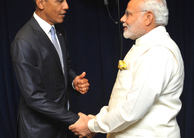
This research paper investigates the impact that the rhetoric of a populist conservative ethnic entrepreneur can have on ethnic conflict by analyzing the tweets of Indian Prime Minister Narendra Modi. Over the years, the emergence of right-wing... Read Article »
2019, Vol. 11 No. 10
This article aims to present the biopiracy of traditional knowledge from India by the United States, which has occurred directly through the use of patent law and indirectly through economic power and cultural imperialism. Throughout this essay,... Read Article »
2019, Vol. 11 No. 02
In recent years, climate change has been increasingly framed as a security issue, with some theorists going so far as to call it the most important security issue of the 21st century. This paper will examine the relationship between climate change... Read Article »
2017, Vol. 9 No. 11
Domestic violence in India poses an interesting paradox: in addition to being the most ubiquitous of basic human rights violations, it is also the least reported and discussed. The tightly patriarchal norms and structure of traditional Indian culture... Read Article »
2015, Vol. 2 No. 1
This paper seeks to address one of the most common critiques of Asian firms doing business in Africa: that low levels of corporate governance and poor managerial practices have undermined anti-corruption efforts throughout the continent. The paper... Read Article »
2016, Vol. 8 No. 03
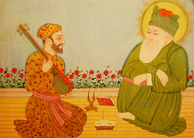
Ab'ul Hasan Yamīn ud-Dīn Khusrau (1253-1325) is one of the most celebrated poets of medieval India, writing both in Persian, the courtly language of Muslims of the Sultanate period, and Hindavī, the vernacular language of the Delhi area. Also... Read Article »
2016, Vol. 8 No. 01
Jalaluddin Mohammad Akbar is placed among the elite few in history; he is amongst the “Great”[1]. Popularly known for his liberal policies and just administration, he is remembered widely as an ideal ruler. It is almost dangerous, thus... Read Article »
2016, Vol. 9 No. 1
Starting with a high profile push through the region in 2011, the Obama Administration has made the "Pivot to Asia" a central part of American foreign policy. Enlisting regional partners who share strategic interests will be critical to ensuring... Read Article »
2015, Vol. 5 No. 1
Environmental communication is now an emerging and a significant curriculum from schools to research centers. The effective and efficient environmental communication occurs when learners interact with their surrounding environment/ecology in which... Read Article »
2015, Vol. 7 No. 08
Since Independence, the Indian government has struggled to achieve political modernity within acceptable religious boundaries. Religious diversity in India necessitates governmental sensitivity toward sometimes opposing principles, and yet, when... Read Article »
2015, Vol. 5 No. 1
As a predominantly rural and densely populated developing nation, India is positioned at the vanguard of the global debate surrounding GMOs. As concerns related to food security mount, what transpires in India is of great importance. Citizens' collective... Read Article »
2015, Vol. 11 No. 2
The level of gender violence against native women in the United States has reached epidemic proportions. Furthermore, the vast majority of Native American gender violence victims are abused at the hands of non-native men. Native American tribes... Read Article »
2014, Vol. 6 No. 08
To assert that Kashmir has been at a perennial crossroads is a gross understatement. For the good part of sixty years, Indian, Pakistani, and Kashmiri interests have been tussling over the disputed region. For the most part, though, the South Asian... Read Article »
2014, Vol. 1 No. 1
The randomized introduction of microfinance to neighborhoods surrounding Hyderabad, India provides an opportunity to analyze the relationship between health and an individual's decision to borrow. Employing the Abdul Latif Jameel Poverty Action... Read Article »
2008, Vol. 4 No. 1
Gavialis gangeticus, the Indian gharial, is the only extant gharial species in the world. The gharial is a large crocodilian in the family Gavialidae and is characterized by a long snout. Due to its sparse numbers and increased habitat destruction... Read Article »
2013, Vol. 7 No. 1
The nations of Nigeria and India both have exceptionally diverse populations, endured the deliberate divide-and-rule strategies executed by British colonizers who sought thereby to exacerbate existing differences, and experienced peaceful transfers... Read Article »
2013, Vol. 5 No. 10
Large-scale rural to urban migrations have been occurring in India in record numbers within the last thirty years, inflating the populations of urban centers, such as Delhi and Mumbai. Within these streams of migrations, the number of youth leaving... Read Article »
2013, Vol. 5 No. 09
In May 2012, Shakil Afridi received a sentence of thirty-three years “rigorous imprisonment” and a large fine for aiding foreign intelligence gatherers in their quest for Osama bin Laden. The Pakistani state did not charge Afridi &ndash... Read Article »
2012, Vol. 6 No. 1
Seymour M. Lipset dubbed economic development a “social requisite to democracy,” considering factors such as national wealth, a large degree of industrialization, and high levels of education to be necessary fertilizers to prepare a... Read Article »
2011, Vol. 3 No. 03
Tribal communities in India mainly consist of forest dwellers who have accumulated a rich knowledge on the uses of various forests and forest products over the centuries. According to Article 342 of the Indian Constitution, the Scheduled Tribes... Read Article »
2011, Vol. 3 No. 02
Elements of defiance in the face of traditionally European ideals and practices are evident throughout Luci Tapahonso’s 2008 A Radiant Curve, most notably in her use of French- and Italian-based forms for many of her poems. Her use of the... Read Article »
2010, Vol. 2 No. 04
In the collection of short stories, Interpreter of Maladies, Jhumpa Lahiri uses food and dining as a vehicle to display the deterioration of familial bonds, community, and culture through the transition from Indian to American ways of life. ... Read Article »
2009, Vol. 1 No. 11
In the latter part of the third century B.C. India was rapidly changing. The Mauryan dynasty was expanding across the sub-continent of India and the line of kings which had begun with Chandragupta had lost another of its sons, Bindusara. Bindusara... Read Article »
2009, Vol. 1 No. 10
Before World War II it was stated fairly, “The sun never set on the British Empire.” For decades, this was true: the British colonial Empire touched all corners of the globe. After the War concluded, however, a worldwide process of decolonization... Read Article »
2008, Vol. 1 No. 2
South Asia is not in itself the primary zone of interest of China. However, China has since long used the region’s dynamics to achieve some of its most important strategic goals. Moreover, since India wishes to establish “its rightful... Read Article »
Expedited Article Review
Submit an article and get a decision fast.
If you need a fast decision, INQUIRIES Journal offers expedited processing of your submission for a small fee. Depending on the expedited review option you choose, you can receive a decision in as few as 5-days.
In addition to a shorter review period, the fee supports the journal's continued operation and open-access publishing model. Standard submissions are always free. Submit Now » - Submit an Article to Inquiries Journal -
|