|
Slavery (tagged articles)
The keyword Slavery is tagged in the following 24 articles.
2021, Vol. 13 No. 05
Some scholars of American history suggest the institution of Slavery was dying out on the eve of the Civil War, implying the Civil War was fought over more generic, philosophical states' rights principles rather than Slavery itself. Economic evidence... Read Article »
2021, Vol. 13 No. 01
The Civil War was a seminal moment in the historical development in the United States. The American Revolution may have created the U.S. as a sovereign nation, but the Civil War helped to determine what kind of nation America would become. The Reconstruction... Read Article »
2020, Vol. 12 No. 11
Resistance to oppression is often found in the most unlikely of places. This article investigates the significance that families and partnerships played in fostering the emotional support necessary to sustain enslaved peoples throughout the onslaught... Read Article »
2019, Vol. 11 No. 04
A close scrutiny through a text-based analysis of Frederick Douglass’ Narrative of the Life Of Frederick Douglass, an American Slave, Written by Himself (1845), would reveal, unquestionably, that this narrative reflects the condition of the... Read Article »
2019, Vol. 11 No. 02
The Haitian Revolution of 1791 – 1804 was a successful slave rebellion in the French colony of Saint-Domingue that began in the wake of the French Revolution and went on to influence subsequent liberation movements for decades to come. The... Read Article »
2019, Vol. 11 No. 01
Until the outbreak of civil war, the United States would continually try and fail to subdue the existential threat of Slavery, with each attempt exacerbating the sectional tensions between slave and free states. In 1830, Massachusetts Senator Daniel... Read Article »
2017, Vol. 9 No. 10
Chocolate is a foodstuff that many people in the modern world take for granted; the sweet treat can today be found plentifully and cheaply in practically any store all across the globe, especially in the Euro-American world. Despite its commonplace... Read Article »
2017, Vol. 9 No. 05
Aphra Behn’s Oroonoko offers a complex representation of the semiotic and socio-political meaning of seventeenth-century torture and death and the intersectional manner in which physical agony coincides with authoritative colonial politics... Read Article »
2016, Vol. 8 No. 09
Solomon Northup’s Twelve Years a Slave (1853) provides a comprehensive first-hand account of Slavery that both corroborates and challenges Eugene Genovese’s argument in his later analysis of the institution of Slavery in The World the... Read Article »
2016, Vol. 8 No. 09
Afro-Pessimism forwards a crucially important foundation with which anyone concerned with forming Black resistance strategy should navigate. It accurately understands that Black life exists outside of the traditional humanist metric, and Blackness... Read Article »
2016, Vol. 8 No. 05
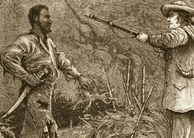
This paper examines two influential slave uprisings and the treatment these received by both the abolitionist movement and the press. The first section explores the country’s reaction to John Brown’s raid on Harper’s Ferry, as... Read Article »
2016, Vol. 8 No. 05
Our world has witnessed significant shifts, transformations, and evolution in government systems, the balance of power among nations, economics, the rights of men and women, and social structures and relationships over the past 500 years. However... Read Article »
2015, Vol. 2014/2015 No. 1
The role of personal property in our lives is one that to a very great extent we take for granted. We, in a crowded country such as the UK, all clearly understand that some things are ‘ours’, some things ‘others’ and some... Read Article »
2014, Vol. 6 No. 06
As an African American author, Toni Morrison is acutely aware of the pain that is intertwined with the history of her history. She articulates the debilitating physical and psychological strain that Slavery, prejudices, and discrimination placed... Read Article »
2014, Vol. 6 No. 04
Colonial-era fictional and non-fictional descriptions of slave motherhood offer conflicting accounts of the attitudes of slave mothers toward their children. While abolitionists tended to portray slave mothers as wholly selfless, doting, and maternal... Read Article »
2013, Vol. 5 No. 11
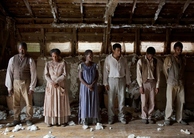
As the lights dropped and I sank into my seat, I thought I was ready for 12 Years a Slave, the 2013 film adaptation of Solomon Northup's 1853 slave narrative. I was expecting a movie, a story told with images, music and sound. But, what I witnesssed... Read Article »
2013, Vol. 5 No. 08
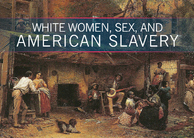
There is ample evidence of sexual relations, from rapes to what appear to be relatively symbiotic romantic partnerships, between white slave masters and black women in the Antebellum South. Much rarer were sexual relations between white women and... Read Article »
2012, Vol. 4 No. 09
The Emancipation Proclamation was arguably the United States’ first step away from hypocrisy and toward true racial equality. However, commentators often obscure its pivotal role in bringing the Civil War to a close by inferring that it was... Read Article »
2011, Vol. 3 No. 01
For many decades, scholars have debated the importance of religion in helping slaves cope with the horrible experience of Slavery in the antebellum South. However, the way they treated the subject differs and the conclusions they reached are varied... Read Article »
2010, Vol. 2 No. 01
Frederick Douglass’ statement about Slavery concisely defines the effect that such an institution had on the entire shape of a nation: Without Slavery, how does one understand freedom? For hundreds of years, the United States thrived economically... Read Article »
2010, Vol. 2 No. 01
In the world of the American slave, violence and control were intimately connected. As Frederick Douglass notes, “Men are whipped oftenest who are whipped easiest,” a sentiment that points to the cyclical nature of violence against the... Read Article »
2010, Vol. 2 No. 01
The legacy of the American Civil War with which we are left is one that emphasizes a participatory American populace, overwhelmingly enthused over and invested in the conflict. Particularly in the North, we are likely to think of a cooperative culture... Read Article »
2009, Vol. 1 No. 12
Children’s literature in the context of this research paper (and hopefully too in the eyes of the majority) is the ultimate escape; it is neither box nor leash nor constraint of any sort. It is the one genre of literature that does not hold... Read Article »
2009, Vol. 1 No. 11
A character in Toni Morrison's Beloved whose crucial importance to both the plot and thematic intent of the book is Stamp Paid. He is a character with limited space devoted to him, but whose every action is a catalyst for the book as a whole. He... Read Article »
Expedited Article Review
Submit an article and get a decision fast.
If you need a fast decision, INQUIRIES Journal offers expedited processing of your submission for a small fee. Depending on the expedited review option you choose, you can receive a decision in as few as 5-days.
In addition to a shorter review period, the fee supports the journal's continued operation and open-access publishing model. Standard submissions are always free. Submit Now » - Submit an Article to Inquiries Journal -
|