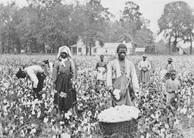
Nat Turner and the Bloodiest Slave Rebellion in American History
By
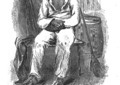
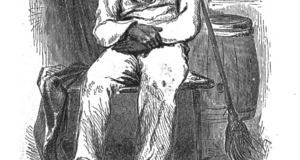
2010, Vol. 2 No. 01 | pg. 1/1 “I didn't know I was a slave until I found out I couldn't do the things I wanted.” - Frederick Douglass Frederick Douglass’ statement about slavery concisely defines the effect that such an institution had on the entire shape of a nation: Without slavery, how does one understand freedom? For hundreds of years, the United States thrived economically at the expense of millions of men and women who were not permitted to realize the freedoms and rights established by their country. To paraphrase Douglass’ words satirically (and in a way common with 1830’s Southern thinking): Ignorance is bliss. As he experienced, this was the type of bliss involving occasional beatings, separation from family, or the bliss of never knowing what freedom is. 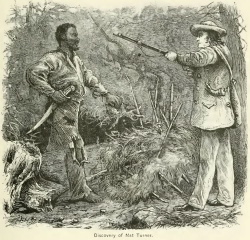 The book, The Fires of Jubilee: Nat Turner’s Fierce Rebellion, by Stephen B. Oates, tells the story of a man who caught a glimpse of freedom as a child and understood its value. Nat Turner used his spotless reputation among whites and religious influence over black slaves to cleverly plan a slave rebellion in 1831. Nat’s insurrection reinforced both the fear and ignorance of Virginia whites toward the institution of slavery, which resulted in numerous repercussions toward slaves, despite would-be Southern Christian intentions. The book, The Fires of Jubilee: Nat Turner’s Fierce Rebellion, by Stephen B. Oates, tells the story of a man who caught a glimpse of freedom as a child and understood its value. Nat Turner used his spotless reputation among whites and religious influence over black slaves to cleverly plan a slave rebellion in 1831. Nat’s insurrection reinforced both the fear and ignorance of Virginia whites toward the institution of slavery, which resulted in numerous repercussions toward slaves, despite would-be Southern Christian intentions.
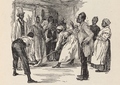
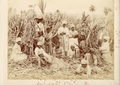
In early 1800’s Virginia, slavery was an integral part of Southern life. Even Virginia’s governor, John Floyd, only disapproved of the institution for an economic reason, namely tariff reductions given to Free states. In addition, for many plantation owners and farmers, owning slaves was a status symbol. Beyond the societal implications, slavery served as a means of “racial control” (10); if blacks were kept busy serving masters, they would not have the time or means to revolt. Virginia allowed such freedoms as slave schools and slave churches, but at the same time enforced slave behavior with military guard. Most Great Planters were not unnecessarily cruel to their slaves; many owners allowed slaves holidays off and opportunity to be with family in the evenings. By comparison, Virginia – especially Southampton County – was more lenient with slaves than the Deep South, perhaps because “over one-third of Southampton’s white families owned no slaves” (2), and the county had never experienced a risk of rebellion. For the most part, “Southampton whites regarded insurrection as some unimaginable calamity that happened to someone else.” (50) This lack of experience with slave discontent further propagated the white perspective that slaves were satisfied with their current conditions. Though many slaves were assimilated enough to fall into their roles as field hands or servants, Nat Turner was different from the day he was born. Born into slavery, his body possessed symbolic birthmarks which his family traditionally associated with leadership in African heritage. Nat also had powerful psychic abilities and was mystically aware of events that “happened before he was born.” (11) He was unusually bright compared to other slave (and white) children and was thus given the opportunity to learn to read and study The Bible by his original masters, Mr. and Mrs. Benjamin Turner. Even they believed he far exceeded the intelligence and capabilities of an average slave. Because of his impeccable behavior, the Turners entertained his young mind by encouraging him to entertain their white friends with his literacy and wit. Though possibly unintentional, Nat’s special treatment was ultimately a cruel trick; when he became old enough to work in the fields, he was set out to hard labor like any other slave. This was “…an especially painful time, for he had been led to believe he might be freed one day.” (21) Although the option to abolish slavery was always available, the Southern agricultural-based economy was too dependent on that aspect of the labor force to discontinue the practice. Christian influences introduced another paradox of Southern slave owners; while some Christian sects denounced slavery, others were able to justify through bastardized Biblical interpretation that made slavery seem legitimate in the eyes of God. Nat’s first owners, The Turners, were pleased when their Methodist congregation stopped trying to “eradicate the peculiar institution and set about Christianizing the slaves for a better time ahead.” (10) Probably due to a cultural divide resulting in misunderstanding and fear of African and Caribbean religions, many like the Turners truly believed that spreading Christianity to the slaves was God’s work. Perhaps the economic necessity coupled with a modicum of kind treatment toward black slaves made the institution of slavery just civilized enough to live with. Surely influenced by his Christian beliefs, Nat spoke of experiencing messages from God and visions of angels which pointed to his divine selection as the chosen one to lead a slave rebellion. “God did not intend a man of his gifts, his intelligence, his powers to waste his years hoeing weeds and slopping hogs.” (32) After transitioning from a childhood where he was respected for his aptitude, to working as a field hand alongside slaves to whom he was intellectually superior, Nat recognized that the best use of his gifts was to continue playing the role of a “smart nigger” (52) and take advantage of the time and liberties he was given by his masters. Nat practiced polite and subservient behavior to gain a reputation never to be associated with trouble. Nat ran away once but apologetically returned of his own will shortly thereafter. He never swore, stole or drank alcohol. As Nat grew older, he became incredibly pious and eventually developed a following as a slave preacher. His return from escape and devout practice of Baptist beliefs reinforced both white religious morality and the notion that Nat was a model slave who could be trusted. After being inherited, bought and transferred, Nat became the property of Joseph Travis who thought Nat was “the smartest, best behaved slave a man was likely to own in all the county.” (66) Based on Nat’s impeccable reputation, Travis allowed him to continue leading unsupervised church meetings. It was eventually through these meetings that Nat was able to explain his beliefs and amass a group of slaves willing to assist with the revolt. Although Southern whites feared a rebellion, they could not realize or correct the obvious reason why one may occur: It is morally wrong to assume control over another human being. Slaves in other areas of the country recognized the injustice, and occasional revolts occurred. Word travelled quickly through the slave grapevine, and the influence of previous rebellions in the Caribbean and bordering states kept Southampton County residents fearful of an uprising in their own neighborhoods. Gabriel Prosser’s rebellion in Richmond, Virginia was especially close to home for Southampton County residents and, in 1800, was still recent enough to strike fear in their minds of white locals. On an August night in 1831, Nat led a group of slaves armed with hatchets, knives and axes from house to house in Southampton County, leaving a trail of mutilated white bodies in their wake. The rampage continued for two days. In the early throes of battle, Nat was hesitant to attack and murder the white families and former masters he had known for so many years. Nat’s personal attachment to his previous owners and the influence of Christianity on his life made it difficult for him to take the life of another, despite the directions he felt had been influenced by God. “In spite of his enslavement, in spite of his own preachings and prophecies, he did not know that he could do it.” (54) Perhaps he felt guilt for taking advantage of the opportunities that allowed plan of the attack. His slave army, enraged by years of mistreatment and influenced by a chance for revenge, took little issue with the violent murder of women, children and infants. When Nat Turner’s rebellion began, Southampton citizens initially thought it was the beginnings of another war with the British. Once it was realized that slaves were responsible for such action and that Nat was the leader, reasons for the insurrection were explained away by “religious fanaticism” (101) and Nat’s influential abilities. After Nat was turned in to authorities, strange religious-inspired drawings and writings with “…no definite meaning” (102) were found with Nat’s wife, which justified the belief that a single “religious maniac” (102) had plotted the entire attack, and that the revolt was more of a delusional impulse than action based on a negative stance toward slavery. Ultimately, Southampton County learned that the “…hostilities had been confined to Southampton and no widespread plot had been uncovered.” (109) Nat’s intention was martyrdom; he chose to use his mysticism and religion as a facade for the uprising that was desired and imagined by many slaves. What was overlooked in the midst of investigation into the slave rebellion was the true motivation. Nat admitted to lawyer Thomas Gray that he was fortunate enough to have masters that treated him fairly well and encouraged his education and religious beliefs, but also that he did not believe his efforts to rebel were wrong. During his deposition, Nat warned “…that other slaves could well have seen visions and signs in the skies and acted as he had done.” (122) Nat was certainly exercising his wit with his suggestion that visions could be widespread among slaves, but the representation of those visions as motivation is tragically poignant. Nat’s mystic childhood visions and memories may have shown him the history of slavery, but slavery in Nat’s time was a practicing history; these “visions” could be witnessed by any black person sent out to the fields. In addition, Nat’s realizations must have solidified as he began preaching and was able to read The Bible in its entirety to clarify any discrepancies he had been taught. The reality of insurrection in their own backyard showed Southampton County that “all was not sweetness and sunshine in their slave world.” (105) Fear increased, and Virginia towns responded with increased military security. Rumors of insurrections spread throughout the South. Though many of these rumors were false, blacks were retaliated against for acts not yet committed through a type of vigilante justice. Across the once relatively peaceful Southampton County, blacks were murdered and their bodies left in public to remind other would-be slave rebels that defiance would not be tolerated. All slaves involved in the rebellious massacre (and some who were not) were executed by hanging, and owners were reimbursed for their losses. This reaction to possible religious motivation is another contradiction in his own right; a black man who knew and understood true Christian beliefs was labeled as a criminal and fanatic when fighting against oppression. The white response to such condemnable brutality and violence by slaves was not recognition of the injustices of slavery, but their own condemnable revolt against the enslaved population. Blame for the events was eventually transferred to the traditionally non-violent Northern abolitionists, especially William Lloyd Garrison. Due to abolitionist pressure and Governor Floyd’s financially-motivated tendency to lean toward abolishing slavery, talk of “gradual abolition” (139) began in Virginia, but the legislation was rejected because of cost and the belief that “the state could not legislate such prejudices away.” (141) Instead, the Virginia General Assembly passed new legislation making it unlawful to teach slaves, free blacks or those of mixed race to read or write. Laws also limited black church congregations, maintaining that a white person must be present at the meetings to discourage collaboration of another insurrection plan. In addition to strengthening laws to keep slaves at bay, rights were also taken away from free blacks and in some instances, even restrictions of slavery criticism by whites. The main lesson whites learned from Nat Turner’s rebellion was ironically not the injustices of slavery, but the frightening possibilities of educated blacks. In attempts to control future situations, legislation encouraged even harsher treatment of blacks than what Nat and the others originally rebelled against. Religious righteousness and superior white intelligence were two major justifications for the enslavement of black people in the Southern United States. Nat Turner’s cunning planning of the bloodiest slave rebellion in American history shattered those theories. His wise use of intellect and religion to manipulate white masters proved equality – regardless of skin color, and changed the misconception that slaves were too ignorant to know or want freedom. The insurrection, although never meeting Nat’s personal expectation of freedom, resulted in a course of events leading to further outcry against and ultimate disintegration of the institution of slavery. Oates, Stephen B. The Fires of Jubilee Nat Turner's Fierce Rebellion. New York: Harper Perennial, 1990. Print. 
From the Inquiries Journal Blog   Related ReadingMonthly Newsletter SignupThe newsletter highlights recent selections from the journal and useful tips from our blog. Suggested Reading from Inquiries Journal
Inquiries Journal provides undergraduate and graduate students around the world a platform for the wide dissemination of academic work over a range of core disciplines. Representing the work of students from hundreds of institutions around the globe, Inquiries Journal's large database of academic articles is completely free. Learn more | Blog | Submit Follow IJ


Latest in History |