Russian History (tagged articles) Vindication for Tin Foil Hats: An Analysis of Unethical Cold War Experiments and Their Enduring ConsequencesMichael D. Opheim - While the Cold War is popularly regarded as a war of ideological conflict, to consider it solely as such does the long-winded tension a great disservice. In actuality, the Cold War manifested itself in numerous areas of life, including the various scientific fields... Keep Reading »
 Ethnography, Folklore, Afanasev, and Russian Self-IdentityMargaret R. Devlin - While the history of ethnography in Russia dates back to the Kievan Rus era, modern ethnographic production in Russia developed in the 17th century and expanded during the late 18th and early 19th centuries as interest in folktales and in the lives and natures of Russian... Keep Reading »
 Molding the Peasantry on the Road to Modernity: State and Peasant Relations in Russia and the Soviet UnionSophia Hernandez Tragesser - This paper examines the peasantry's response to modernization measures taken by Imperial Russia and the Soviet Union during the late 19th and early 20th centuries. In the pursuit of modernity, the Tsarist Russian and early Soviet regimes altered the nature of the peasantry... Keep Reading »
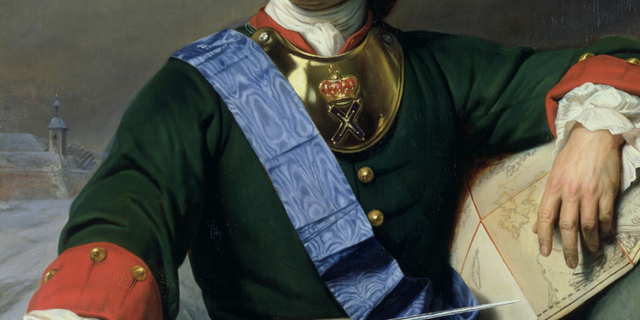 The Reign of Peter the GreatIulia O. Basu-Zharku - Peter the Great inherited a score of problems in the administration of his empire. Of course, through his well-known zest and ambition, he tried to solve most of them, and made steps in that direction. However, his actions did not always have the wanted effect. As... Keep Reading »
 The Poetry of Yevgheny YevtushenkoIulia O. Basu-Zharku - Yevgheny Yevtushenko’s poetry spans time and space when relating to Russia and its history. His poetry, as he himself, declares, is intended to teach the conscience of anyone who reads it. And indeed, his poetry, whether political or romantic, alludes to themes... Keep Reading »
     The keyword Russian History is tagged in the following 7 articles.  Follow IJ


Expedited Article ReviewSubmit an article and get a decision fast. If you need a fast decision, INQUIRIES Journal offers expedited processing of your submission for a small fee. Depending on the expedited review option you choose, you can receive a decision in as few as 5-days. In addition to a shorter review period, the fee supports the journal's continued operation and open-access publishing model. Standard submissions are always free. Submit Now » - Submit an Article to Inquiries Journal -Inquiries Journal provides undergraduate and graduate students around the world a platform for the wide dissemination of academic work over a range of core disciplines. Representing the work of students from hundreds of institutions around the globe, Inquiries Journal's large database of academic articles is completely free. Learn more | Blog | Submit 


|