|
Philosophy (tagged articles)
The keyword Philosophy is tagged in the following 52 articles.
2022, Vol. 14 No. 03
After World War II, America’s baby boom and rapid migration into cities sparked a damaging housing crisis. This marked a turning point in architectural style: the rise of modernism. Modernism prioritizes function above all else and believes... Read Article »
2021, Vol. 13 No. 12
This research elucidates the striking parallelism between the Hindu Varna System and Plato's Magnificent Myth through an unorthodox view of their class-based classification, social mobility, and meritocracy while arguing that these stem from the... Read Article »
2021, Vol. 13 No. 05
Foucault raised the concept of biopower in the first volume of The History of Sexuality and placed its emergence in the context of capitalism, but he did not fully tackle the relationship between biopower and capitalism. In this article, the author... Read Article »
2021, Vol. 13 No. 03
Western conservatism is often conceived as the Philosophy of large landowners in the past and business executives in the present. Heightened awareness of racial and class disparities in recent years has increased the perception that conservatism... Read Article »
2021, Vol. 13 No. 03
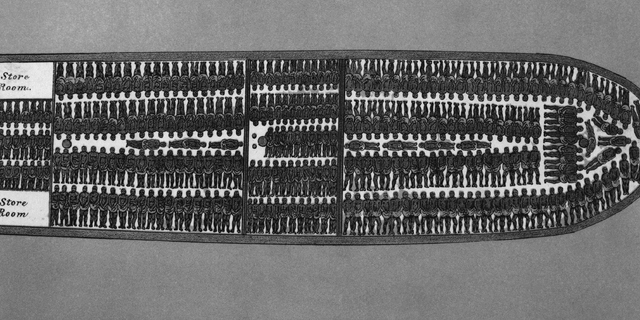
Intersecting Edouard Glissant’s poetics with Hortense Spillers’ theory of race, gender, and sexuality alchemizes a new conception of the Middle Passage’s spatiotemporality. With the slave trade haunting the living, this paper attempts... Read Article »
2021, Vol. 13 No. 03
The transformation of the Philosophy of history reveals how and why methodological systems change over time. Methodological systems engage in contemplative action, and strive to assemble a distinguishable pattern of historical study. Though structure... Read Article »
2020, Vol. 12 No. 10
The eugenics movement of the 20th century epitomizes the danger that is possible when religion and science coalesce. Grounded in the emerging science of evolution and heredity, social Darwinists superimposed beliefs about social worth, racial superiority... Read Article »
2020, Vol. 12 No. 09
Human beings decided that time is linear. We continually assert that is made up of the past, present, and future, proceeding infinitely and mercilessly in an exclusively forward motion. Thus, our lives and our relationships are experienced linearly... Read Article »
2019, Vol. 11 No. 10
Jean Baudrillard’s essay ‘The Precession of Simulacra’ from Simulacra and Simulation (1981) is a key postmodern text to understanding the contemporary technological Western world. ‘The Precession of Simulacra’ explores... Read Article »
2019, Vol. 11 No. 09
Questions regarding the very foundations of our reality abound throughout the history of world philosophies. For example, if we examine Plato’s “Allegory of the Cave,” as well as the Bhagavad Gita, we find that both masterpieces... Read Article »
2017, Vol. 9 No. 10
Political philosophers and theorists alike continue to debate if more enlightened populations would be of value or not. This piece will contribute to that dispute by claiming that an enlightened populace is integral to the progress of free-societies... Read Article »
2017, Vol. 9 No. 04
This piece examines the ideologies and tactics used by fascist governments to validate and enforce their authority through Michael Mann’s work Fascists. By explicating Kant’s view of autonomy and progress, found in “An Answer to... Read Article »
2017, Vol. 9 No. 04
In recent years there has been quite a bit of talk in Philosophy of religion regarding how relevant and how purposive natural theology is, especially in comparison with experiential evidence. One major proponent of this recent skepticism in relation... Read Article »
2017, Vol. 9 No. 04
Man in his search for meaning—everyman— is Albert Camus’ rebel. In The Rebel man must accept and seek to encounter the universe as it presents itself in absurdity. He encounters the universe out of a strange love and a need for... Read Article »
2017, Vol. 13 No. 1
Consciousness is a thought-provoking phenomenon. In recent decades, though, the Philosophy of mind has revealed consciousness to be, in the words of Thomas Nagel, "what makes the mindbody problem intractable" (Nagel, 1979). Though consciousness... Read Article »
2017, Vol. 9 No. 03
Is there a goal or purpose to history? And if so, how is one to determine its starting point, the ways in which it develops, and how it achieves its aim? Luckily, one philosopher, Hegel, analyzed history philosophically and tried to answer these... Read Article »
2017, Vol. 9 No. 03
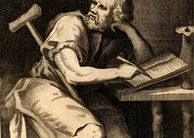
Philosophers have long debated the meaning of virtuousness and the role that reason plays in achieving it. According to the Stoic philosophers Epictetus and Marcus Aurelius, virtue comes through a proper understanding of nature, its processes, as... Read Article »
2016, Vol. 8 No. 11
Throughout Philosophy’s history, some of its most prominent thinkers have drawn inspiration from sources outside of its canon. It is of my opinion that one of these philosophers, Spinoza, in the first book of his Ethics, borrowed elements... Read Article »
2016, Vol. 8 No. 07
As Europe’s frontier with the Muslim East, Greece has been cast as backward, and not worthy of full sovereignty since the earliest years of its independence from the Ottoman empire. Greece's contradictory position as guardian of the origins... Read Article »
2016, Vol. 8 No. 06
The revered Madhyamika Buddhist philosopher Nagarjuna is a central figure in the history of Eastern thought. In his Seventy Stanzas, Nagarjuna shares his views on many eternal questions including inquiries into what it means to have a proper understanding... Read Article »
2016, Vol. 8 No. 05
As a founder of sociology, Max Weber influenced the social sciences immensely. In his “Politics as a Vocation,” Weber claims that one of the definitions of the state is its ability to employ legitimate violence as a means of control... Read Article »
2016, Vol. 8 No. 03
Within The Enneads, Plotinus claims all existence derives from an entirely immaterial and benevolent source which he calls the One.[1] At the same time, he also states matter corrupts that which is immaterial, and one should not understand it as... Read Article »
2016, Vol. 8 No. 03
The ideas of Adam Smith have remained relevant well beyond his lifetime. He is remembered as the father of modern-day economics and the author of the still widely read Wealth of Nations, known for his formulation of the invisible hand and consequent... Read Article »
2016, Vol. 8 No. 02
The path towards and the meaning of Nirvana have been central issues to many theorists of the Buddhist Tradition. With this paper, I will describe the path toward and the state of Nirvana from a Theravada and Mahayana Buddhist perspective. By doing... Read Article »
2016, Vol. 8 No. 02
In Developing a Critical Realist Positional Approach to Intersectionality, Martinez et. al. (2014) argue that Critical Realism (henceforth ‘CR’) solves what they identify as the methodological ‘crisis’ within intersectionality... Read Article »
2016, Vol. 8 No. 02
Within the works of Spinoza, as well as those of Descartes, issues concerning the nature of free-will come to the fore. With this essay, I will first explain Spinoza’s and Descartes’s notions regarding freedom of the will, its existence... Read Article »
2016, Vol. 8 No. 01
Within Lao Tzu’s Tao-Teh-Ching and Machiavelli’s The Prince, there are similar notions concerning how a ruler should maintain order and how he/she can be an effective leader. According to the former, it is best if people are blind to... Read Article »
2016, Vol. 8 No. 01
Hans Jonas main objective in his book The phenomenon of life is to offer an interpretation of the phenomenon of Being that is neither conditioned to dualism nor to a partial conception of being, such as those developed by idealism and by materialism... Read Article »
2015, Vol. 12 No. 1
There has been a modern revival of interest in virtue ethics as a plausible moral theory. There has been dissatisfaction with the way many modern moral theories emphasize moral obligation and law at the expense, some argue, of the individual (Slote... Read Article »
2015, Vol. 7 No. 09
One of the greatest ironies of Plato's Republic is that, although he condemns the poets and exiles them from his idyllic city, the Republic is perhaps one of the greatest literary works of all time, and a poem in its own right. Although written... Read Article »
2015, Vol. 7 No. 06
In William Shakespeare’s Hamlet, Prince Hamlet’s polysemic language raises the theme of empowerment of the body politic and, ultimately, the notion of democratization. Through an analysis of Hamlet’s speech, particularly in response... Read Article »
2015, Vol. 7 No. 05
Their protest challenged the paradigm of power as it existed at the time, specifically by revealing the limitations of the state's ability to exercise its will even in a situation where the state wielded seemingly absolute authority.[1] Power, as... Read Article »
2015, Vol. 7 No. 04
The assertion that unconstrained power brings with it inevitable corruption has occupied theorists since the first considerations of authority. That the nature of man in unconstrained assemblage will lead to a “tyrannical abuse of power&rdquo... Read Article »
2015, Vol. 7 No. 03
In a previous article I wrote about fine-tuning in the Universe and the empirical evidence for a Grand Designer that can be found within our reality. This argument of course occurs within the context of ongoing fiery debate between theists and secular... Read Article »
2015, Vol. 7 No. 02
Our contemporary global public sphere is made up of a tiny proportion of the world’s population. Affluent, exclusive, and concerned only with perpetuating its own economic advancement, this contemporary global public sphere is an anachronism... Read Article »
2014, Vol. 6 No. 09
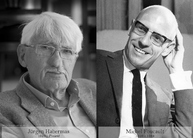
This paper contrasts the Philosophy of Michel Foucault and Jürgen Habermas to determine whether there is any point of substantial convergence between the two.[1] To do so, the essay first argues that the projects engaged in by each philosopher... Read Article »
2014, Vol. 6 No. 08
We often acquire knowledge about the world through the detailed process of description. We understand even more by describing and explaining to others—people often report that they only really understand a topic once they have described it... Read Article »
2013, Vol. 5 No. 11
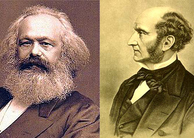
This essay compares Karl Marx’s and J.S. Mill’s understandings of freedom and their analyses of the impediments to its realization. First, this essay argues that the two philosophers share the same premise that progress is possible and... Read Article »
2013, Vol. 5 No. 01
In his poem “The Plain Sense of Things,” Wallace Stevens strikes out in a direction that differs greatly from the established norms and expectations of poetry before the Modernist era. Stevens, at times, moves against traditions such... Read Article »
2012, Vol. 4 No. 11
It has been argued that the global trading system is supposed to promote global efficiency and growth, but a rising chorus of voices is asserting that the global economy operates in a way that is fundamentally unfair and seems to be ‘rigged... Read Article »
2012, Vol. 4 No. 10
Jürgen Habermas - a prominent German philosopher and critical social theorist - offers a theory of language use that identifies and analyzes the rationality potential of communicative understanding between two parties. Habermas champions this... Read Article »
2012, Vol. 4 No. 10
As humans, we are compelled to ask the questions, why do we exist? How do we exist? Even, how can I know that I am using this existence in the correct way and with the right intentions? Even the earliest of the ancient philosophers pondered these... Read Article »
2012, Vol. 4 No. 07
In his essay, “An Aesthetic Reality,” Andre Bazin writes, “Let us agree, by and large, that film sought to give the spectator as perfect an illusion of reality as possible within the limits of logical demands of cinematographic... Read Article »
2012, Vol. 4 No. 03
Due to their different subject matter, the way in which social and natural science inquiries are conducted differs. For some, this difference is constituted in a greater reliance upon values in the social sciences than in the natural. This essay... Read Article »
2011, Vol. 3 No. 04
A large portion of Robert Nozick’s Anarchy, The State and Utopia is dedicated to refuting the theories of John Rawls. Specifically, Nozick takes issue with Rawls’ conception of distributive justice as it pertains to economic inequalities... Read Article »
2011, Vol. 3 No. 03
John Dewey was an ingenious and significant figure whose criticisms spanned a wide range of disciplines, including Philosophy, education, politics, aesthetics, and ethics. The late American philosopher Richard Rorty, in Philosophy and the Mirror... Read Article »
2011, Vol. 3 No. 01
Throughout Émile Durkheim’s Social Facts, he provides an account of what he deems to be the correct nature of social facts. This essay explores his account in order to assess its relation to both methodological holism and methodological... Read Article »
2010, Vol. 2 No. 10
A nine-foot-tall, royal blue giant creeps low to the ground, brushing by exotic foliage. He holds a proportionally large bow and arrow in hand. In an instant he pauses, keeping entirely still, before loading an arrow into his weapon. He pulls back... Read Article »
2010, Vol. 2 No. 08
From the time of the ancient Greek philosophers to modern contemporaries, the mind-body problem has been perpetually debated. With neuroscientific evidence in mind, traditional Cartesian dualism, which establishes that mental and physical substances... Read Article »
2010, Vol. 2 No. 08
For centuries philosophers have struggled to define personal identity. In his 1690 work An Essay Concering Human Understanding, John Locke proposes that one's personal identity extends only so far as their own consciousness. The connection between... Read Article »
2010, Vol. 2 No. 04
Confucianism was one of the dominant political philosophies of Imperial China. Confucianism’s influence declined throughout the 19th century coinciding with the end of the Qing Dynasty in 1911. Some Chinese intellectuals, like Lu Xun, attacked... Read Article »
2009, Vol. 1 No. 12
Political philosopher and social psychologist, John Locke was an outspoken supporter of equal rights within a governed society. He espoused the natural rights of man, namely the right to life, liberty and property, and he articulated that every... Read Article »
Expedited Article Review
Submit an article and get a decision fast.
If you need a fast decision, INQUIRIES Journal offers expedited processing of your submission for a small fee. Depending on the expedited review option you choose, you can receive a decision in as few as 5-days.
In addition to a shorter review period, the fee supports the journal's continued operation and open-access publishing model. Standard submissions are always free. Submit Now » - Submit an Article to Inquiries Journal -
|