A Daylight Debacle: Is Daylight Saving Time Still Relevant?
By
2009, Vol. 1 No. 10 | pg. 1/1
KEYWORDS:
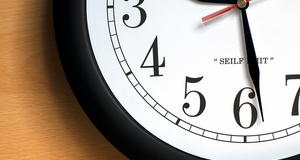
Whether you noticed it or not, in 2008 Daylight Saving Time ended a bit later than normal. Though this is in fact the second year of the new Daylight Saving Time, or DST, schedule, many Americans are still not used to the new timeframe. DST now begins on the first Sunday in March and ends on the second Sunday in November, extending the established period of time adjustment by over a month. While DST has come to be accepted as common practice, few understand the reasoning for such a system. To better comprehend the effects of and rationalizations for DST, it may be helpful to first review why DST was created at all. Daylight Saving Time was first devised by William Willet, a prominent Englishman, in 1905. During an early morning ride, he was struck by the amount of beautiful daylight that was wasted away by many who chose to sleep later. His solution to this problem involved advancing the clock during the summer in order to take advantage of this early morning sun. He lobbied until his death in 1915 for his idea to become established as an official measure, though little interest was paid towards it. That is until Germany and its occupied zones adopted Willet's idea during World War I, with the rest of Europe quickly following in their footsteps. In the United States, DST was established in 1919 as an energy saving method during wartime. Though regulation, the legal definition, and the length of DST has fluctuated in the United States, DST has still existed in one form or another since that time.Many of the reasons that DST was established are still viable today. Without DST, a portion of the day's sunlight during summer would be lost to people staying in bed. Moving clocks ahead by an hour allows for workplaces, schools, and other establishments to remain on their normal schedule without forcing individuals who want to enjoy the early sunlight to wake at too early an hour. This adjustment also presents a longer period of daylight in the evening when people are returning from work and school. This allows for more outdoor leisure time in the evenings. The extended period of sunlight throughout daytime hours also can be beneficial to laborers whose jobs take place outside, such as those involved in the agricultural industries. More daylight should provide greater productivity and a reduction in energy costs. A lower energy burden is a potential benefit as a result of DST. With more natural light available, it is reasonable to think that usage of electricity for artificial lighting should decrease, especially in the mornings and evenings (Energy conservation...). The United States has several times re-arranged DST in order to assist in perceived energy crises, as was the case in the 1970s. With lower energy consumption leading to decreased energy bills, it is easy to see why governments across the world have looked to DST as an effective measure in reducing power demand. There is also some evidence that DST may have positive effects on human health. In the first three days following the end of DST, there is evidence to suggest that we see a reduced amount of heart attacks (Janszky). The increased amount of evening daylight may also provide more time for exercise and therefore promote healthier behaviors. Rising earlier and experiencing more sunlight also affects seasonal affective disorder (SAD), and DST shifts may be beneficial in reducing incidents of depression (Olders). However, for all the evidence stacked in DST's favor the sheer amount of negative and contradictory evidence far outweighs DST's benefits. In all of the main issues that I have discussed above, new studies are beginning to negate the favorable outcomes of the shifting of the clock. Recent evidence shows detrimental impacts on energy usage and health. Yes, DST may give us more time to bask in the precious sunlight, but at the end of the day this is a superficial result. A great number of studies conducted in relation to the effect of time shifts on power usage have in fact shown the reverse outcome of what was intended. Instead of a decrease in energy consumption, we see an increase, and ironically, in some areas the increase is during the hours that DST is intended to decrease consumption (Kellogg). In a study on the effects of DST on power usage in Indiana, a state who chose not to enforce DST in some areas until 2006, it was determined that the yearly clock adjustment actually increased overall energy usage by 1-4% (Grant). This increase has caused Indiana households to experience additional total costs of $8.6 million per year. This is not including the “social cost” of DST due to factors such as increased pollution, which tacks on between $1.6 million and $5.3 million dollars per household per year (Gramling). But energy demands stretch farther than just increased power consumption in homes. There are studies that suggest shifts during Daylight Saving Time are also responsible for increases in spending on fossil fuels, especially gasoline for use in transportation. In 2007, when DST was rescheduled and lengthened in the US, gas use increased by 1% (McCarthy). These figures glaringly present major flaws in DST. Across-the-board increases in energy spending are a clear indicator of the ineffectiveness of DST as an energy saving measure. Saving energy, however, should be the least of people's worries as DST also seems to be responsible for an increasing number of health issues. For starters, the very same study that found a decreased number of heart attacks during the days following DST also observed increased heart attack rates during the days just after the start of DST (Janszky). Sure, these numbers probably balance themselves out, but is any increase in danger to human lives justifiable by a subsequent decrease? Contradictory reports have also surfaced indicating that DST may in fact have unfavorable repercussions concerning SAD and depression rates. One study even points to increased suicide rates, especially among males, during the spring after DST has begun (Berk). Increased suicide rates may come as a result of what is perhaps the most pressing issue surrounding human health and DST: disrupting the bodies natural clock. This roughly 24-hour natural cycle, known as the Circadian Rhythm, is responsible for determining physiological and biochemical processes in human beings. DST forces a shift in this natural progression, disrupting sleep cycles and normal bodily processes and “severely affects our seasonal timing” (Kantermann). The time it takes to adjust to DST's new schedule results in a period where sleep times are shorter or not as effective. The inability for the body to recuperate during rest periods can lead to general tiredness, stress, chemical imbalances in the body, and even depression. This disruption is not unknown to those in charge of establishing DST. In 2005, after deducing DST to be the main culprit behind certain health complications, the government of Kazakhstan abolished DST all together. So, if all of the adverse side effects of DST seem like a valid tradeoff for a few extra hours of sunlight, then by all means we should keep it. On the other hand, as someone like the millions of others who experience the time warping consequences of DST, I see no plausible reason that DST should remain instated. In an age where we are beginning to understand more than ever the importance of rest – where we recognize that following natural sleep cycles is more beneficial than creating our own – it is ludicrous to think anyone would still follow an idea that was created by a man on the whim that he'd like to experience more sunlight throughout his day so as not to cut his golf games short. Even ignoring the ill effects on human health, supposed energy saving has been debunked by numerous studies and does not stand on it's own as a legitimate reason to continue to use DST. Therefore, I say down with Daylight Saving Time. Surely it wouldn't be too hard to deal with a few less hours of sunlight during the summer months. And end to DST means we'd see more stabilization in energy spending throughout the year. No longer would we be tasked to remember to reset all of our clocks and time keeping devices, including our most important time keeping device: our body. This would have numerous health benefits and result in a more rested, possibly less seasonally affected populous. Where DST's originators argued more sunlight during the day provided greater productivity, I say that a healthier individual can increase productivity in ways no amount of sunlight could.
Berk, Michael, Seetal Dodd, Karen Hallam, John Gleeson, Margaret Henry and Lesley Berk. "Small shifts in diurnal rhythms are associated with an increase in suicide: the effect of daylight saving ." Sleep and Biological Rhythms 6.1: 22-25. Casey, Mayra J. "Of Cannon Fire and Daylight Saving Time." New York Times. 8 Mar. 2008: 14. “Energy conservation potential of extended and double daylight saving time : hearing before the Subcommittee on Energy, Committee on Science, House of Representatives, One Hundred Seventh Congress, first session, May 24, 2001." United States, Washington D.C. 24 May 2001. Gramling, Carolyn. "Wasting energy by saving time?" Geotimes 53.5 (2008): 10-11. 20 Nov. 2008. Janszky, Imre, and Rickard Ljung. "Shifts to and from daylight saving time and incidence of myocardial infarction." New England Journal of Medicine 359.18 (2008): 1966-68. 1 Dec. 2008. Kantermann, Thomas, et al. "The Human Circadian Clock's Seasonal Adjustment Is Disrupted by Daylight Saving Time." Current Biology 17.22 (20 Nov. 2007): 1996-2000. Academic Search Premier. EBSCO. Kotchen, Matthew J., and Laura E. Grant. "Does daylight saving time save energy? Evidence from a natural experiment in Indiana ." Oct. 2008. National Bureau of Economic Research . 1 Dec. 2008 . Kellogg, Ryan, and Hendrik Wolf. "Daylight time and energy: evidence from an Australian experiment." Journal of Environmental Economics and Management (2008). 1 Dec. 2008 . Lahart, Justin. Wall Street Journal. (Eastern edition): pg. D.1 Feb 27, 2008. New York, N.Y. McCarthy, Shawn. "Has daylight saving time fueled gasoline consumption?" Globe and Mail 18 Apr. 2007. Olders, Henry. "Average sunrise time predicts depression prevalence." Journal of Psychosomatic Research 55.2 (2003): 99-105. Tsikoudakis, Mike, and Joanne Wojick. "Fallback on recipe for heart health." Business Insurance 42.44 (03 Nov. 2008): 31-31. MasterFILE Premier. EBSCO. UMBC, Baltimore, MD. 20 Nov. 2008 
From the Inquiries Journal Blog   Monthly Newsletter SignupThe newsletter highlights recent selections from the journal and useful tips from our blog. Suggested Reading from Inquiries Journal
Inquiries Journal provides undergraduate and graduate students around the world a platform for the wide dissemination of academic work over a range of core disciplines. Representing the work of students from hundreds of institutions around the globe, Inquiries Journal's large database of academic articles is completely free. Learn more | Blog | Submit Follow IJ


Latest in Anthropology |