Opinion:The Poetry of Yevgheny Yevtushenko
By
2011, Vol. 3 No. 01 | pg. 1/1
KEYWORDS:
Yevgheny Yevtushenko’s poetry spans time and space when relating to Russia and its history. His poetry, as he himself, declares, is intended to teach the conscience of anyone who reads it. And indeed, his poetry, whether political or romantic, alludes to themes that are to be found over and over in Russia’s history and are intended to heal and provide solutions for a new beginning. The first and foremost thing that Yevtushenko is and wants to be is a cosmopolite. In the first poem he read, he expressed the desire of being a citizen of every country and be everyone, reincarnated in every person. This aspiration replicates the cosmopolitan life of the aristocracy of Imperial Russia. The nobles, since the time of Peter the Great, have had access to foreign travel, all over Europe and not only. 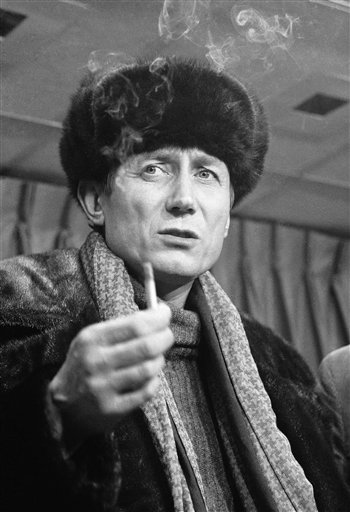
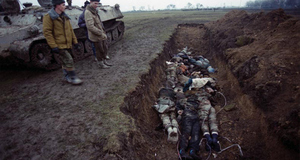
Moreover, they had access to Russian as well as foreign schools. They also learned to speak other languages, aside from Russian. In many ways, they became detached form the social reality of their own country but they were in touch to the cultural life of Europe, learning form it and adding to it. Nabokov’s own family and upbringing is a testimony of this cosmopolitan life: he travels all over Europe before he is even able to realize the difference between one country or another (except for the fact that they speak different languages), he learns English even before he learns Russian, and has governesses that are foreign (English, French) and that speak only their own language. And, indeed, although this added to the social separation of the aristocracy form the rest of Russia’s population, it did have a beneficial effect on Russian culture, giving it a boost forward, in line with European culture but at the same with its unique flavor. This cosmopolitanism is related also to Yevtushenko’s desire of knowing everything, being everywhere, and belonging to all times. Similarly, the great Russian scholars have left no stone unturned. The best example would be Lomonosov. Coming from a peasant family, he raised himself to the respect of everyone through his impressive love of knowledge and foresight in sciences. His development in Chemistry, Physics and Grammar were ahead of his time and helped subsequent generations of scientists and writers in developing their arts. Moreover, such writers as Pushkin, Gogol, Dostoievsky, and Turghenev expand the range of knowledge to psychology and the intricate web of human feelings and relationships with the society. In addition, Yevtushenko’s desire of knowledge is expressed in the tendencies of Peter the Great’s followers, especially the Empresses Anna, Elizabeth and Catherine II. Their building of schools (for example, the Academy of Arts, the first Russian University, the cadet school for gentry, private schools, schools for girls etc.) and their support for scientific expeditions (for example, the first Academic Expedition for the mapping and exploring of Siberia, and the discovery of Alaska) was crucial for Russia and for the world at large. However, there are other positive themes in Yevtushenko’s poetry. His goal when writing poetry is to inspire others to speak-up, as he does. This is what scores of others had done before in Russian history, obviously suffering the consequences. Starting with Alexander Radishchev and the Decembrists and continuing with the articles published by Herzen, Belinski, Chaadev, Bakunin or the Petrashevskys, all sorts of people, from different strata of the society did speak up. Radishchev was sent to Siberia for it, the Petrashevskys were disbanded and Dostoievky (who was one of them) was sent to Siberia, while Chaadev ended in a mental hospital for speaking against the government. In this, another aspect of Yevtushenko’s poetry is to be seen: that of his respect of journalists, the only ones that he considers as still speaking up. In Yevtushenko’s eyes, poets have ceased to say anything through their art, while journalists had taken the pen and continued the battle as all these great men of letters did before them. Indeed, people never ceased speaking up. The work of these pioneers was continued by other liberals or more radical elements of the society, up until the Revolution of 1905. Before and during it, workers start to organize and the Union of Liberation appears, trying to unite everyone, from different political orientation towards the same goal: reform. Again, history repeats itself, and many of those that spoke up were imprisoned or killed. In line with this awakening of consciences is also Yevtushenko’s broad range of people to which he reached out. The fact that he read his poetry to a variety of people, from miners, to cowboys, to middle school children, reminds one of the “To the People” movement and subsequent Populism. The former movement involved student, young intellectuals form the cities who lived through the Great Reforms of Alexander II and considered that the peasants were the ones in whose hands was the future of Russia. Thus, they go into villages and try to speak with the peasant and persuade them to organize and start a revolution. They reached out to the oppressed and tried to help them as much as possible, through their knowledge. Of course, later on, the Marxists will do the same thing, this time reaching out the workers in the rapidly rising industry and end up succeeding in organizing the proletariat. Unfortunately, there are negative themes in Yevtushenko’s poetry as well. “Baby Yar,” for example, present in an evocative way the tragedy of the pogroms that ranged through Russia for many years. And along with this poem-tragedy, other poems, such as “Sleep, My Beloved,” speak the same language as the one spoken by the nostalgia and pain of the aristocracy and liberals that had to emigrate from Russia in order to escape the wrath of the Bolsheviks. The beautiful rustic images, the urge to dream, and the feeling that when the lovers will fall, they will fall together are all found in the pages of those émigrés that wrote about the country and culture they were coming and had left behind. Although that world was dead-most probably as the love of the two in the poem-it would live on through their writing and beings. In addition, the poems that present the daily realities of the Soviet Union, enter in the same category as the written legacies of the White Russian émigrés: they preserve a reality that is no longer existent. In conclusion, Yevgheny Yevtushenko is, as he proclaims himself to be, a poet of the conscience. And indeed, he continues the legacy of thousands of others before him in speaking up, seeking knowledge and enriching Russian culture, without losing the large context of the world and in preserving the parts of this world that are fading out from the present. And in doing this, he puts into words what others just spoke through their actions: a refusal to have happiness and freedom at the expense of those that lack them. 
From the Inquiries Journal Blog   Related ReadingMonthly Newsletter SignupThe newsletter highlights recent selections from the journal and useful tips from our blog. Suggested Reading from Inquiries Journal
Inquiries Journal provides undergraduate and graduate students around the world a platform for the wide dissemination of academic work over a range of core disciplines. Representing the work of students from hundreds of institutions around the globe, Inquiries Journal's large database of academic articles is completely free. Learn more | Blog | Submit Follow IJ


Latest in Literature |