Featured Article:Filling in the Holes in the Biography of William Shakespeare
By
2010, Vol. 2 No. 01 | pg. 1/1
KEYWORDS:
As critic Sam Leith points out, many critics and scholars of Shakespeare have no problem, and really no choice, with using phrases such as, “’would have’, ‘could have’, ‘probably’, ‘possibly’, and ‘might’,”1 when discussing the details of Shakespeare’s life. Regardless, these possibilities and holes in the Bard’s biography help form some coherent and interesting thoughts about his life and most famous works. His LifeCritic Daniel Wackerman argues in his essay, “To Be or Not to Be (Catholic, That is),” that there are many biographical reasons to believe that Shakespeare was a catholic. He writes about how from his birth Shakespeare was in the presence of some strong catholic influences. Wackerman and some other scholars, including Eamon Duffy, have pointed to the family’s religious affiliations to back this up. The Bard’s maternal grandfather was Edward Arden, Wackerman writes that, “Arden, was patriarch to ‘one of the most prominent Warwickshire Catholic families.” He is even said to have secretly kept his own catholic priest, disguised as the family gardener.”2Shakespeare scholar Stephen Greenblatt in his book Will in the World supports the claim that Edward Arden was a catholic. He adds that Mary Arden, Shakespeare’s mother, was “the youngest of eight daughters, Mary was her father’s favorite.”3 The tradition of Catholicism would have likely been passed down from father to daughter. If the claim that Edward kept a private priest is true, it is clear that Mary would have had some sort of opportunity to converse and interact with him. Wackerman goes on and cites scholarship that claims Mary Arden, “made specific mention of the Blessed Virgin Mary in her will, a practice long out of fashion for all save Catholics in 16th-century England.”4 This with the connection to Edward Arden essentially captures the Catholic connection on the maternal side of the Bard’s family; however, since the England of Shakespeare’s time was thoroughly patriarchal it is important to examine the religious affiliations of the Bard’s father. John Shakespeare was the father of William. Many scholars have highlighted the presence of a ‘spiritual testament’ that was found hidden in the rafters of John Shakespeare’s house after his death. Literary critic Ralph Berry writes about the testament, “The Spiritual Testament of John Shakespeare, William’s father, proves him a Catholic; the document no longer exists but its authenticity is generally accepted.”5 This idea is supported by Greenblatt, Wackerman, and others. They all discuss the testament that declared John Shakespeare a Catholic. Considering that his mother and father were Catholic then it is likely that the Bard would have been raised with the religion of his parents. His surroundings would have all but guaranteed that he end up with Catholic beliefs by the time that he left for his career in London. His hometown Stratford-on-Avon was still very much a Catholic stronghold after the country officially moved to Protestantism. Even though it was nominally Protestant the town still held firmly to its old ways. Greenblatt writes about the cultural influences of Catholicism on Stratford, "Stratford had nominally become Protestant, like most of the kingdom […] Officially, England had decisively broken away from Rome. But in matters of religious belief, families in early-sixteenth-century England were characteristically fractured, and many individuals were similarly fractured inwardly. It would have been an unusual extended kin group that did not have at least some of its members holding on to the old faith."[6] Even the leadership and the elites of Stratford were associated with the old ways of Catholicism. The vicar of the town was expelled from duty after being accused of “popery,” and one of the schoolmasters from Shakespeare’s school left his job to become a Catholic Jesuit priest. Wackerman writes about this in his article, “[the] vicar was expelled for ‘popery’ [and] Shakespeare’s own schoolmaster, Simon Hunt, abandoned his teaching post in 1575 to become a Catholic priest – a Jesuit.”7 Greenblatt also writes about the Bard’s schoolmaster, "Originally from Lancashire, in the north of England, where the old faith was clung to most tenaciously, Simon Hunt, Will’s teacher between the ages of seven and eleven, took the drastic step of leaving Stratford in 1575 for the Continent to attend the Catholic seminary at Douai and, eventually, to become a Jesuit […] the decision meant that he would have to spend the rest of his life in exile or return to England in secret." Greenblatt goes on and writes that Hunt did not keep his ideas to himself and that he actually took a student with him to the continent. The teacher that replaced Hunt was also either a Catholic or was sympathetic to the Catholic cause.8 The next part of Shakespeare’s life is one that many of the scholars call the ‘lost years.’ The lost years are roughly framed by his marriage to his wife in late 1582 and the production of Venus and Adonis in 1593. One of the most intriguing theories is that he spent this time in Lancashire staying with the Catholic Hoghton family. French critic Jean-Christophe Mayer, as well as others, writes of the possibility that Shakespeare may have been the “William Shakeshafte” whose name is recorded as staying with the Hoghton family.9 Peter Dickson argues for some of the Catholic connections that the Bard would have made in Lancashire in his article “Bardgate: was Shakespeare a Secret Catholic?” Dickson argues, "Young William may have been the [Shakeshafte] who was a tutor in the household of aristocratic Catholic families […] in Lancashire. Presumably, these connections could have facilitated his move to London and his rapid rise in the world of London theater." He goes on to say that this whole theory is “highly seductive” and that the Catholic spin on the Lancashire connection could explain how a man like Shakespeare who had no college education could get his foot in the London theater circles.10 With all of these connections to Catholicism in his early life it is easy to see why many would argue that Shakespeare was a Catholic, or had strong Catholic sympathies. With the early years aside readers of Shakespeare’s life might find some interesting Catholic connections in the late, in fact the latest possible, years of the Bard’s life. Shakespeare purchased a couple of properties in the later years of his life. This normally would not be an issue worth examining in regards to a man like Shakespeare who had enjoyed some wonderful success in the London stage world; however, these purchases are highly significant when one is taking a view of the Bard as a Catholic. Dickson describe the purchases in his article, "Not long before his death, William Shakespeare purchased the labyrinthian London tenement known as the Blackfriars Gatehouse, notorious for decades as a secret hideaway for crypto-Catholics […] The bottom line is that the two most important real estate acquisitions of Shakespeare’s life, New Place and the Blackfriars Gatehouse, were both properties long-known to have strong historical associations with Catholics." Dickson goes on and describes some research that shows the purchase price of the Blackfriars Gatehouse at twice the price of the New Place. This demonstrates that the acquisition was not just a simple investment and that he had some other motives. 11 Catholicism can be easily spotted in the Bard’s own family. His marriage was presided over by John Frith, a minister who was an ‘ex-Catholic Priest.’ He was even suspected as “unsound on religion” by the Protestant authorities.12 Hamnet and Judith were two of Shakespeare’s children. He named them after his neighbors Hamnet and Judith Sadler who were well known for their attachment to the old religion. This is significant because, apparently, the Sadler’s were named as the Godparents of the children. Godparents, even today, are supposedly responsible for the well-being of the children; physical, mental, and – most importantly – spiritual.13 If one takes the common conception that the Bard was a Protestant then it is curious that he would leave the spiritual fate of his children in the hands of some papists. His WorkOnce one is convinced that the Bard was Catholic then it becomes easier to see the way that this religion crept into Shakespeare’s theatrical writings and performances that were delivered in, as Christian literary critic Tiffany Grace writes in her agreeing paraphrase of critic David Daniell, a “nation that was officially, aggressively, and massively Protestant.”14 This is important to establish because it demonstrates his bravery. The nation was Protestant with the treat of fines, torture, and even execution if one was found to be out of line with the official stance religious of the country and crown. The premise that there may be hidden Catholic text in the Bard’s work was been criticized by some but there is some well argued and circumstantial evidence that the premise might just be true. First, is that there are already a number of different interpretations of the same Shakespearian texts that often have less proof and validity than the Catholic views. Also, that just because a piece has not seen before does not mean that it is untrue. Many of the issues that modern forms of criticism see and raise have not been seen before yet one would have a hard time trying to say that the issues are not present. Author Clare Asquith, who has recently published a book about the hidden Catholic subtexts of Shakespeare, Shadowplay: The Hidden Beliefs and Coded Politics of William Shakespeare, addresses the issue of a ‘shadow’ language in the texts, she writes, “Instead of diminishing Shakespeare’s work, awareness of the shadowed language deepens it, adding a cutting edge of contemporary reference to the famously universal plays and giving them an often acutely poignant hidden context.”15 Why would the Bard have included these things in his work? A better question is why wouldn’t he? Asquith, Greenblatt, and other all agree that it would have been almost impossible for Shakespeare to keep his life out of his works. Even many who argue that the Bard was Protestant admit and cite instances when biographical issues arise in his texts. Some may ask about weather he was afraid that he would get caught. This is a good question and Asquith has a very good response to it. She writes about how the allusions and references to things Catholic are visible to the knowing eye and that they are at the same time “perfectly clear, perfectly deniable.”16 Shakespeare knew that if he included things about his Catholic beliefs that he would have to be able to deny them to the authorities while convincing his target audience that they are present. Nearly all of his works contain Catholic issues. Some naturally have more Catholic substance and subtexts then others. Asquith goes through a number of times in the various historical, comedic, and tragic plays when the Bard seems to give signs of Catholic ideas. She discusses Julius Caesar and how the figure of Caesar represents the central Roman Authority (the Catholic Church) and how the separation from that authority sends the whole empire into chaos and conflict. Asquith argues convincingly, that this is representative of the situation that is occurring in England with the separation from the Roman Catholic Church and authority of the Pope.17 She goes on to give some more examples. They are too many to repeat here but the names of some of the plays she mentions are; Titus Andronicus, The Rape of Lucrece, Taming of the Shrew The Tempest, Romeo and Juliet, Midsummer Nights Dream, and, of course, Hamlet. She even discusses some of the Sonnets. Hamlet is one of the best plays that demonstrate Catholic affiliations in subtle ways. The issue of Catholicism is apparent in even the first quarto version of Hamlet that was produced. Writer Dorothea Kehler argues in her Shakespeare Quarterly article “The First Quarto of Hamlet: Reforming Widow Gertred,” that, "By attempting to reform the lusty widow and prodigal mother, by presenting the audience with a good woman gone wrong…then showing her the error of remarriage and aligning her with her son, Q1 depicts a queen well suited to audiences dedicated to the old religion and its values, one who could be considered a ‘Catholic’ Gertred." 18 It is hard to say why Shakespeare may have changed the apparently Catholic Gertrude in the later versions but, it is easy for the sharp eye to see Catholic belief creeping into other parts of the play. The most obvious part of the play, as we know it today, where we can see a Catholic influence is when the Ghost of King Hamlet speaks with Prince Hamlet. The Ghost speaks of a place that the Catholics would call Purgatory. Asquith writes in her book, about Hamlets interaction with the Ghost, "When his father’s ghost appears to him from Purgatory, the terrible region where, according to Catholicism, souls destined for Heaven expiated their sins through suffering, Hamlet instinctively replies in kind, calling on angels, banned prayers for the dead, and St. Patrick, the patron of souls in Purgatory. All this was out of bounds to a student from Wittenberg [Protestants], for the doctrine of Purgatory was denied by reformers." 19 The very fact that the Ghost comes from Purgatory is invocative of a Catholic theme. This is one of the boldest moves that the Bard ever made in regards to revealing his, as Asquith would call it, “coded politics.” Literary critic Mark Matheson, who ultimately believes that the Bard was a Protestant, even admires this gamble that Shakespeare took, “Shakespeare shows a certain daring in establishing the context of the Ghost so plainly.”20 Scholar Gerard Kilroy in his article, “Requiem for a Prince,” discusses the impact of the interaction between the Ghost and the young prince. He argues that the impact of the meeting between the Ghost from a Catholic Purgatory and the Prince from a Protestant University, Wittenberg, is highly significant because young Hamlet has been trained to not believe in Purgatory by his Protestant teachers. When viewed this way the tension of this scene is hugely increased. Hamlet’s education, everything that he believes, is being undermined by the presence of the Ghost from Purgatory. Maybe the Catholics are right; that there is a Purgatory because this Ghost, Hamlet’s father, is telling Hamlet that it does.21 The tension is between what as a good educated Protestant Hamlet should believe and what the old sprit of the kingdom that is telling him. This translates directly to the situation that Shakespeare finds himself in during the time of divided loyalties in England. Kilroy also raises an interesting point about the graveyard scene in Hamlet when the prince picks up and speaks with the skull of Yorick. He argues that, “YORICK is an anagram of the Greek word KURIOS, used through the New Testament for Christ,” he adds that the line “I knew him, Horatio” spoken by Hamlet could be viewed in relation to the denial of Christ by Peter and that this is all in line with the testament of John Shakespeare.22 This idea ties everything back to religion and relates the religious play on words and ideas that the Bard was capable of. One final point that I will make here about Hamlet and the Catholic subtexts, although there are a number of other ones that I could make, is that of a real life source and inspiration for the Hamlet character. Asquith argues that Shakespeare modeled Hamlet, in part, on a famous knight and author named Sir Phillip Sidney. Asquith describes Sidney as a man “who for many at home and abroad epitomized the very best of Elizabethan England.”23 Although, Sidney had died before Shakespeare had a chance to meet him, he had a profound influence on the Bard through legends and stories. The issue with Sidney, Asquith argues, is that he may have been a ‘closet Catholic’ who, in his later years was not trusted by the crown and was not allowed to leave the country unsupervised. Also, Sidney’s father was even listed with the Catholic Spanish crown “as a potential ally… [He was] ‘held to be Catholic.’”24 To some, this may seem far fetched because Sidney is considered a fierce Protestant but, the idea is that he made fierce remarks for Protestantism so that he would not be suspected of anything of being anything other than Protestant. There is an argument that suggests that Sidney’s writing gradually begins to show some disillusionment with English Protestantism and an increasing sympathy for the plight of the English Catholics.25 I know that many may not buy this idea but, it is important to see that the possibility may exist of at least sympathy for the plight of the Catholics in England. There is even an interesting textual link to Sidney in the play. King Hamlet’s Ghost refers to Hamlet’s hair like that of a porcupine. This is symbolic of the Sidney family crest which was a porcupine.26 We see that the Bard’s life was filled with Catholic influences and surroundings and that his works have numerous references to Catholic ideas. A very excellent case can and has been made by a number of scholars. This idea is not simply a conspiracy theory but, it still has the ‘juiciness’ of one. In fact, I feel that the solid scholarship that is behind this idea of a Catholic Shakespeare makes it that much ‘juicer.’ So What?Why does this matter? One might ask about the significance of all of this. Dickson has some ideas about why it matters. He highlights the fact the Protestant identity has been a crucial part of the English identity. So crucial, that scholars of the 19th Century would have called this whole idea “unthinkable” and, probably even, “repugnant.” Dickson writes, "The reason for […] hostility toward a Catholic Bard is that for more than three centuries and on both sides of the Atlantic the twin pillars of Anglo-Saxon culture of the English speaking peoples, have been the King James Version of the Bible […] and the works of William Shakespeare […] The British achieved national self-definition not only through military achievements on the battlefield or the high seas […] but through this magnificent tradition of the Bible and the simultaneous flourishing of English literature and theater, of which the apex was the great Bard […] English nationalism and Protestantism, which had, by the early 1600s, become inextricably intertwined, leaving virtually no room for a Catholic tradition to survive in England." 27 England and most English speakers were Protestant. The fact the Bard has been and is the greatest cultural icon of the English is important and if Shakespeare was, in actuality, Catholic then that would have a tremendous impact on his status a symbol. An important issue in regards to the Bard’s Catholicism is the impact that it would have had on his own life. Greenblatt and Dickson both weigh in on this and point out that he would have been under tremendous stress in trying to keep this double consciousness going. He would have been stressed in his dramatic and poetic productions but also in life. He and his work were likely under close observation by the censor and the need to repress ones urges twice is powerful.28 It is unlikely that Shakespeare will be given up as the greatest production and producer of English culture and language but, his status will have to be revised. It is clear that Catholic values and religion were a part of his life from childhood all the way through his own family and into his death. Well argued and respected scholars see the instances of Catholic ideas and religion in his works and even those who ultimately think he was a protestant have a hard time disproving the possibility of Catholicism playing a major role in his life. Maybe, after all, there is nothing wrong with dying “a papist.”29 1.) Leith, Sam. “The Everlasting Guessing Game. (Shakespeare: The Biography) (Shadowplay: The Hidden Beliefs and Coded Politics of William Shakespeare)(Book Review).” Spectator. Sept 17, 2005. Infotrac. Accessed Oct 26 2005. 2.) Wackerman, Daniel. “To be or Not to be (Catholic, That is).” America. May 18, 1996. Infotrac. Accessed on Oct 26, 2005. 3.) Greenblatt, Stephen. Will in the World: How Shakespeare Became Shakespeare. New York. W.W. Norton & Company. 2004. pg 59. 4.) Wackerman. 5.) Berry, Ralph. “Shakespeare and the Catholic Network.” Contemporary Review. April 2005. Infotrac. Accessed Nov 29, 2005. 6.) Greenblatt. pg 89. 7.) Wackerman. 8.) Greenblatt. pg 98. 9.) Mayer, Jean-Christophe. “’this Papist and his poet’: Shakespeare’s Lancastrian Kings and Robert Parson’s Conference About the Next Succession.” Theatre and Religion: Lancastrian Shakespeare Ed. Richard Dutton, Alison Findlay, and Richard Wilson. New York: Manchester University Press. 2003. pg 117. 10.) Dickson, Peter. “Bardgate: was Shakespeare a Secret Catholic?” The Oxfordian. Annual 2003. Infotrac. Accessed on Nov 29, 2005. 11.) Dickson, Peter. 12.) Wackerman. 13.) Dickson, Peter. 14.) Grace, Tiffany. “Hamlet and Protestant Aural Theater.” Christianity and Literature. Spring 2003. Infotrac. Accessed on Oct 26, 2005. 15.) Asquith, Clare. Shadowplay: The Hidden Politics and Coded Beliefs of William Shakespeare. New York. PublicAffairs. 2005. pg xv. 16.) Asquith, Clare. pg 31. 17.) Asquith, Clare. pg 130. 18.) Kehler, Dorothea. “The First Quarto of Hamlet: Reforming Widow Gertred.” Shakespeare Quarterly. Winter 1995 JStor. Accessed on Oct 26, 2005. 19.) Asquith, Clare. pg 153. 20.) Matheson, Mark. “Hamlet and ‘A Matter Tender and Dangerous.’” Shakespeare Quarterly. Winter 1995. JStor. Accessed on Oct 26, 2005. 21.) Kilroy, Gerard. “Requiem for a Prince.” Theatre and Religion: Lancastrian Shakespeare Ed. Richard Dutton, Alison Findlay, and Richard Wilson. New York: Manchester University Press. 2003. pg 146. 22.) Kilroy, Gerard. pg 152. 23.) Asquith. pg 147. 24.) Asquith. pg 148. 25.) Asquith. Pg 147. 26.) Asquith, 150 & Hamlet I.v.20. 27.) Dickson, Peter. 28.) Dickson, Peter. 29.) Milward, Peter. “Shakespeare’s Jesuit Schoolmasters.” Theatre and Religion: Lancastrian Shakespeare Ed. Richard Dutton, Alison Findlay, and Richard Wilson. New York: Manchester University Press. 2003. pg 69. NOTE: Original quote attributed to a 17th Century Anglican clergy member named Richard Davies. 
From the Inquiries Journal Blog   Related ReadingMonthly Newsletter SignupThe newsletter highlights recent selections from the journal and useful tips from our blog. Suggested Reading from Inquiries Journal
Inquiries Journal provides undergraduate and graduate students around the world a platform for the wide dissemination of academic work over a range of core disciplines. Representing the work of students from hundreds of institutions around the globe, Inquiries Journal's large database of academic articles is completely free. Learn more | Blog | Submit Follow IJ


Latest in Literature |

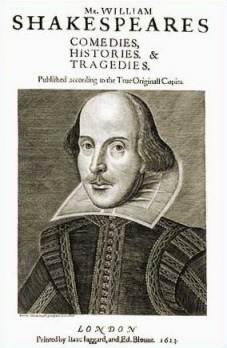 Shakespeare was a man surrounded by controversy. He, himself, has a biography filled with holes and question marks. Some have even held that the great English Bard could not have been one man. Although the idea that Shakespeare was really a compilation of men has been dismissed by most critics, the idea highlights a significant issue in trying to pin down the exact biographical and historical surroundings of the playwright.