Effects of Drug Carrier Geometry on Drug Delivery
By
2011, Vol. 3 No. 11 | pg. 1/1
IN THIS ARTICLE
KEYWORDS
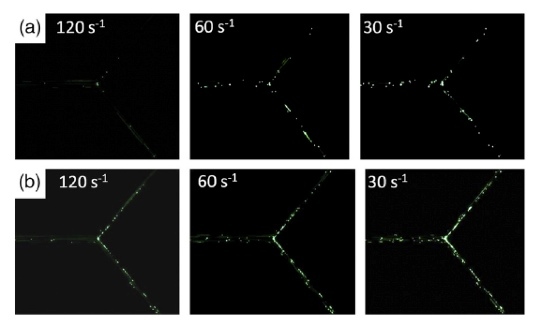
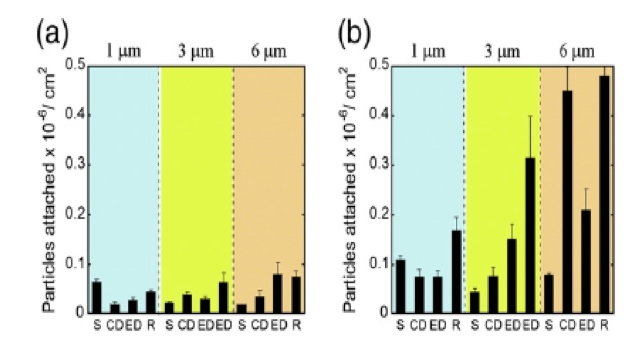
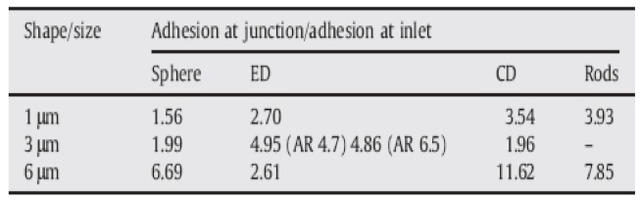
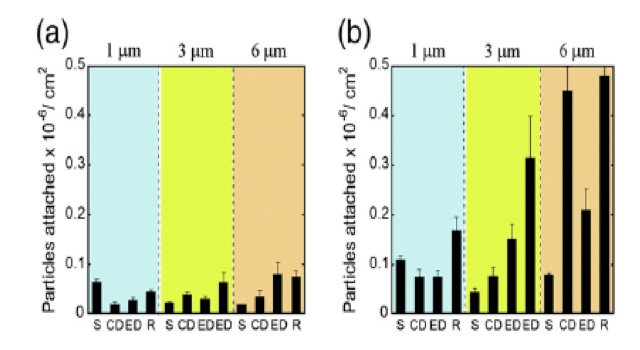
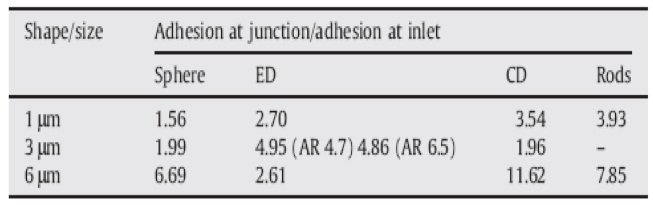
AbstractTraditional drug delivery development has often neglected the study of drug carrier shape in favour of size and surface chemistry due to the inadequacy of apparatus to mimic in vivo conditions and difficulty in pin pointing confounding parameters. These concerns have been addressed to an extent with development of bifurcating synthetic microvascular networks which have yielded encouraging results showing how geometry (shape) may be adapted to fit disease states such as atherosclerosis, with an aetiology dependent on arterial hemodynamics hence the tendency of appearing on the outer edges of bifurcating blood vessels where rod shaped particles show greater adhesion. IntroductionSynthetically formulated particles tend to be spherical due to the desire to minimize particulate surface energy. Size is considered the more pressing parameter to control in drug formulation due to the dependence on the enhanced retention and permeability (EPR) as the main strategy for delivery of particulate systems, requiring a size restriction of between 100-300nm on particle size if drug delivery is to be effective [1]. With the advancement of targeted drug delivery such as the use of monoclonal antibodies to target disease sites, geometry namely shape has emerged as an important research area for optimising targeting efficiency [2]. Abnormal endothelia such as those found in many disease states exhibit biological and biophysical differences [1]. Endocytosis is a key mechanism in drug delivery by particulate systems (nm to um) but the impact of geometry is little understood with regards to endothelial drug targeting, research has shown markedly different propensities for different carrier geometries, spheres tend to be endocytosed much quicker than disk shaped carriers which exhibit prolonged circulation half-life and better targeting efficiency in animal models [3] Research ConsiderationsMajor problems are encountered in carrying out such research using blood vessels; difficulty in observing, gathering results and also in controlling external factors places importance in finding in vitro conditions that mimic in vivo conditions sufficiently to give validity to results obtained[2]. Several apparatuses have been proposed for use in such researches, most commonly the parallel plate flow chamber [4] and more recently, simple microfluidic devices [5]. However their linear nature oversimplifies the vasculature and hemodynamics [6]. Microfluidic bifurcating synthetic microvascular networks (SMN) have been shown to be able to generate sound data in particle adhesion research as they represent a more complete model of the complex nature of vasculature [7].Adhesion Propensities of Varying Drug Carrier GeometriesDoshi et al (2010) investigated the effect of shape on adhesion propensities of drug carriers using SMN’s at shear rates ranging from 15 s-1 to 250 s-1 mimicking physiological conditions. Spherical particles of sizes 1,3,6µm were stretched to generate other shapes (elliptical/circular disks and rods) required for the study, so that the volume across all particles would be concordant. The SMN and particles were coated in complimentary antibodies (BSA and anti-BSA respectively) for consistent surface chemistry [2]. Data showed marked differences in adhesion between the different shapes. Regardless of geometry adhesion was greater at the junction of SMN’s than at the inlet, 6µm circular disks show 11.62 fold greater adhesion at the junction (see table 1) than at the inlet linear section of the SMN. Rods had the greatest attachment compared to any other shape. Elliptical particles (3µm) display on average ~ 4.5 greater attachment propensity compared to spherical particles (3 µm) at the 15s-1 shear rate. The difference is even starker at 250 s-1 where the factor is roughly ~10. The difference in adhesion propensities between these two shapes can be seen in fig 1. Circular disks show behaviour that fits in between that of spherical and elliptical particles. Different particle sizes where investigated so that any shape-size relationship could be analysed. For all particle shapes the greater the size the greater the attachment per unit2 and the starker the adhesion propensities [8]. Practical applications of Drug Delivery GeometryThe delivery of particulate systems can be simplified into three interconnected vectors: margination, adhesion and cell internalization [1]. Control of one of the vectors can help with drug affinity and specificity [9]. Research in the field of margination has proposed that ideal drug particles should marginate and drift towards vessel walls much akin to leukocytes when the inflammation mechanism is triggered. This ideal margination scenario would allow drug carriers to differentiate between normal and damaged endothelia e,g abnormal expression of specific antigens as is found in tumours, hence increasing specificity for the target therapeutic site [10,11]. Geometry of drug carriers can be a crucial parameter in controlling margination, traditional spherical drug carriers tend to show behaviour analogous to red blood cells during normal circulation, hence travel in the core of vessels unless under an external force [12]. Non spherical shapes such as rods display complex dynamics, experience lower drag and higher surface contact area, which can be adapted to control margination crucially in the absence of an external force [2,13]. This is shown in the experimental data (see fig 2) by the fact that regardless of size, rods show the highest adhesion of all geometries implying the importance of elongation over flatness which disks were used to investigate [2]. Diseases where hemodynamic stress is a crucial aetiological factor could benefit from geometric optimisation of drug carriers; atherosclerosis is a geometrically focal disease which research has shown more likely to occur at the junction of vessel bifurcations, areas with low hemodynamic stress (<15 dyne/cm2)[14]. Rod shaped drug carriers could be expected to be the most effective geometry for any therapeutic particulate system, looking at fig 2 they show an adhesion propensity ~4 greater than tradition spherical particles at the junction of SMN’s[2]. ConclusionGeometry has been shown to be important drug carrier transport in the blood vessel but the implication for drug formulation process has yet to be truly understood. Research needs to be undertaken in more complicated SMN’s perhaps incorporating the use of endothelial cells in the SMN’s to obtain more valid data that can be extrapolated to in vivo conditions. Furthermore the research by Doshi et al focused used sizes ranging from 1µm to 6µm mimicking, which is far bigger than orthodox drug carriers and hence research needs to be conducted in the nanoparticle range to see if the effect and advantage of geometry is still observed or viable especially as a major reason for the margination tendency observed in non-spherical shapes (e,g leukocytes) is due to the interaction with red blood cells [2,14,15]. References
Fig 1 Differences in adhesion propensities between (a) spheres and (b) elliptical disks in SMN at varying shear rates. Adapted from Doshi et al (2010) [2]
Fig 2 Adhesion propensity of carriers (number of particles attached per unit area for all shaped and sizes investigated at shear rate of 15s-1. S (Sphere), CD (Circular Disk), ED (Elliptical disk), R (Rods). Graph A represents adhesion at the inlet section of SMN. Graph B represents junction section. Adapted from Doshi et al (2010)[2]
Table 1 Adhesion at junction/adhesion at inlet (ratio) at shear rate set at 15s-1. Adapted from Doshi et al (2010) [2]

From the Inquiries Journal Blog   Monthly Newsletter SignupThe newsletter highlights recent selections from the journal and useful tips from our blog. Suggested Reading from Inquiries Journal
Inquiries Journal provides undergraduate and graduate students around the world a platform for the wide dissemination of academic work over a range of core disciplines. Representing the work of students from hundreds of institutions around the globe, Inquiries Journal's large database of academic articles is completely free. Learn more | Blog | Submit Follow IJ


Latest in Health Science |