|
Women (tagged articles)
The keyword Women is tagged in the following 82 articles.
2022, Vol. 14 No. 09
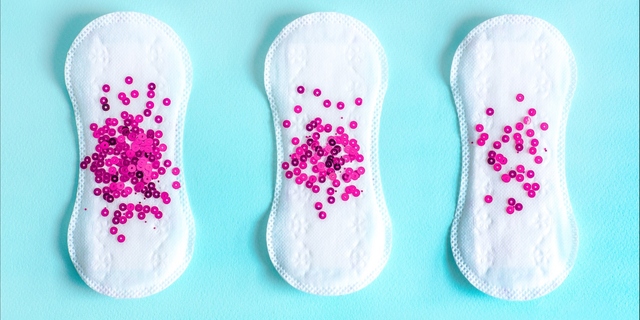
Perceptions of menstruation as a taboo subject have historically characterized Western and non-Western societies alike and persist today, both perpetuating harmful cultural understandings of Women’s abilities and normalizing institutional... Read Article »
2020, Vol. 12 No. 10
Bogs are one of Ireland’s most notable and mysterious landscapes. As explored in the work of Seamus Heaney, the bog’s capacity to preserve memory across generations makes it a melancholic terrain that is uniquely suited to explorations... Read Article »
2020, Vol. 12 No. 10
Centuries of subjugation under Spanish and American colonial rule have embedded an idealistic view of white beauty in the minds of Filipinos. It continues to be deeply rooted in Philippine culture due to the constant exposure of Filipina bodies... Read Article »
2020, Vol. 12 No. 10
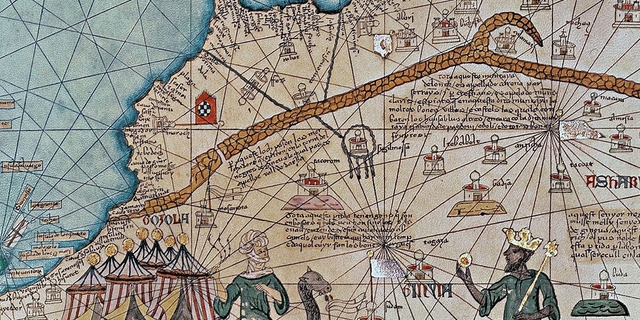
The fifteenth-century Middle English romance "The Sultan of Babylon" partakes in the Orientalist literary tradition through the poet's linguistic economy of the Other. The paradoxical shortages and surpluses of ethnic descriptors of East female... Read Article »
2020, Vol. 12 No. 10
This paper explores the woman’s body as a site of sanctity and disgust in the film Rosemary’s Baby. The character of Rosemary Woodhouse is depicted as a pure, virtuous, and feminine figure. She is positioned against other corrupted,... Read Article »
2020, Vol. 12 No. 07
From a very young age, Women are taught to suppress their sexuality. Sex, we are told, is deeply personal; a private act that must be sequestered within the four walls of a bedroom and never see the light of day. However, as we grow up we are steeped... Read Article »
2019, Vol. 11 No. 12
South Asian Women in particular are not only vulnerable to domestic violence, but exceptionally vulnerable to underreporting of domestic violence. The problem compounds itself by making it difficult not only to quantify the issue, but also harder... Read Article »
2019, Vol. 11 No. 10
Scholars have since the 1980s tried to explain why Women are more religious than men, but contradictory evidence complicates a precise answer (Pew Research Center 2016:54), so this essay evaluates some theories to explain Women’s increased... Read Article »
2019, Vol. 11 No. 10
The status of Women and their role in Late Antiquity has been a topic of inquiry among historians. It is a particularly challenging study to achieve a degree of certainty because of the biases present in historical evidence. This paper shall explore... Read Article »
2019, Vol. 11 No. 02
The issue of “comfort Women,” sex slaves utilized by the Japanese army during World War II, is treated in this paper as a collective memory in the consciousness of South Koreans. Differing narratives of this historical event, and the... Read Article »
2019, Vol. 11 No. 02
The discussion of ' Women's rights' is often subsumed into the broader consideration of 'human rights,' but when it comes to understanding the experiences of the world's most vulnerable people — refugees — the issue of gender cannot be... Read Article »
2019, Vol. 11 No. 01
Globalization is generally studied as a process that extensively impacts nations and peoples across every aspect of society. Empirical and theoretical research largely focuses on this effect, seeking to discover the impact of an increasingly globalized... Read Article »
2017, Vol. 9 No. 11
Domestic violence in India poses an interesting paradox: in addition to being the most ubiquitous of basic human rights violations, it is also the least reported and discussed. The tightly patriarchal norms and structure of traditional Indian culture... Read Article »
2017, Vol. 9 No. 10
“As Roman imperialism laid the foundations of the modern civilization, and led the wild barbarians of these islands along the path of progress, so in Africa today we are repaying the debt, and bringing to the dark places of the earth, the... Read Article »
2017, Vol. 9 No. 02
The International Criminal Tribunals for the Former Yugoslavia and International Criminal Tribunals for Rwanda, for the first time in international law, recognized sexual violence in conflict as crimes against humanity and grave breaches of international... Read Article »
2016, Vol. 8 No. 12
Near the end of 2015, in the midst of recent presidential and congressional debates, House Republicans proposed a bill to defund Planned Parenthood, blocking all of the organization’s federal funding, after the release of videos discussing... Read Article »
2016, Vol. 10 No. 1
"One thing governments have got is legislation. Legislation has an impact. It affects millions of people in a country just by a stroke of a pen." – Executive Director of UN Women, Dr. Phumzile Mlambo-Ngcuka, "Gender and Violence... Read Article »
2016, Vol. 8 No. 10
Over the last few decades, fetal homicide laws have become the topic of fierce debate. Some argue they are necessary to protect pregnant Women from violence and provide for restitution in cases of assault that result in the loss of the fetus. Others... Read Article »
2016, Vol. 8 No. 10
In the United Arab Emirates (UAE) and the Gulf Cooperation Council (GCC) states in general, Women played an important economic role in the pre-oil era (before the 1960s) in addition to their “traditional” domestic role. Fatima Al-Sayegh... Read Article »
2016, Vol. 8 No. 06
In Canada, a point of national pride has often been our publicly funded health care system. Its pillars of universality, accessibility and comprehensiveness exemplify the Canadian identity as being inclusive and progressive. However, it is important... Read Article »
2016, Vol. 8 No. 05
It is a common misperception that Islamist organizations are men’s groups. Some, like the Muslim Brotherhood, even involve specifically gendered names, or include other references to “brothers” and “brotherhood.” Beyond... Read Article »
2016, Vol. 12 No. 2
In this ethnographic case study, field observations were conducted of an all-female obstetrics and gynecology (OB/GYN) clinic located in Livonia, Michigan. While interacting with professionals as a student volunteer at the clinic, I took the role... Read Article »
2016, Vol. 8 No. 02
With the fall of the Tokugawa Shogunate in the late 1860s, there emerged (or re-emerged) a new center for power in Japan—the Emperor Meiji. With a long drawn restoration of the imperial stronghold, a complete restructuring of the economy,... Read Article »
2015, Vol. 6 No. 2
In recent decades, research has focused on the powerful effects of advertising on negative body image. While researchers have studied how the general female population reacts to various advertising techniques, little research has been published... Read Article »
2016, Vol. 8 No. 02
Who is a woman? What does it mean to be a woman? Is she a mother-daughter-wife-sister? Or is she more than that? What is her role in society and how does it play out in various institutions? Does she really face oppression? If so, how? Is Feminism... Read Article »
2016, Vol. 8 No. 01
The most commonly cited statistic for the gender wage gap in the United States is that Women earn seventy-eight cents to every dollar men earn. A great deal of contention however, surrounds the interpretation of this measure as well as others seeking... Read Article »
2015, Vol. 2015/2016 No. 1
Politics has been given many different definitions, ranging from something as solid as “the activities associated with the governance of a country,” to a more abstract designation such as “the principles relating to or inherent... Read Article »
2015, Vol. 2015/2016 No. 1
In 1999, The New York Times Magazine ran a cover story which asked: Does “being a good soldier [depend] on being an aggressive male?” “Is there something uniquely male about the warrior? Can the warrior survive the feminisation... Read Article »
2015, Vol. 2015/2016 No. 1
It is a generally accepted fact that there are both public and private spheres of action, and that as set out in Article 12 of the Universal Declaration of Human Rights, “no one shall be subjected to arbitrary interference with his privacy... Read Article »
2015, Vol. 2015/2016 No. 1
Statistics show that it is reasonable to argue that an increasing number of people worldwide are convinced of the importance of gender equality, in other words the idea that Women and men should have equal rights and receive the same respect in... Read Article »
2015, Vol. 7 No. 08
Since Independence, the Indian government has struggled to achieve political modernity within acceptable religious boundaries. Religious diversity in India necessitates governmental sensitivity toward sometimes opposing principles, and yet, when... Read Article »
2015, Vol. 7 No. 08
“Not all silences are equal,” writes Michel-Rolph Trouillot (1997, p.27). Not everyone, I add, possesses the power to silence a person or a group of people. In this research paper, I use gender as an analytical tool to examine the way... Read Article »
2015, Vol. 7 No. 06
The theme of feminism is present in Ariel Dorfman’s play, Death and the Maiden, and Laura Esquivel’s novel, Like Water for Chocolate. Both works showcase strong female protagonists endeavouring to escape and solve the issues of their... Read Article »
2015, Vol. 7 No. 06
The present study explores the portrayal of Women in ancient Greek literature within the context of warfare. More specifically, this work focuses on Classical Period Greek literature, particularly between 450 and 350 BCE, written by Athenian men... Read Article »
2015, Vol. 11 No. 2
The level of gender violence against native Women in the United States has reached epidemic proportions. Furthermore, the vast majority of Native American gender violence victims are abused at the hands of non-native men. Native American tribes... Read Article »
2015, Vol. 7 No. 04
In a 1920 speech on Women’s literature, the cultural critic Zhou Zuoren argued that the value of literature lies in its power to show us new human perspectives and “erase all boundaries and distances” (Zhou 1920), as spoken in... Read Article »
2015, Vol. 7 No. 03
Violence against Women has recently become well recognized as a violation of human rights that holds worldwide significance. Unfortunately, violence against Women outside of North America has gone largely unnoticed among the academic community and... Read Article »
2015, Vol. 7 No. 02
In 1972, The Equal Rights Amendment was first introduced to Congress to protect an individual’s irrefutable equality of rights under the law regardless of sex. Although it passed both houses and failed to secure the necessary votes for state... Read Article »
2015, Vol. 2014/2015 No. 1
At present, ‘more than 80 percent of Afghan Women are illiterate’.1 However, in the rural regions of Afghanistan, where more than 74 percent of the population lives, the illiteracy rate of females is closer to 93 percent.2 Following... Read Article »
2014, Vol. 5 No. 2
This study analyzed 54 advertisements for food products, grocery stores and restaurants in nine major Women’s magazines in order to gain understanding of the values of American ethnic groups. The author divided the magazines by audience (mainstream... Read Article »
2014, Vol. 5 No. 2
The purpose of this research is to identify trends and themes that reflect feminist values in American Women’s magazines throughout history. The goal is to show that feminism was an frequently discussed topic in American media as it gained... Read Article »
2014, Vol. 6 No. 10
For scholars of gender and sexuality, the publication of Joan Wallach Scott’s acclaimed essay “Gender: A Useful Category of Historical Analysis” in the 1970s was a remarkable moment. The essay, although specifically directed toward... Read Article »
2014, Vol. 4 No. 2
Women make up anywhere from 0% to 56% of the national legislatures around the world. Research has attributed this wide spectrum to political, socioeconomic, and cultural or ideological factors. After testing these existing theories on a sample of... Read Article »
2013, Vol. 4 No. 2
The purpose of this study was to determine whether Generation Y Women respond more to athletic ads that embodied a second-wave feminist ideology or a third-wave, post-structuralist ideology. A focus group was conducted and its findings revealed... Read Article »
2013, Vol. 4 No. 2
The purpose of this study was to analyze advertisements in magazines targeting Women readers and find the preferred type of appeals advertisers used. This study analyzed 590 advertisements in three Women's interest magazines from October 2012 to... Read Article »
2013, Vol. 9 No. 2
One may contend that attaining unadulterated awareness of one’s existence is, in present society, idealistic. Specifically, such achievement is unlikely if, in the midst of oppressive forces, one rests in a state of what sociologists Karl... Read Article »
2013, Vol. 4 No. 1
This article compares the media's framing of five groups in response to a societal catalyst that propelled them into the public and media spotlight: Native Americans during the Indian Wars; Women during the suffrage movement; African Americans during... Read Article »
2013, Vol. 3 No. 2
Women’s advancement in the corporate workplace has taken significant strides over the last century. Research demonstrates, however, that despite an increased presence of female employees in mid-management positions, executive positions continue... Read Article »
2013, Vol. 5 No. 09
This study investigates the behavior of the labor supply of Canadian Women at different composite hourly wages of all paid jobs in 2009. Since it is widely demonstrated in the literature that variables such as age and levels of education, as well... Read Article »
2013, Vol. 5 No. 06
“Tonight, we gather to affirm the greatness of our nation—not because of the height of our skyscrapers, or the power of our military, or the size of our economy. Our pride is based on a very simple premise, summed up in a declaration... Read Article »
2012, Vol. 2 No. 1
In light of Women's underrepresentation in student government, this paper investigates to what extent levels of political ambition differ between male and female students and why at American University. Current literature regarding Women's underrepresentation... Read Article »
2012, Vol. 4 No. 09
This essay explores the roles of Women in Beowulf in a contextual assessment. It is often an incorrect assumption that Women within Beowulf and Anglo-Saxon culture are subservient to a patriarchal culture that places little to no value on them.... Read Article »
2012, Vol. 1 No. 1
This paper seeks to determine the impact the Zapatista Movement had on Women's rights in Chiapas, Mexico. I hypothesized that the movement positively, but indirectly, impacted Women's rights in Chiapas by causing increased awareness of the issues... Read Article »
2012, Vol. 4 No. 05
New York’s 1827 mayoral election was the harbinger for a new era in politics. Tammany Hall—New York’s democratic political machine—suborned thousands of immigrants to vote for the pro-Tammany ticket. With cartloads of Irish... Read Article »
2011, Vol. 5 No. 1
Over the past thirty years, China has moved from a communist to a capitalist economy. This change has pushed millions of young, rural Women to migrate to the cities in order to begin working in its many booming factories. These Women, if they manage... Read Article »
2011, Vol. 3 No. 10
In 1967, Valerie Solanas wrote and self-published the SCUM Manifesto, which called for male gendercide and the creation of a superior, all-female society.[1] This radical manifesto declared that Women must “overthrow the government, eliminate... Read Article »
2011, Vol. 3 No. 10
Since the early 20th century, the feminist movement has made enormous strides to improve the status of female athletes. Prior to the movement’s achievements, female athletes had to play in much poorer facilities, under different rules, and... Read Article »
2011, Vol. 3 No. 09
The prevailing issue of fin-de-siècle France was the increasing autonomy of Women. Independence for Women threatened traditional social and gender roles, and consequently men’s civil power. Margaret and Frances Macdonald embodied this... Read Article »
2011, Vol. 3 No. 07
American culture is saturated with messages propagated by mass media. What was originally created for encouraging consumerism is now being promoted to a society that is being consumed by the messages themselves. Mass media is especially harmful... Read Article »
2011, Vol. 3 No. 05
Despite the increasing number of states that have ratified binding international human rights treaties, human rights abuses continue unabated. The persistence of rights abuses cast doubt on the efficacy of human rights treaties. This paper empirically... Read Article »
2011, Vol. 3 No. 03
Rebecca West’s 1918 novel The Return of the Soldier dissects the socioeconomic and psychological tensions wrought by the upheaval of the First World War. In a nuanced reiteration of the typical trope of a soldier’s return, Christopher... Read Article »
2011, Vol. 3 No. 02
Christianity has not gained a large number of adepts in China, if compared, for example, with Japan. But Christianity in China, in the late Imperial Era, had a number of particularities. Moreover, Christianity sometimes influenced Chinese Women&... Read Article »
2011, Vol. 3 No. 01
Madame de Beaumont's Beauty and the Beast and Angela Carter's The Tiger's Bride delve into the nature of men and Women and the relationships between them by exploring and analyzing the motifs of wildness and civilization. Thus, Women are presented... Read Article »
2010, Vol. 2 No. 12
Joseph Conrad’s Heart of Darkness is a novel about the human psyche. It is as concerned with man’s ability to descend into madness as it is with his ability to break away from it and triumph over the dark, consuming impulses that threaten... Read Article »
2010, Vol. 2 No. 12
In the society that Giovanni Boccaccio’s The Decameron is set in, Women generally are held in a lower social standing than men. As with most societies until relatively recently in history, Women were not allowed to have a significant role... Read Article »
2010, Vol. 2 No. 11
Historically, female models in photographic art have depicted an ideological construction of the female body which Women, regardless of stature, ethnicity or class, must conform to. John Berger (1972, p. 46) notes that ‘to be born a woman... Read Article »
2010, Vol. 2 No. 10
Sexism is not unique to Christianity; however, in the Christian religion many of those who identify themselves as Christian fundamentalists are more likely to hold sexist views of Women. Because the scriptures were written during a time in which... Read Article »
2010, Vol. 2 No. 09
The role of Women in ancient Japan elicits inconsistencies due to different influences that were integrated at various time periods. The primary influence that contributed to these inconsistencies was religion. Integration of the two major religions... Read Article »
2010, Vol. 2 No. 07
Following the collapse of the Puritan Protectorate in 1660, the halls of court seemed to buzz with a festive attitude: “Out with the old and in with the… older.” Cavalier revelries under Charles II regained the notoriety of their... Read Article »
2010, Vol. 3 No. 2
Human trafficking is a global issue that is only recently being recognized with global action. The United Nations' Protocol to Prevent, Suppress and Punish Trafficking in Persons, Especially Women and Children (UNTIP), the first global initiative... Read Article »
2010, Vol. 2 No. 03
From skimpy skirts to smoldering skivvies, American’s remember the 1960s as a decade of social change and assertion of the rights and strengths of Women. True to American style, the Women’s movement was fought and won boldly and bluntly... Read Article »
2010, Vol. 2 No. 01
In Mary Shelley’s Frankenstein, the author characterizes each woman as passive, disposable and serving a utilitarian function. Female characters like Safie, Elizabeth, Justine, Margaret and Agatha provide nothing more but a channel of action... Read Article »
2010, Vol. 2 No. 01
Mass media is perhaps the most powerful tool in the world for creating, changing or perpetuating society’s ideas about an issue or group of people. It works both overtly and subconsciously: deciding which issues are important, how to frame... Read Article »
2010, Vol. 2 No. 01
Sylvia Plath‘s The Bell Jar is about a young woman named Esther Greenwood entering college in the early 1950’s, a time before the second wave of the Women’s movement had been implemented. Esther has dreams of becoming a famous... Read Article »
2010, Vol. 2 No. 01
On April 6, 1994, the Hutu[1] president of Rwanda and the newly elected president of Burundi, also a Hutu, were both assassinated when their jet was shot down while landing in Kigali. In response to the April killing of the two state presidents,... Read Article »
2009, Vol. 1 No. 12
“The genocide was a collective act. What made it possible, what made that final political crime possible was the absence, the erasure of seeing the other, of knowing, of feeling, of being with the other. And when that's removed, then politics... Read Article »
2009, Vol. 1 No. 12
Nationalism is defined by Merriam-Webster’s dictionary as, “loyalty and devotion to a nation; especially: a sense of national consciousness exalting one nation above all others and placing primary emphasis on promotion of its culture... Read Article »
2009, Vol. 1 No. 11
In her book, Maneuvers: The International Politics of Militarizing Women’s Lives (2000), Cynthia Enloe examines the role militarization plays in Women’s lives. Enloe defines militarization as “a step-by-step process by which a... Read Article »
2009, Vol. 1 No. 11
In Shakespeare’s play Macbeth, he presents the conflicting character of Lady Macbeth. Upon receiving her husband’s letter about the witches’ prophesies, she attempts to be like a man in order to exude the strength needed to gain... Read Article »
2009, Vol. 1 No. 11
The ability to control one’s sexuality and make informed, responsible decisions about one’s sexual health is a basic human right. The Netherlands, Sweden, Australia, France and Germany protect this right by providing comprehensive sex... Read Article »
2009, Vol. 1 No. 11
Every year, 10-50% of Women suffer intimate partner violence (Bargai, Ben-Shakhar, & Shalev, 2007). It is important to understand what conditions affect these battered Women and how any resultant conditions interact with each other in order... Read Article »
2009, Vol. 1 No. 11
Sex work has long been criticized and stigmatized in our society. While many members of society view sex work as immoral and degrading to Women, I argue that sex work is essentially just work, and that it is not necessarily harmful to Women. Under... Read Article »
Expedited Article Review
Submit an article and get a decision fast.
If you need a fast decision, INQUIRIES Journal offers expedited processing of your submission for a small fee. Depending on the expedited review option you choose, you can receive a decision in as few as 5-days.
In addition to a shorter review period, the fee supports the journal's continued operation and open-access publishing model. Standard submissions are always free. Submit Now » - Submit an Article to Inquiries Journal -
|