Featured Article:Cedars to the East: A Study of Modern Lebanon
By
2011, Vol. 3 No. 12 | pg. 1/1
IN THIS ARTICLE
KEYWORDS
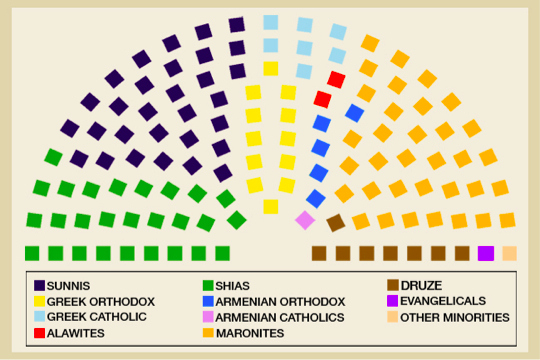
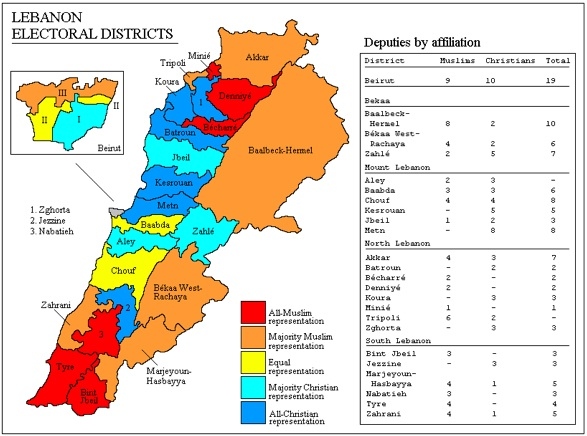
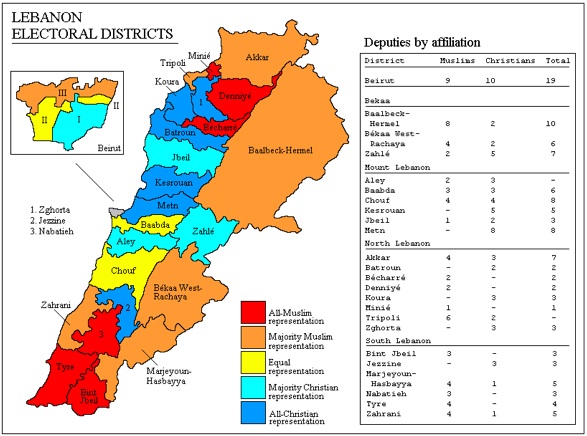
The political history of the Middle East is a complex story wrought with instability, conflict, religious and ethnic cleavages, and artificial imperial and colonial borders. These challenges manifest themselves in varied political systems, norms, and tensions--both domestic and external--in the countries throughout the region. Looking at Lebanon, we see a country that has been, for centuries, a central meeting place of all these conflicts and challenges. From its time under Ottoman rule, Lebanon was beset by religious conflict and infighting among rival religious sects. These violent flare-ups were exacerbated by European intervention in Lebanese affairs. Under French colonization, Lebanon’s confessional system (allocating parliamentary seats based on religious affiliation) was institutionalized, and has been in place ever since. Many argue that this system is the only way to guarantee representation of all the country’s minority groups, while others argue that the system is wrought with corruption and perpetuates reinforcing cleavages, which came to a head during the 1975-1990 Lebanese Civil War. This paper traces the historical background of Lebanon, providing context for the country’s many conflicts and explaining why key political decisions were made. Secondly, it analyzes Lebanon’s political system, focusing on the uniqueness of their confessional system of seat allocation. This section weighs the system’s strengths and weaknesses, as well as its potential to be manipulated. Finally, using corruption data and information from the large black market economy surrounding vote-buying, a case is constructed for the adoption of a proportional system of representation, replacing the dysfunctional methods used in Lebanon today. The Historical Perspective: Lest We Be Doomed to Repeat ItWhen looking at Lebanon, the student of history must realize that it has been and continues to be a country struggling to find its identity. As far back as the First Crusade, Lebanon found itself at the mercy of foreign powers imposing their political will on domestic issues. Lebanon was in the main path of the First Crusade's advance on Jerusalem. Later, Frankish nobles occupied present-day Lebanon as part of the southeastern Crusader States.1 The southern half of present-day Lebanon formed the northern march of the Kingdom of Jerusalem; the northern half was the heartland of the County of Tripoli.2 Although Saladin eliminated Christian control of the Holy Land around 1190, the Crusader states in Lebanon and Syria were better defended, and Muslim control of Lebanon was not reestablished until the late 13th century under the Mamluk sultans of Egypt.3 During this time, local Maronite Christian groups were strengthened and supported by the Europeans. They were given more of a political voice in the Crusader States and found wealth trading with Venetian merchants.4 Once given this taste of freedom under a Christian majority, the Maronites would be satisfied with little less once Lebanon returned to Arab rule. Skipping ahead to the era of Ottoman rule, we see the beginnings of Lebanon’s modern day confessional system. Part of the Ottoman strategy for maintaining peace throughout the empire was the use of the millet system of governance; whereby non-Muslims were allowed to worship freely, live under their own laws, and enjoy a sort of protected status within the Empire.5 Each of these semi-autonomous millets paid higher taxes and were subject to an Ottoman governor,6 but different groups were able to pursue their own interests with little interference from the imperial government. Unfortunately, this tentative peace could not be maintained indefinitely. During the nineteenth century, Beirut became the most important port of the region, supplanting Acre to the south.7 This was mostly because Mount Lebanon became a centre of silk production for export to Europe. While this new industry quickly increased the region’s wealth, since most of the silk produced went to Marseille, the French began to have a more direct impact on politics.8 Under Emir Bashir II, financial ties to France grew heightening the economic and political isolation of the Druze, and the increasing wealth of the Maronites.9 This discontent grew into an open rebellion. In 1841, conflicts between the impoverished Druze and the Maronite Christians exploded resulting in a massacre of Christians by the Druze at Deir al Qamar.10 The Ottomans attempted to create peace by dividing Mt Lebanon into a Christian district and a Druze district, but this would merely create geographic powerbases for the warring parties, and it plunged the region back into civil conflict which included not only the sectarian warfare but a Maronite revolt against the Feudal class. Another destabilizing factor was France's support for the Maronite Christians, which in turn led the British to finance the Druze offensives, exacerbating religious and economic tensions between the two communities.11 Druze forces verge of total military victory when the Congress of Europe intervened.12 French forces were deployed to enforce the group’s final decision, another example of foreign interests interfering in Lebanese affairs. The French accepted the Druze as having established control and the Maronites were reduced to a semi-autonomous region around Mt Lebanon, without even direct control over Beirut itself.13 It is estimated that more than 4,000 Christians were killed in the conflict, with another 4,000 dying of destitution, and over 100,000 reduced to refugee status.14 The remainder of the 19th century saw a relative period of stability, as Islamic, Druze and Maronite groups focused on economic and cultural development which saw the founding of the American University of Beirut and a flowering of literary and political activity associated with the attempts to liberalize the Ottoman Empire.15 One of the most destabilizing events in Lebanon’s history was the League of Nations mandate that placed Lebanon under French governance. Following the collapse of the Ottoman Empire after World War I, the League of Nations mandated the five provinces that make up present-day Lebanon to the direct control of France in 1922.16 According to the agreements reached at San Remo, having taken Damascus in 1920, France’s control over Syria was recognized, providing the French with a unique opportunity. Wanting to maximize the area under its direct control, contain Syrian influence centered in Damascus, and insure a defensible border, France established the Lebanon-Syrian border on the far side of the Beqaa Valley, territory which had belonged to the province of Damascus for hundreds of years, and was far more attached to Damascus than Beirut by culture and influence.17 This doubled the territory under the control of Beirut, at the expense of what would become the state of Syria, and profoundly altered the demographics of Lebanon. Overnight, Maronite Christians were reduced to barely more than 50% of the population, while Sunni Muslims in Lebanon saw their numbers increase eightfold and Shi'ite Muslims fourfold.18 Modern Lebanon's constitution, drawn up in 1926, specified a balance of power between the various religious groups, but France designed it to guarantee the political dominance of its Christian allies. The president was required to be a Christian (in practice, a Maronite) and the prime minister a Sunni Muslim.19 On the basis of the 1932 census, parliament seats were divided according to a six-to-five Christian/Muslim ratio.20 The constitution also gave the president veto power over any legislation approved by parliament, virtually ensuring that the 6:5 ratio would not be revised in the event that the population distribution changed.21 By 1960, Muslims were thought to constitute a majority of the population, which contributed to Muslim unrest regarding the political system.22 The French Mandate expired in 1946 and Lebanon finally achieved independence. Alternating periods of turmoil and political stability have marked Lebanon’s history from independence, with prosperity built on Beirut's position as a regional center for finance and trade.23 Beirut became a prime location for institutions of international commerce and finance, as well as wealthy tourists, and enjoyed a reputation as the "Paris of the Middle East" until the outbreak of the civil war.24 The most important and formative event of modern day Lebanon is, without question, the 1975-1990 Lebanese Civil War. Political tensions rooted in the constitution’s inherent inequality led Kamal Junblatt to form a self-proclaimed "democratic, progressive and non-sectarian" front, which later allied itself with the Palestinians.25 This front grouped several nationalist and leftist political parties and organizations that formed the Lebanese National Movement (LNM) in 1976. The conservative forces led by the predominantly Christian Kata'ib (Phalange) Party formed another block called the Lebanese Front.26 The LNM advanced a comprehensive political reform plan, which called for the total abolition of political confessionism and the implementation of wide democratic reforms of the political, electoral, and administrative systems.27 The Lebanese Front rejected these reforms and advocated an alternative, although less articulated, plan that varied from maintaining the status quo to political decentralization and federalism.28 During the first two years of the war, 1975-1976, the balance of forces favored the LNM and their Palestinian allies. They tried to advance their plan but were unable to impose it, especially after the Syrian military Intervention in 1976.29 The Israeli invasion of 1982 dealt a staggering blow to the Palestinians and the LNM and dramatically strengthened the Lebanese Front, bringing its militant leader, Bashir Gemayel, to the presidency.30 Throughout the conflict, Syria, Palestine, Israel, and even the United States played major roles in sustaining the conflict and undermining Lebanese sovereignty. On another level, internal battles of that period (in the Mountain and Shouf area [1983], in Beirut [1984], and in East Sidon [1985]) increased the sectarian character of the Lebanese conflict. Confessional segregation reached its peak and the confessionally-based militias ruled the various regions in closed and semi-closed enclaves.31 In the "Christian areas" the militias spread slogans of a "Christian republic," "Christian security," federalism and partition. In the "Muslim areas," the emerging radical Islamic movements raised the slogans of an Islamic republic.32 After years of conflict, there came a general acceptance that none of the warring factions could decisively win the war, and that there was no alternative to a new compromise ensuring the continuity of Lebanon as an entity having a united central political system. 33 The Taif Agreement constituted a compromise among the Lebanese deputies, political groups and parties, militias and leaders. It tackled many essential points pertaining to the structure of the political system and to the sovereignty of the Lebanese state.34 Indeed, these two issues are interrelated. The mechanism for regaining state sovereignty was preceded by an affirmation of the identity and unity of Lebanon.35 It was also preceded by internal political, administrative and other reforms. The Taif Agreement strengthened the office of Prime minister, making it responsible to the legislature rather than directly to the president; increased the size of the legislature to 128 seats with an even split of Christian and Muslim seats (64 each); and provided for the disarmament of all national and non-national militias.36 After Taif, confessional balance and confessional representation became the top priority in the new constitution; moreover, confessionism was reproduced and further institutionalized.37 With the signing of the Taif Agreement, an uneasy peace came over the Lebanese landscape and the people that had been ravaged and violated by war for decades. Since the end of the war, the Lebanese have conducted several elections, most of the militias have been weakened or disbanded, and the Lebanese Armed Forces (LAF) have extended central government authority over about two-thirds of the country.38 Only Hezbollah retained its weapons, and was supported by Lebanon's parliament in doing so, because it was defending Lebanon against the ongoing Israeli occupation of almost one-quarter of the country, which finally ended in May 2000 because of the attacks launched by Hezbollah on Israeli strongholds on the south of Lebanon.39 Postwar social and political instability, fueled by economic uncertainty and the collapse of the Lebanese currency, led to the resignation of Prime Minister Omar Karami, who was replaced by former Prime Minister Rashid al Sulh, tasked to serve as a caretaker to oversee Lebanon's first parliamentary elections in 20 years.40 By early November 1992, a new parliament had been elected, and Prime Minister Rafiq Hariri had formed a cabinet, retaining for himself the finance portfolio. The formation of a government headed by a successful billionaire businessman was widely seen as a sign that Lebanon would make a priority of rebuilding the country and reviving the economy.41 While problems with basic infrastructure and government services persisted and sovereign debt was piling up quickly, much of the civil war damage has been repaired throughout the country, and many foreign investors and tourists returned under Hariri’s rule. If Lebanon has in part recovered over the past decades from the catastrophic damage to infrastructure of its long civil war, the social and political divisions that gave rise to and sustained that conflict remain largely unresolved. Parliamentary and more recently municipal elections have been held with fewer irregularities and more popular participation than in the immediate aftermath of the conflict, and Lebanese civil society generally enjoys significantly more freedoms than elsewhere in the Arab world.42 However, there are continuing sectarian tensions and unease about Syrian and other external influences.43 During Lebanon's civil war, Syria's troop deployment in Lebanon was legitimized by the Lebanese Parliament in the Taif Agreement, supported by the Arab League, and is given a major share of the credit for finally bringing the civil war to an end in October 1990.44 In the ensuing fifteen years, Damascus and Beirut justified Syria's continued military presence in Lebanon by citing the continued weakness of a Lebanese armed forces faced with both internal and external security threats, and the agreement with the Lebanese Government to implement all of the constitutional reforms in the Taif Agreement.45 The United States and France rejected Syrian reasoning that they were in Lebanon by the consent of the Lebanese government, claiming that the latter had been co-opted and that in fact Lebanon's Government was a Syrian puppet.46 The 2004 amendments to the constitution that would have extended the pro-Syrian president’s term-limit are further evidence of Syrian influence over Lebanon’s government. Syria was charged with pressure the National Assembly to amend the constitution, and many of the Lebanese rejected it, saying that it was considered as contradictive to the constitution and its principles.47 Pressure against Syria increased exponentially after Hariri’s assassination and the full extent of their power in Lebanon was understood.48 Lebanon’s sovereignty issues do not end there. From the beginning of the civil war, Hezbollah has been a rogue actor, subverting government policy and engaging in hostilities with Israel. Funded and supported predominantly by Iran,49 Hezbollah seeks to lay down the bases of a Muslim state, which plays a central role in the world.50 Hezbollah has been kept out of politics by the relatively pro-Western forces of the Lebanese government, but that has not stopped their paramilitary wing from undermining the government’s monopoly over the use of force. Rocket attacks into Israeli territory sparked the 34-day 2006 Lebanon War despite the government’s attempts to avoid conflict.51 In recent elections, Hezbollah’s political wing has actually gained a considerable voice in the parliament. Lebanon’s is a long and complex story wrought with conflict and competing groups. As such it should come as little surprise that this bloody history birthed a political system that strives to maintain peace and equilibrium among those in conflict. The effectiveness of this system is analyzed in next section. The Lebanese Political SystemThe alternating periods of conflict and prosperity found throughout Lebanon’s history may corroborate the classic Clemenza Theorem, which states “This thing's gotta happen every five years or so; ten years; helps to get rid of the bad blood,”52 but they are not conducive to a well-run political system. In this section, I define and analyze the structures of the Lebanese political system; examine how the system affects measures like proportionality and coalition composition; and weight the system’s benefits and drawbacks, such as corruption, vote-buying, and lack of accountability. The Confessional System The term confessional-system has been used in this paper several times so far, but has not yet been sufficiently defined. Lebanon is divided into 26 constituencies that are then grouped into five regions: Beirut, Bekaa, Mount Lebanon, North Lebanon, and South Lebanon. (See Appendix A for the district map with religious breakdown.) Each district has a certain number of parliamentary seats determined by district population. Of these districts, Beirut is the largest and elects 19 deputies while Minié is the smallest and elects only one. What makes Lebanon’s system unique is that each district reserves seats for different religious groups, ensuring representation of all minorities. Taking Beirut as an example, of the 19 total seats, 9 are reserved for Muslims and 10 for Christians (further divisions are made among the groups ensuring that the proportion of seats allocated to Sunni, Druze, Shi’a, Greek Orthodox, Maronite candidates represents the districts demographic reality).53 This complex calculus is done throughout Lebanon’s districts, ensuring that the even 64-64 seat split between Christians and Muslims looks like this:
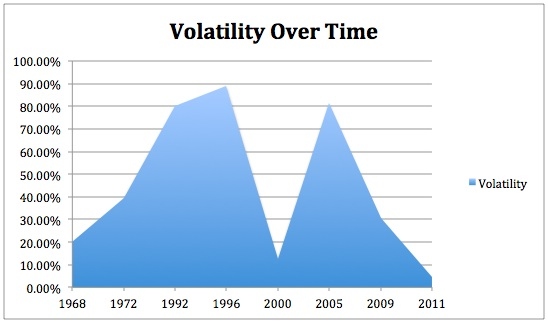
Image Source: http://www.anigalla.net/70mm/post/Lebanon-Elections-and-Results-2009-Lebanon-Election-Results-Exit-Poll-Results.aspx Before the Taif Agreement, this system was built to maintain a 6:5 majority for Christians (see appendix B for the totals before and after the Taif Agreement). The Executive and Judicial Branches The National Assembly elects the president for unlimited, nonconsecutive six-year terms, and, as agreed in the National Pact of 1943, he or she is to be a Maronite Christian. Post-Independence, the President held veto power, extensive control over the prime minister, and with the 6:5 Christian majority, he was, for all intents and purposes, the head of the government.54 Only after the Taif agreement, were the president’s powers curtailed and limits more explicitly defined. As dictated by the constitution, the president is the head of state, chair of the Supreme Defense Council, and commander in chief of the armed forces.55 The president still holds veto power and a few extended authorities in states of emergency, but the role of the Prime Minister as head of government has been more clearly established. Lebanon's judicial system is a mixture of Ottoman law, Napoleonic code, canon law and civil law. The Lebanese court system consists of three levels: courts of first instance, courts of appeal, and the court of cassation. The ten-member Constitutional Council rules on the constitutionality of laws and electoral frauds. Five of its members are elected by the parliament and five are appointed by the executive.56 There also is a system of religious courts having jurisdiction over personal status matters within their own communities, with rules on matters such as marriage and inheritance57 While the courts have made important rulings on social and religious issues such as age of consent, polygamy, and women’s rights, ruling regarding electoral laws and statues have been delayed, at times by the president wanting to buy time, and at times, by the Council itself.58 With a better understanding of the complex nature of the power-sharing executives and the split judiciary, one can see how alarmingly easy it can be for political disagreements in Lebanon to snowball into destabilizing conflicts. Parties, Stats, and the Nitty-Gritty of Elections True political power in Lebanon lies in the 128-seat unicameral legislature. These deputies, directly elected every four years, represent the political preferences and religious diversity of their districts. While as an ideal, this system sounds perfect given Lebanon’s unique circumstances and demographics; the realities of recent elections pain a different picture, and we are left to wonder whether a confessional system can every truly represent the people of Lebanon. The 2009 election can be summed up as an electoral between the March 14th Alliance, led by Saad Hariri’s Future Movement Party, and the March 8th Alliance, led by Hezbollah and Armal. Unfortunately, in spite of tireless searching, party-specific vote data could not be found either through the Interior Ministry’s archives or from open source data online. This may be due to government inefficiency, lack of transparency, and Lebanon’s lack of uniform ballots, which I will discuss in a later section. However, seat allocations and coalition percentages were more readily available. Looking at the results, one is immediately struck by the fact that the March 14th Alliance received only an average of 44.5% of the national vote, but received 71 seats; while the March 8th Alliance received 55.5%, but only 57 seats in the legislature.5960 Coincidentally, this result is virtually the same as the result from the election in 2005.61 What is significant about these elections becomes evident after completing the Least Squares calculation of proportionality. (Sere Appendix D) What we are left with is a roughly 11% deviation from proportionality; nearly twice our global baseline of 6.65%.62 Under normal circumstances, the 11% figure would not raise any red flags, but when we consider it in the context of Lebanon, a country with a political system that is falling over itself to ensure proportional representation of different groups, this figure becomes more interesting. Why, despite their best efforts, are the Lebanese still so far from the proportionality they strive to achieve? The answer lies within the confessional system itself. To illustrate this point, take the district of Baabda as an example. The six seats in this district are split with three seats reserved for Maronites, two for Shias, and the last seat for Druze candidates.63 In this system, the top three Maronite candidates will be elected to the legislature, but the candidate with the fourth-highest vote total receives nothing, even if he/she received more votes than the top Shia or Druze candidates. These votes that are lost and sent into the electoral void decrease the proportionality of the election results and directly undermine voter preferences. With 26 districts electing 128 representatives, Lebanon’s average district magnitude is 4.92 (M = 128/26), which is well below Lijphart’s magical M=7 threshold where a legislature truly represents a microcosm of society.64 With the confessional system, a Maronite voter in Baabda sees the district magnitude cut effectively in half from its intended six seats down to only three. While voters are encouraged and expected to vote for candidates for each seat, regardless of their personal religious identity, this rarely works as originally intended. Religious prejudice may result in voters ignoring candidates of other faiths; party deals and strategies may call for members to vote for certain coalition partners running for other seats, or conversely they may instruct members to ignore a seat entirely.65 This is made possible by the fact that there are no official ballots in parliamentary elections. Voters may either write the names of the candidates they wish to vote for on a plain piece of paper, or they may use party-issued ballots that are almost completely unregulated by the central government.66 These shortcomings of the confessional policies reduce the proportionality and effectiveness of a delicate system and make it susceptible to corruption and manipulation by parties and power players. Volatility: Tempest in a Teapot, or Quiet Serpent Waiting to Strike? Given the challenging demographic realities and fractured political system in Lebanon, coalitions and political alliances have been the only way for parties to remain in power. As such, with these ever shifting alliances and marriages of political convenience, Lebanon is prone to a high level of volatility from cycle to cycle. (See Appendix E for volatility measurements).
Source: Author Generated Running the volatility calculations yields some alarming results for Lebanon. With an overall, average volatility of 44.82%, Lebanon has quintupled the global baseline of 8.6%.67 With this average and spikes of +80% in the aftermath of the civil war, one would assume that democracy in Lebanon is in the midst of its death throes, and in one sense this is correct; however, like all other aspects of Lebanese politics, this too requires further investigation. Looking closely at the Appendix E table, it becomes apparent that this electoral volatility is not due to massive swings in voter preference, but due to changes within the parties themselves. The Taif Agreement ended the destructive Lebanese Civil War and did away with the old 6:5 Christian majority, replacing it with equal representation for Christians and Muslims; but with beneficial changes, Taif also unshackled the forces of political gamesmanship. Where before the status quo was predictable and parties were merely competing for power within the Muslim minority, after the 64-64 split, suddenly the majority was available to whichever party or coalition was strong enough to take it.68 With that in mind, parties seized the opportunity 1992 and 1996 to form new coalitions and blocs that had never previously existed. Volatility was fueled not by voters deciding they no longer liked a party, but by parties deciding they no longer liked themselves. Parties became preoccupied with their structure, their allies, and how these factors affected their chances of capturing that all-important 65th vote and joining the government. Looking again at the table, a massive volatility spike in 2005 coincides with the formations of the March 8th and March 14th Alliances. These grand-coalitions unified by ideology, circumstance, and in some cases convenience have dominated Lebanese politics for the last six years. Since their formation in 2005, volatility has steadily decreased, signaling that the alliances are stable. With the volatility rating a mere 4.69% during the 2011 Hezbollah political coup, I would argue that Lebanon has begun moving from a multi-party system to a two-coalition system. As predicted by Maurice Duverger, the stronger the alliances become, the more we will see the fusion of small parties under the leadership of either the Future Movement or Hezbollah, respectively, and the elimination of weaker parties by voters.69 These powerful alliance structures coupled with the lack of reliable party-specific data make it very difficult to calculate the effective of number parties. While an empirical measure of the strength of Lebanon’s parties would be ideal, qualitative analysis of the volatility table provides some clear insights into coalition structures and the power of individual parties. Looking at the 2011 shift in power, we see the March 14th Alliance lost its majority when Hezbollah convinced the Progressive Socialist Party to leave the Alliance and join the March 8th Alliance government as “pro-government independents.”70 The transfer of those eleven seats reduced the March 14th Alliance from 71 votes to only 60 and allowed the March 8th Alliance to take over with 68 in total. From this point of view, the Progressive Socialist Party was a major power player; while the March 14th Alliance was not a minimal winning coalition, this defection was still enough to cost them the majority. This brings up a deeper question about Lebanese coalitions, namely, how would one form a minimally connected winning coalition? To this there is no easy answer. Given the religious divisions maintained by the confessional system, parties are forced to play political games on two different levels when forming coalitions. A party like the Progressive Socialists does not have a stated religious agenda, as it is more concerned with economic and welfare policies, so on that metric, the socialists would be neutral. A party like Hezbollah, with its clear ideological and theological stance, falls on the Islamist side of the spectrum, but their social policies have room for experimentation. In this case, a party that would sit socially on the left is in high demand by both coalitions due to its central, swing-vote status on the religious metric. Given the right incentives, the socialists could be persuaded to change their allegiances in exchange for a governmental post that would allow them to pursue their policy goals, so long as the main party’s religious agenda does not interfere. Vote-Buying & The Party Apparatus: It’s Just The Way Things Are Done To conclude this section I will delve into the thriving black market that surrounds vote-buying in Lebanon. Dominant parties seek to purchase votes by co-opting poor, uneducated voters in key districts. Like any other economic transaction, vote-buying is governed by the laws of supply and demand: the more contested the election is looking, the more parties are willing to pay for votes.71 Payment comes in many forms; sometimes food, sometimes cash, sometimes support or services such as giving a voter’s son a job.72 This clientalism is deep-rooted and very sophisticated. Party officials keep their end of the bargain, and have invested heavily in monitoring systems to ensure that the voters do too. Using party-endorsed, suggested ballots, parties affect the objectivity of the vote by only putting the names of candidates they want elected (either from the same party or coalition partners). Party leaders also send out observers who infiltrate people’s social networks and keep records of what deals they have made and with whom. When it comes time to count the votes, it is done meticulously at polling stations in very small numbers.73 While this cuts down on the level of human error during vote analysis, it also gives party observers time to track who voted for whom and whether any deals have been breached.74 While the ballot remains secret, given the small sample size at any polling station and their familiarity with the locals, party observers are able to, with a reasonable degree of certainty, ascertain how an entire family voted through this practice.75 While freer than many other Arab states,76 Lebanon scored a 2.5 on Transparency International’s Corruption Perception Index.77 Given the open system of vote-buying and the fact that 81.2% of survey respondents opposed the statement that “The Government works to create good conditions for citizens and improve their lives through service”,78 not to mention the 80.1% believe that the government does not take the views of citizens seriously,79 this score should not be surprising. To make the point more concrete, in a recent survey, 55% of respondents admitted that “personal services” swayed them to vote for one party over another.80The parties in Lebanon are political machines, seeking to outwit their opponents and hold onto control. Many are also beholding to and influenced by foreign actors; Saudi Arabia supports Saad Hariri and Iran supports Hezbollah, just to name a few.81 Party coffers are weighted down every election cycle by foreign funds pouring in from Saudi Arabia, Iran, Syria, Israel, and recently, Druze leaders have been appealing to wealthy minorities in Bahrain and the UAE.82 With all this foreign influence and political subterfuge, one must question whose interests the deputies truly represent when they are finally sworn in. Regardless, as it stands, the political system is a well-oiled machine propped up by too much wealth and too many foreign interests. It seems that even when the faces change from election to election, the policies remain the same.83 Prescriptive Analysis: Untangling the PuzzleDuring the two decades preceding the 1975 civil war, many Western scholars referred to Lebanon as the "most stable democracy" in the Arab world; however, the political system, at times, falls far short of being democratic.84 The Lebanese system represents a political structure that is trying to do too many things at once, and is suffering in the process. Governed by the confessionism, Lebanon is locked into a system of representation that perpetuates reinforcing cleavages of religion, rather than diffusing them. While many would argue that the current system is the only way for religious minorities to be guaranteed a voice in politics, it is worth noting here that, since 1943, political confessionism has been considered as a temporary arrangement that should be expunged as soon as possible, but it has continued to predominate.85 In Lebanon, transforming the provisional decisions into permanent ones has become a tradition, reaffirmed most recently with the Taif Agreement.86 There is currently talk in Lebanon of adopting a proportional representation system to replace the current “winner-take-all” confessionism for the 2013 elections. Many in the government are fighting the reform, claiming that Lebanon is not ready for such a change, and that the system is too delicate; but with a recent survey showing that 59 percent of Lebanese favor proportional representation over the current winner-takes-all system,87 and another showing 81.7% of Lebanese prefer that there be a separation between religious activities and economic and social life,88 the writing appears to be on the wall. A proportional system would allow for the creation of catch-all parties to enter and compete in the political system. These national parties, free from the limiting stigmas of confessionism, would create cross-cutting cleavages, providing more opportunities for members of various religious faiths to find common ground and express themselves politically; unlike many of the current religious parties. To assuage the fears of minority groups, a low quota would allow smaller parties of any type to win more seats in the legislature. The beauty here, lies in the fact that these smaller groups could then band together to form new coalitions or larger parties without worrying about appealing to the Maronite and Druze voter in the same district. I recognize that changing an unstable democracy’s electoral system overnight is both impossible and highly irresponsible. Further research must be done on the subject, but from popular sentiment, it seems that this change is inevitable. There are however smaller, institutional changes that could be made immediately that will help ease Lebanon’s corruption woes. The first is institutionalizing a uniform, national ballot. Under the current system, parties use specially printed or doctored ballots to instruct voters whom to vote for.89 They also use these ballots as they count the votes to track who voted the way they wanted and who did not.90 Regulating voting with a uniform paper or electronic ballot will restore anonymity to the voting process and break a crucial link in the chain that allows parties to spy on voters.91 Finally, giving more power to the judiciary would certainly help clean up electoral politics. As it stands now, the foxes guard the henhouse, as the Constitutional Council can only investigate electoral fraud, but since parties’ manipulative practices are not explicitly illegal, the council is powerless to stop them.92 If however the council were more empowered, precedents could be set that would allow Lebanon to develop into a freer, more democratic society. ConclusionSolving the political problems faced by Lebanon is no easy task. With deep, internal conflicts that date far back and are still tied to a political system imposed by a colonial power, Lebanon’s democracy is delicate to say the least. Besieged constantly by foreign influences and powers, (France, Syria, Israel, Iran, and Saudi Arabia, just to name a few) Lebanon’s sovereignty has never been fully stable, preventing the country from developing and adopting a political system based around its preferences, not the preferences of others. As the 2013 election draw near, we can only hope that the people will mobilize and elect a government that will work for the best interests of the country. Based on surveys explored in this paper, it seems there is the political will for change, and given the inspiration of this year’s Arab Spring, the people of Lebanon may very well succeed. As Syria retreats inward to deal with its own upheaval and the rest of the Arab World is preoccupied with the unprecedented political change that swept through the region, 2013 may be Lebanon’s first step toward regaining the stability and grandeur that today seems like a distant memory.
| |||||||||||||||||||||||||||||||||||||||||||||||||||||||||||||||||||||||||||||||||||||||||||||||||||||||||||||||||||||||||||||||||||||||||||||||||||||||||||||||||||||||||||||||||||||||||||||||||||||||||||||||||||||||||||||||||||||||||||||||||||||||||||||||||||||||||||||||||||||||||||||||||||||||||||||||||||||||||||||||||||||||||||||||||||||||||||||||||||||||||||||||||||||||||||||||||||||||||||||||||||||||||||||||||||||||||||||||||||||||||||||||||||||||||||||||||||||||||||||||||||||||||||||||||||||||||||||||||||||||||||||||||||||||||||||||||||||||||||||||||||||||||||||||||||||||||||||||||||||||||||||||||||||||||||||||||||||||||||||||||||||||||||||||||||||||||||||||||||||||||||||||||||||||||||||||||||||||||||||||||||||||||||||||||||||||||||||||||||||||||||||||||||||||||||||||||||||||||||||||||||||||||||||||||||||||||||||||||||||||||||||||||||||||||||||||||||||||||||||||||||||||||||||||||||||||||||||||||||||||||||||||||||||||||||||||||||||||||||||||||||||||||||||||||||||||||||||||||||||||
| Confession | Before Taif | After Taif |
| Maronite | 30 | 34 |
| Greek Orthodox | 11 | 14 |
| Greek Catholic | 6 | 8 |
| Armenian Orthodox | 4 | 5 |
| Armenian Catholic | 1 | 1 |
| Protestant | 1 | 1 |
| Other Christians | 1 | 1 |
| Total Christians | 54 | 64 |
| Sunni | 20 | 27 |
| Shi'ite | 19 | 27 |
| Alawite | 0 | 2 |
| Druze | 6 | 8 |
| Total Muslims | 45 | 64 |
| Total | 99 | 128 |
Source: Krayem, Hassan. "AUB: The Lebanese Civil War and the Taif Agreement." Digital Documentation Center - AUB. Web. 17 Nov. 2011. .
Appendix C – 2009 Detailed Results
| Election Results for each Alliance | Total | % 14M | 14 March | % 8M | 8 March | |
| Beirut 19 | Beirut 1 | 5 | 52.1% | 5 | 47.9% | 0 |
| Beirut 2 | 4 | 50.5% | 2 | 49.5% | 2 | |
| Beirut 3 | 10 | 69.6% | 10 | 31.4% | 0 | |
| Bekaa 23 | Baalbek +Hermel | 10 | 21.6% | 0 | 78.4% | 10 |
| Zahleh | 7 | 52.7% | 7 | 47.3% | 0 | |
| Rashaya +West Bekaa | 6 | 53.3% | 6 | 46.7% | 0 | |
| Mount Lebanon 35 | Jbeil | 3 | 39.6% | 0 | 60.4% | 3 |
| Kisrawan | 5 | 44.9% | 0 | 55.1% | 5 | |
| North Metn | 8 | 48.4% | 2 | 51.6% | 6 | |
| Baabda | 6 | 43.8% | 0 | 56.2% | 6 | |
| Aley | 5 | 61.2% | 4 | 38.8% | 1 | |
| Chouf | 8 | 75.6% | 8 | 24.4% | 0 | |
| North Lebanon 28 | Akkar | 7 | 63.1% | 7 | 36.9% | 0 |
| Dinniyeh +Minnieh | 3 | 70.9% | 3 | 29.1% | 0 | |
| Bsharreh | 2 | 73.4% | 2 | 26.6% | 0 | |
| Tripoli | 8 | 63.5% | 8 | 36.5% | 0 | |
| Zgharta | 3 | 44.2% | 0 | 55.8% | 3 | |
| Koura | 3 | 51.1% | 3 | 48.9% | 0 | |
| Batrun | 2 | 52.2% | 2 | 47.8% | 0 | |
| South Lebanon 23 | Saida | 2 | 63.9% | 2 | 36.1% | 0 |
| Tyre | 4 | 06.8% | 0 | 93.2% | 4 | |
| Zahrani | 3 | 10.0% | 0 | 90.0% | 3 | |
| Hasbaya +Marjeyoun | 5 | 21.4% | 0 | 78.6% | 5 | |
| Nabatiyeh | 3 | 11.6% | 0 | 88.4% | 3 | |
| Bint Jbeil | 3 | 05.8% | 0 | 94.2% | 3 | |
| Jezzine | 3 | 25.5% | 0 | 74.5% | 3 | |
| Total 128 | 128 | 44.5% | 71 | 55.5% | 57 | |
Source: Lebanese Interior Ministry – 2009 Election Results. http://www.elections.gov.lb/Parliamentary/Elections-Results/2009-Real-time-Results/نتايج-الانتخابات-لكافة-الاقضية.aspx
Appendix D – 2009 Least Squares Calculations
| Parties | Votes % | Seats | Seats % | %S - %V | (%S - %V)^2 | |
| Mar - 14 | Future Movement | 26 | ||||
| PSP | 11 | |||||
| IM | 13 | |||||
| LF | 8 | |||||
| LSDP | 5 | |||||
| SDHP | 3 | |||||
| JAI | 1 | |||||
| ADP | 2 | |||||
| DLM | 1 | |||||
| NLP | 1 | |||||
| 44.5 | 71 | 55.47 | 10.97 | 120.3409 | ||
| Mar - 8 | ||||||
| FPM | 18 | |||||
| Armal | 13 | |||||
| Hezbollah | 12 | |||||
| LDP | 4 | |||||
| MM | 3 | |||||
| ARF | 2 | |||||
| SSNP | 2 | |||||
| ASBP | 2 | |||||
| SP | 1 | |||||
| 55.5 | 57 | 44.53 | -10.97 | 120.3409 | ||
| Totals | 100 | 128 | 100 | 240.6818 | ||
| LSq | 10.97 |
Source: Lebanese Interior Ministry – 2009 Election Results. http://www.elections.gov.lb/Parliamentary/Elections-Results/2009-Real-time-Results/نتايج-الانتخابات-لكافة-الاقضية.aspx
Appendix E – Volatility Calculations (All Parties From 1962 – Present)
| Parties | 2011 | 2009 | 2005 | 2000 | 1996 | 1992 | 1972 | 1968 | 1964 |
| Future Movement | 0.203125 | 0.203125 | 0.28125 | 0 | 0 | 0 | 0 | 0 | 0 |
| PSP | 0.0546875 | 0.0859375 | 0.125 | 0 | 0 | 0 | 0 | 0 | 0 |
| IM | 0.0859375 | 0.1015625 | 0.015625 | 0.671875 | 0.765625 | 0.109375 | 0.161616161616162 | 0.141414141414141 | 0.0808080808080808 |
| LF | 0.0625 | 0.0625 | 0.046875 | 0 | 0 | 0 | 0 | 0 | 0 |
| LSDP | 0.0390625 | 0.0390625 | 0 | 0 | 0 | 0 | 0 | 0 | 0 |
| SDHP | 0.015625 | 0.0234375 | 0 | 0 | 0 | 0 | 0 | 0 | 0 |
| JAI | 0.0078125 | 0.0078125 | 0 | 0 | 0 | 0 | 0 | 0 | 0 |
| ADP | 0.0078125 | 0.015625 | 0 | 0.03125 | 0.0078125 | 0 | 0 | 0 | 0 |
| DLM | 0.0078125 | 0.0078125 | 0 | 0 | 0 | 0 | 0 | 0 | 0 |
| NLP | 0.0078125 | 0.0078125 | 0 | 0 | 0 | 0 | 0 | 0 | 0 |
| FPM | 0.1484375 | 0.140625 | 0.1171875 | 0 | 0 | 0 | 0 | 0 | 0 |
| Armal | 0.1015625 | 0.1015625 | 0.109375 | 0.078125 | 0.0625 | 0 | 0 | 0 | 0 |
| Hezbollah | 0.09375 | 0.09375 | 0.109375 | 0.078125 | 0.0546875 | 0 | 0 | 0 | 0 |
| LDP | 0.03125 | 0.03125 | 0 | 0 | 0 | 0 | 0 | 0 | 0 |
| MM | 0.0234375 | 0.0234375 | 0.015625 | 0 | 0 | 0 | 0 | 0 | 0 |
| ARF | 0.015625 | 0.015625 | 0 | 0.015625 | 0.0078125 | 0 | 0 | 0 | 0 |
| SSNP | 0.015625 | 0.015625 | 0.015625 | 0.03125 | 0.0390625 | 0 | 0 | 0 | 0 |
| ASBP | 0.015625 | 0.015625 | 0 | 0 | 0 | 0 | 0 | 0 | 0 |
| SP | 0.0078125 | 0.0078125 | 0 | 0 | 0 | 0 | 0 | 0 | 0 |
| GM | 0.015625 | 0 | 0 | 0 | 0 | 0 | 0 | 0 | 0 |
| Other | 0.0078125 | 0 | 0.0390625 | 0 | 0 | 0 | 0 | 0 | 0 |
| QSG | 0 | 0 | 0.046875 | 0 | 0 | 0 | 0 | 0 | 0 |
| Tripoli Ind. | 0 | 0 | 0.0234375 | 0 | 0 | 0 | 0 | 0 | 0 |
| DR | 0 | 0 | 0.0078125 | 0 | 0 | 0 | 0 | 0 | 0 |
| DL | 0 | 0 | 0.0078125 | 0 | 0 | 0 | 0 | 0 | 0 |
| SB | 0 | 0 | 0.0390625 | 0 | 0 | 0 | 0 | 0 | 0 |
| BP | 0 | 0 | 0 | 0.0234375 | 0.015625 | 0 | 0 | 0 | 0 |
| KP | 0 | 0 | 0 | 0.015625 | 0 | 0 | 0 | 0 | 0 |
| LNB | 0 | 0 | 0 | 0.015625 | 0 | 0 | 0 | 0 | 0 |
| SDHP | 0 | 0 | 0 | 0.0234375 | 0.0078125 | 0 | 0 | 0 | 0 |
| PNO | 0 | 0 | 0 | 0.0078125 | 0.0078125 | 0 | 0 | 0 | 0 |
| TL | 0 | 0 | 0 | 0 | 0.0078125 | 0 | 0 | 0 | 0 |
| IG | 0 | 0 | 0 | 0.0078125 | 0.0078125 | 0 | 0 | 0 | 0 |
| PP | 0 | 0 | 0 | 0 | 0.0078125 | 0 | 0 | 0 | 0 |
| AA | 0 | 0 | 0 | 0 | 0.0078125 | 0 | 0 | 0 | 0 |
| Northern Bloc | 0 | 0 | 0 | 0 | 0 | 0.1640625 | 0 | 0 | 0 |
| NSB | 0 | 0 | 0 | 0 | 0 | 0.1484375 | 0.0808080808080808 | 0.0707070707070707 | 0.0909090909090909 |
| LRB | 0 | 0 | 0 | 0 | 0 | 0.09375 | 0 | 0 | 0 |
| WJB | 0 | 0 | 0 | 0 | 0 | 0.09375 | 0 | 0 | 0 |
| F&C | 0 | 0 | 0 | 0 | 0 | 0.078125 | 0 | 0 | 0 |
| Armenian Bloc | 0 | 0 | 0 | 0 | 0 | 0.046875 | 0 | 0 | 0 |
| SPP | 0 | 0 | 0 | 0 | 0 | 0.046875 | 0 | 0 | 0 |
| BSB | 0 | 0 | 0 | 0 | 0 | 0.03125 | 0 | 0 | 0 |
| SBZ | 0 | 0 | 0 | 0 | 0 | 0.03125 | 0 | 0 | 0 |
| ZB | 0 | 0 | 0 | 0 | 0 | 0.0234375 | 0 | 0 | 0 |
| JB | 0 | 0 | 0 | 0 | 0 | 0.0234375 | 0 | 0 | 0 |
| FBB | 0 | 0 | 0 | 0 | 0 | 0.0234375 | 0 | 0 | 0 |
| IB | 0 | 0 | 0 | 0 | 0 | 0.0234375 | 0 | 0 | 0 |
| AB | 0 | 0 | 0 | 0 | 0 | 0.015625 | 0 | 0 | 0 |
| MMB | 0 | 0 | 0 | 0 | 0 | 0.015625 | 0 | 0 | 0 |
| NP | 0 | 0 | 0 | 0 | 0 | 0.015625 | 0 | 0 | 0 |
| PF | 0 | 0 | 0 | 0 | 0 | 0.015625 | 0 | 0 | 0 |
| NLP | 0 | 0 | 0 | 0 | 0 | 0 | 0.111111111111111 | 0.131313131313131 | 0.0909090909090909 |
| T | 0 | 0 | 0 | 0 | 0 | 0 | 0.0606060606060606 | 0.0404040404040404 | 0.0404040404040404 |
| K | 0 | 0 | 0 | 0 | 0 | 0 | 0.0707070707070707 | 0.0909090909090909 | 0.0404040404040404 |
| CG | 0 | 0 | 0 | 0 | 0 | 0 | 0.292929292929293 | 0 | 0 |
| 0 | 0 | 0 | 0 | 0 | 0 | 0.0707070707070707 | 0.272727272727273 | 0.383838383838384 | |
| AB | 0 | 0 | 0 | 0 | 0 | 0 | 0.0404040404040404 | 0.0606060606060606 | 0.101010101010101 |
| HB | 0 | 0 | 0 | 0 | 0 | 0 | 0.0505050505050505 | 0 | 0 |
| NB | 0 | 0 | 0 | 0 | 0 | 0 | 0.0404040404040404 | 0.0606060606060606 | 0.0303030303030303 |
| N | 0 | 0 | 0 | 0 | 0 | 0 | 0.0101010101010101 | 0.0101010101010101 | 0.0101010101010101 |
| B | 0 | 0 | 0 | 0 | 0 | 0 | 0.0101010101010101 | 0.0606060606060606 | 0.0404040404040404 |
| EAB | 0 | 0 | 0 | 0 | 0 | 0 | 0 | 0.0606060606060606 | 0.0909090909090909 |
| Totals | 1 | 1 | 1 | 1 | 1 | 1 | 1 | 1 | 1 |
| Volatility | 0.0469 | 0.3047 | 0.8125 | 0.1250 | 0.8906 | 0.8098 | 0.3939 | 0.2023 | - |
Source: IPU Paraline Database – Lebanon http://www.ipu.org/parline-e/reports/2179_A.htm
From the Inquiries Journal Blog



Monthly Newsletter Signup
The newsletter highlights recent selections from the journal and useful tips from our blog.

Suggested Reading from Inquiries Journal

Inquiries Journal provides undergraduate and graduate students around the world a platform for the wide dissemination of academic work over a range of core disciplines.
Representing the work of students from hundreds of institutions around the globe, Inquiries Journal's large database of academic articles is completely free. Learn more | Blog | Submit
Follow IJ