Featured Article:Mining in Latin America: The Interplay Between Natural Resources, Development, and Freedom
By
2011, Vol. 3 No. 08 | pg. 1/1
IN THIS ARTICLE
KEYWORDS
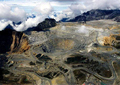
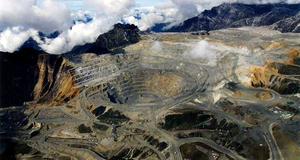
The extraction of non-renewable natural resources in the form of large-scale mining projects has intensified in recent years in Latin America. In fact, the World Bank and other international financial institutions have continued to encourage countries to commit to extractive industry growth as a development strategy (Campbell 2008). Not surprisingly the mining industry has responded accordingly and many developing countries – both with and without a mining tradition – have seen significant increases in mining investment coming from developed countries (Bebbington et al. 2008, 4). Canada has the biggest share and largest mining industry in the world and much of its outward investment targets Latin American countries. Many Latin American states are welcoming Canadian mining companies to operate on their territories since revenues from mining can help to increase a country’s Gross Domestic Product and might bolster economic growth which subsequently reduces poverty and unemployment, as the liberal economic discourse purports. However, large-scale mining projects can also have negative effects not only on the environment but also on the communities where mineral extraction takes place. Sen’s Development as FreedomAmartya Sen’s view of development, although widely contested, conveys a different approach in which economic growth is not the main goal of development. Instead, Sen focuses more on individuals’ freedoms where the expansion of capabilities is viewed both as the primary end and as the principal means of development. In order to achieve this, development requires the removal of major sources of unfreedoms, such as “poverty as well as tyranny, poor economic opportunities as well as systematic social deprivation, neglect of public facilities as well as intolerance or over activity of repressive states” (Sen 1999, 3). These types of unfreedoms, for Sen, can arise either through inadequate processes, such as violation of voting privileges or other political or civil rights, or through inadequate opportunities that some people have for achieving what they minimally would like to achieve, including the absence of such elementary opportunities as the capability to escape premature mortality or preventable morbidity or involuntary starvation (Sen 1999, 17). Another example of an unfreedom is the denial of political and civil liberties by authoritarian regimes like imposed restrictions on the freedom to participate in the social, political, and economic life of the community (Sen 1999, 4). These political liberties and civil freedoms are directly important on their own and do not have to be justified indirectly in terms of their effects on the economy. According to Sen, even when people without political liberty or civil rights do not lack adequate economic security, they are deprived of important freedoms in leading their lives and denied the opportunity to take part in crucial decisions regarding public affairs.As I will show in the case of Marmato, the citizens of the town are deprived from the decision-making process affecting their lives since the relocation schemes are being implemented without consultation and the consent from many members of the community. These are the kinds deprivations that restrict social and political lives of individuals. Hence, for Sen, development must consist on the removal of various types of unfreedoms which leave people with little choice and little opportunity of exercising their agency. In Sen’s view, development has to be more concerned with enhancing the lives a person leads and the freedoms she or he enjoys. So for Sen “expanding the freedoms that we have reason to value not only makes our lives richer and more unfettered, but also allows us to be fuller social persons, exercising our own volitions and interacting with the world in which we live” (Sen 1999, 15). The Good, the Bad, and the Ugly of Mineral ExtractionThe polemic of the resource curse has been widely debated in mainstream and academic literature for several decades. Economists, political scientists, activists and natural resource industry professionals have all focused on the question of whether the presence of natural resources is beneficial or harmful for developing countries. One of the most contested arguments is with regards to mining, and gold mining in particular. In 2009, the World Gold Council released a special report on the matter in which different aspects of mining were studied. The report, entitled The Golden Building Block: gold mining and the transformation of developing economies, considers the macroeconomic benefits of gold production in developing countries over the entire lifecycle of a mining operation. The report looks in significant detail at the impact of gold mining on a particular economy, Tanzania, and examines the effects on its economy over a 40-year period. According to the report, “Tanzania provides the perfect test case to conduct such a comprehensive assessment of both gold mining’s contribution to date and its potential future contributions to the economy over the life cycle to mine closure” (World Gold Council 2009). The findings of the study uncovered that the most significant contribution that gold mining provides to Tanzania’s economy is its effect on foreign direct investment (FDI) which has been enabled by the mining law reforms introduced over the past 12 years. Particularly, it is clear that government reforms of mining laws have been the common denominator in mining’s contribution to positive economic development in that country (World Gold Council 2009). Indeed, evidence suggests that gold mining can be one of the first sectors to sustain growth in a previously failing economy once minimum mining reforms are in place, as was the case in Tanzania. In addition to mining reforms, export earnings from gold mining in Tanzania are already at US $770 million, and these are estimated to more than double in the following decade. Job creation, although not typically among the greatest benefits of large-scale mining due to its capital-intensive nature, is in fact an important direct benefit of gold mining in the country. The mining industry employs more than Tanzania’s utility sectors combined, including gas, electricity and water, and the increase in wages injected into the economy has helped to develop other sectors, especially service providers. The report also finds that large-scale gold mining has been found to be a major factor in bolstering the economies of other developing countries. For example Chile1 and Ghana have both experienced clear improvements in the living conditions of their populations and increased economic development as their own mining industries have expanded. In Chile, these improvements have translated into the enhancement of living conditions and poverty reduction. Most significantly, these gains have been most substantial in mining-related regions of the country, the report states. These regions could also see the promotion of local development since it increases the demand of labour at the local and regional level. This could have significant effects in helping local suppliers of services which might help to reduce unemployment due to the generation of direct and indirect sources of income. At the national level, mining activities could bring economic advantages from higher tax incomes that could be re-invested into society as social services or as infrastructure building. Nevertheless, mining also has negative consequences. The most well known effect of mining is with regards to environmental degradation. There is evidence that suggests that mining is inherently damaging to the environment, and sometimes disastrously so. According to Jaime Kneen, beyond the diversion and contamination of water, the persistent toxic leaks, and periodic catastrophic spills, large-scale mining projects plays an important role in opening remote wilderness areas to industrial development, as it pushes roads and seismic lines into forests, mountains, and tundra, followed by highways, electrical transmission lines, hydroelectric dams, and even ore slurry pipelines and port facilities (Kneen 2007, 3). Deforestation and despoliation are the main negative results as trees and wildlife alike suffer from the direct damages of mining. Furthermore, with new mining technologies, local and regional landscape transformations associated with mining become all the more significant. Mining is essentially a waste management industry. Whether a mine is underground or open-pit, most of what is mined is discarded, leaving millions of tons of waste rock and ‘tailings’ loaded with dangerous heavy metals that had previously been more or less safely bound up in the rock. Gold and silver are among the most wasteful metals in the world, with more than 99 per cent of ore extracted ending up as waste. For example, to make a gold ring, the average amount of rock waste generated is over 3 tons. In addition to these negative environmental effects, mining can also have devastating consequences to communities found in close proximity to a mine. In some Latin American countries for example, most new areas of mining investment are on inhabited lands, and even when these areas are not directly inhabited, communities nearby are commonly affected by the inevitable environmental repercussions of mining, which include industrial run-off affecting local water sources, or the loss of arable land resulting from the infrastructural development accompanying mining (Gordon & Weber 2008, 68). Large-scale mining activities often produce or worsen poverty on the ground even as it generates prosperity for mining companies and for the local elites, as villages are displaced, farms destroyed, watersheds dried up or contaminated, etc. in exchange for temporary jobs for a portion of those affected. Displacement may result in very serious social problems, including marginalization, food insecurity, loss of access to common resources and public services, and social breakdown. An example of a community devastated by mining is the city of Potosí in Bolivia – once comparable in size to London and a hive of extractive activity in the heart of the Andes, now a poor capital of a chronically impoverished department (Bebbington et al. 2008, 2). As stated above, the enormous wasteful consumption of water that is required for mining activities generally reduces and pollutes the water table around the site drying up wells and springs that could have been used by a community for irrigation or as drinking water. Water usually ends up being contaminated by the acid drainage due to the air and water exposure of the acids formed in certain types of ore – particularly sulphuric acids – as a result of mining activities, which in turn react with other exposed minerals (World Rainforest Movement 2008, 21). A self-perpetuated dumping of acid toxic material is also generated and this can go on for hundreds or even thousands of years. These small particulates of heavy metals that with time separate from the waste are disseminated by the wind, landing on the soil and in the beds of watercourses and slowly integrate the tissues of living organisms, humans included. In short, mining can be considered a short-term activity with long-term effects. Mining comes along with its promise of wealth and jobs, but there are millions of people throughout the world who can testify to the high social costs that mining brings, such as the appropriation of lands belonging to the local communities, impacts on health, alteration of social relationships, destruction of forms of community subsistence and life, social disintegration, radical and abrupt changes in regional cultures, displacement of present and/or future local economic activities. All this is added to the hazardous and unhealthy working conditions of this type of activity. Mining accidents are well known throughout the world, the most recent tragedy in New Zealand in 2010 claims truth to that. Mining as UnfreedomIn order to better capture the negative effects mining has on communities where extractive activities take place, it is important to observe and examine whether or not a mining project affects people’s assets and capabilities. For Bebbington, peoples’ assets are not merely means through which individuals make a living, but “they also give meaning to that person’s world” (Bebbington 1999, 2022). Assets can then become the capacities people have in order to add to their quality of life and also enhance their capabilities to confront the social conditions that (re)produce poverty. In these regards, people’s assets are not simply resources that people use in building their livelihoods; they also give people the capability to be, act, and react. To show this, Bebbingotn develops a framework for understanding poverty in terms of assets by incorporating an analysis of the economic, social and political relationships that create poverty and wealth to understand power relations that are potentially contingent and subject to re-negotiation, and by linking this contingency to the capabilities that people have as a result of the assets at their disposal. This is related to Sen’s view of development since capabilities have the power to enhance people’s ability to be agents of change, that is, to be free. So when a mining company sets its operations in a particular community without consultation and the consent from the inhabitants of that locality, their capabilities as social actors are diminished and their freedoms to decide how to use and extract natural resources becomes marginal. The effects are harsher when a community deeply depends on artisanal mining for their subsistence. If a large-scale mining project is implemented in such situations, the opportunities to use those resources into sources of livelihoods enhancement are compromised since many people will be stripped of their assets that contribute to their livelihoods. This is exactly what is taking place in the town of Marmato, where most of its inhabitants do not give their consent for the implementation of an open-pit mining project that would require the relocation of the town as well as the destruction of their traditional livelihoods as artisanal miners. The Possible Disappearance of MarmatoIn order to analyze how a large-scale mining project could affect the town of Marmato in Colombia, it is imperative to understand the current situation that the country is experiencing. As it is widely acknowledged, Colombia is the worst country in the world for union leaders; and it is significantly worse for those in the mining sector as 42% of all human rights violations against unionists take place in the mining and energy sectors (Gordon & Weber 2008, 77). Furthermore, around three million people have been displaced in the 21st century in Colombia, two million of whom were displaced from mining regions – this proves that the levels of violence in mining zones in this country are extraordinary. In mining communities between 1995 and 2002 there have been 828 homicides, 142 forced disappearances, 117 people injured, 71 people tortured, 355 death threats, and 150 arbitrary detentions, every year (Gordon & Weber 2008). These have to be the backdrops against which the political economy of mining activities in Colombia must be analyzed. Marmato, located in the Caldas department, is a small mining town of some 8,000 people clinging to the side of El Burro, a mountain in the Colombian Andes. More than 50% of its population is Afro-Colombian and 17% are indigenous. For more than 500 years, small artisanal gold mining created a distinct community that based its living, traditions, and histories deep in the mountain’s heart. Mining the gold of Marmato defines a Marmateño. The first to mine El Burro Mountain were indigenous peoples, including the Quimbayas. Later on, the Spanish Conquest brought to Marmato the first African slaves through the port of Cartagena. In 1825, the liberator Simón Bolívar conceded the mines to England as a guarantee for the loans that would help funding the war of independence from Spain. However, there is much more to Marmato than just gold. In 1982, the Colombian government recognized the town as a national historic site, due to its centuries-old mining tradition and unique history and culture (Tuathail 2008). Five years ago Marmato’s roots were shaken to the ground when a Canadian mining company, Colombia Goldfields Limited,2 began its project of consolidating ownership of the mountain for the construction of a large-scale open pit mine, leading to what many in Marmato and throughout Colombia call the “economic forced displacement” of the town and the social eradication of a working community that has depended on traditional mining for its subsistence. Opposition to this large-scale project was immediately manifested by most of the community. Yamil Amar Cataño, president of the Marmato Pro-Defense Committee, a grassroots organization opposed to the company’s plans, recounts the arrival of the company, “[the miners] had never seen so much money in one place. We only know pesos. The dollars flashed in their faces were part of a plan to destabilize the community” (Tuathail 2008). Indeed, the plan has worked since most of the artisanal miners have sold their mines to the Canadian company. Diego Ruíz, a lawyer, miner, and representative of the Colombian Federation of Small Miners (FENAMICOL), says that purchasing mines is not a crime; he is rather concerned with the company’s behavior which is having disastrous consequences in the small community. He says that “in Marmato, when a mine is bought, it is closed down immediately. Mills are bought and destroyed. The local economy is going backwards, and for the first time, people are unemployed. Hunger, prostitution, and poverty are all that is left” (Tuathail 2008). In addition to these testimonies, Miguel Alberto Giraldo, the son of a Marmateño historian and former mayor of the town, sums up what is on most peoples’ minds; “Marmato doesn’t exist for Marmateños anymore. We’ll all have to go, but how, where and when? For me, this whole thing is forced displacement through unemployment and apocalyptic threats of total disaster” (Tuathail 2008). The assets of most Marmateños, what gives meaning to their lives, lays in Marmato; the displacement of the entire community for the benefit of a few cannot be tolerated and resistance to their forced displacement is evident. Residents of Marmato are vehemently opposed to their displacement. “We don’t want what they [the government and the company] are offering us,” states one miner. “We don’t want a nice big school or a new office for the mayor. We only want what we already have. But here!” (Tuathail 2008). Nonetheless, as the consolidation of the open-pit mine in Marmato nears completion, unemployment and misery will force those who remain in the town as well as those not directly involved within the mining economy to leave behind their businesses, schools and homes – not to mention their histories, stories, culture and identity – to join the millions of displaced Colombians that currently surround the country’s metropolitan cities. A town that has always lived and depended on artisanal gold mining throughout its entire history could be erased from the map in less than 5 years; the company has plans to mine in Marmato for 20 years, which is the average lifespan of any mine, leaving behind a hole in the ground and 8,000 people displaced. ConclusionAs this paper has demonstrated, in the case of Marmato, a large-scale mining project can have disastrous consequences. A project of this magnitude is destructive not only to the biophysical environment but also have negative effects on the well-being of Marmateños. Poverty and unemployment in Marmato is a clear example of this. The diverse assets that Marmato has drawn throughout its history in building the livelihoods of its inhabitants, the ways in which the community are able to access, defend, and sustain their assets and sustainability, and the abilities of the community to transform those assets into income, dignity, power and sustainability are threatened by a large-scale open-pit mining project. This kind of project contributes to the loss of culture, divides communities and increases the gap between the rich and poor. In fact, throughout history, the various gold rushes have brought death and devastation to many populations. For these reasons, mining must be drastically scaled back; restricted, not expanded; and where it cannot be avoided it must be carried out carefully and responsibly. However, responsibility seems to be the last thing Canadian mining companies have in mind and it also seems not to be a priority for the government as seen with the refusal to implement Bill C-300, a bill which seek to impose sanctions on Canadian mining companies found guilty for violating human rights as well as environmental regulations outside of Canada. The contradictions being made by the Canadian government are evident. The government says they are reinforcing democratic governance by “strengthening democratic institutions, practices, and principles that deliver freedom, human rights, and the rule of law” (Government of Canada 2009). Yet, one must ask what kind of freedom the government intends to promote. It is clearly not the freedom of the community to choose the lives they value and want to live but seems to be the freedom for mining companies to displace entire communities. The Canadian government also intends to increase the economic prosperity of countries by “helping to build dynamic and growing economies, and promote responsible investment and open markets that will create new opportunities and jobs” (Government of Canada 2009). A town that has depended on traditional mining for centuries will disappear and the mine, which will only operate for a maximum of 20 years, will leave destruction and environmental degradation. How is this responsible investment? The Canadian government, together with developing countries’ governments, must work together to find a balance between economic development, necessary for developing countries, and the protection of communities and the environment that could be affected by a large-scale mining project.
References Bebbington, Anthony. 1999. “Capitals and Capabilities: A Framework for Analyzing Peasant Viability, Rural Livelihoods and Poverty”. World Development. Vol. 27, No. 12: pp 2021-2044. Bebbington, Anthony, Hinojosa, Leonith, Humphreys Bebbington, Denise Burneo, Maria Luisa, and Warnaars, Ximena. 2008. Contention and ambiguity: Mining and the possibilities of development. Brooks World Poverty Institute, (BWPI Working Paper 57). Campbell, B. 2008. Refore Processes in Africa: Issues and Trends. Presentation to the 2nd International Study Group Meeting, Economic Commission for Africa, 19-21st May, 2008, Addis Ababa. Government of Canada. 2009. Canada and the Americas. Special Report. Gordon, Todd and Webber, Jeffery. 2008. “Imperialism and Resistance: Canadian mining companies in Latin America”, Third World Quarterly. Vol. 29, No. 1: pp 63-87. Kneen, Jamie. 2007. Earth: What is Mining All About? The Up and Down Sides. Part of the Ottawa University Institute of Environment 2006-07 Lecture Series “Elemental Environmentalism: Water, Air, Fire and Earth.” February 28, 2007. Upton, Maureen. 2009. The Golden Building Block: gold mining and the transformation of developing economies. World Gold Council Report Sen, Amartya. 1999. Development as Freedom. Oxford: Oxford University Press. Tuathail, Micheál. 2008. Marmato’s Gold Bonanza: Canadian Mining Firm Involved in ‘Economic Forced Displacement’ in Colombia. March 18, 2008. Features. http://www.dominionpaper.ca/author/miche_l_tuathail_0 World Rainforest Movement. 2004. Mining: Social and Environmental Impacts. Fonseca, Hersilia (Ed). World Rainforest Movement Press 1.) Chile leads South America in terms of GDP per capita at US $14,510, according to 2008 estimates by the IMF. 2.) The concession is now owned by Medoro Resources Limited. Medoro is currently conducting a substantial exploration and drilling programs which aims to expand and upgrade the gold resources at its Marmato Project as the basis for its plan to develop a large open pit gold mine to realize the rich potential of the Marmato Project. It is anticipated that this program will be completed in the second quarter of 2011. 
From the Inquiries Journal Blog   Related ReadingMonthly Newsletter SignupThe newsletter highlights recent selections from the journal and useful tips from our blog. Suggested Reading from Inquiries Journal
Inquiries Journal provides undergraduate and graduate students around the world a platform for the wide dissemination of academic work over a range of core disciplines. Representing the work of students from hundreds of institutions around the globe, Inquiries Journal's large database of academic articles is completely free. Learn more | Blog | Submit Follow IJ


Latest in International Affairs |