Living on the Streets: The Street Children of Brazil
By
2011, Vol. 3 No. 04 | pg. 1/1
KEYWORDS:
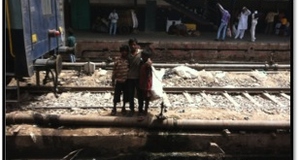
The existence of street children is most often viewed as a significant problem, stripping youth of their humanity and burdening them with the everyday concern of survival. It is easy to analyze this complicated issue objectively, yet the actual experiences of the children are just as easily lost. It is therefore necessary to approach the subject with the inclusion of contextual information regarding the problem. Statistical evidence provides only a narrow view of the problem. Through a combination of both numbers and context, the many problems contributing to their existence can be addressed. This growing issue is evident in many countries throughout the world; however, its presence in Brazil and Latin America is the most studied. Poverty, the work force, substance abuse, and general homelessness in Brazil are just a few of the many influences that affect the lives of street children. In addressing these effects, this paper questions how the topic of street children is an outgrowth of its surroundings. Furthermore, recent research has been focused on providing grass-roots solutions to the problem; thus, the remainder of the analysis centers on the new directions being taken in addressing this large-scale issue. “We sniff glue because we need to. We steal- watches, necklaces. We don’t have anywhere to eat, we don’t have anywhere to sleep, we don’t have anywhere to stay- that’s why we steal. I steal, I walk around, I sniff glue, and then I can’t do anything. I haven’t got a Dad- he died seven years ago. I have eight brothers and sisters and I can’t really stay at home, so I live on the street. That’s how I lead my life” (Dimenstein, 1991, p.22)
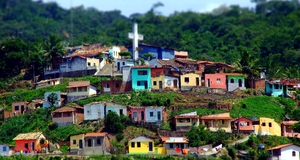
To begin with, one must understand the term ‘street children’ itself. Who are they? UNICEF defines them as “children who live in the streets. The street is their home” (Fernandes & Vaughn, 2008, p.670). While this definition seems mundane and simple, there are numerous ongoing factors that compose it. The crux and most-contributing context to this problem is the issue of poverty. Other influences upon street children cannot be understood aside from it, and it is continually addressed throughout this analysis. For instance, the lack of both education and job opportunities is an outgrowth of poverty within Brazilian society. The nation’s wealthiest 20 percent of the population has access to over 65 percent of the entire country’s wealth. More than 45 million people are living in poverty, with 32 million children living in families that make less than $40 US dollars per month. It is easy to be unbothered by statistical evidence, but the existence of street children is a living result of Brazil’s numerous socioeconomic issues. “Poverty is one of the reasons that lead children to the street. The process of children going to the streets to work in legal or illegal businesses to supplement family income contributes in part to the later phenomenon of street children: children on the street become children of the street” (Fernandes &Vaughn, 2008, p.671-2). But where does this distinction lie? The conceptual difference between children of the street and children on the street was determined in a 1989 meeting on the issue. Children of the street were described as youth under the age of 18 living in urban areas and who call the street their principal home, assuming they no longer live in their familial residence. The street is the central environment from which they develop and obtain social skills. Children on the street, however, are children under the age of 18 who maintain stronger family ties, yet continue to spend the majority of their time in the streets. They work and engage in activities to ensure their survival, their families’, or even that of a third party. For the purposes of this paper, both types will be continually referred to as street children. This is the simplest way to explore the other surrounding factors that contribute to any type of life on street.Street children can be best understood as a product of their context and socialization, and this includes aspects of their familial and socioeconomic background. In looking at Brazilian society, the structure and role of the family plays an integral part in the socialization and development of children. In each culture, the family maintains a certain responsibility toward the minimal requirements for their offspring’s survival. Research on contemporary Brazilian families reveals that a nuclear family structure is the most common type, a result of a population and industrialization boom that led to the “formation of an urban proletariat” (Mickelson, 2000, p.44). On a socioeconomic level, this urban class was faced with overpopulation, housing shortages, and a lack of many other basic amenities. Such factors allowed the development of households in favelas, otherwise known as slum areas, that are located on the outskirts of major cites. Migrants to these areas were confident they would find more employment opportunities as well as an overall better future for themselves. However, “more than 50 percent of favelados (people living in favelas) are unemployed and do not have medical assistance or unemployment benefits” (Fernandes &Vaughn, 2008, p.672). Inflation and ongoing economic problems continue to present difficulties for families to live decently, with the head of the family working excess hours and other family members entering the labor force to ensure better income. Often this is seen in the joining of the informal economy, such as vending on the street, to make any earnings possible to support the family. These conditions threaten the overall organization and stability of Brazilian families, as well as the socialization of their children. In the process of a child’s development, “families are expected to instill in children their society’s basic values, attitudes, and modes of behavior” (Boocock & Scott, 2005, p. 74). This harsh economic condition is the world many Brazilian children are born into, an urban culture based on pressure and the basic need for survival. This environment has caused difficulty for families to properly socialize their children, and also has prevented the development of values outside those of subsistence. Additional family members, as previously mentioned, are often forced to join the labor force in the interest of their family’s survival. This is noted by a rise in women workers, but also by the increasing numbers of children and adolescents in the Brazilian work force. “A 1995 survey of households reported that almost 5 million children between the ages of 10 and 14 were working…the percentage of youth in the labor force varies with the families’ socioeconomic status; for example, the rate of children’s economic activity declines as family income rises” (Mickelson, 2000, p.47). This child labor force is therefore widely dominated by poorer children. The issue of unemployment and lack of jobs contributes to widespread informal economic activities that include vending and shoe-shining, but also the illicit businesses of prostitution and drug sales. Children have become a workforce commodity, and the street serves as an attractive workplace to gain extra income for the family. Urbanization has caused the development of child labor to thus evolve from a family agriculture business to industrial and illegal work within the street’s informal economy. In addition to the influence of family, school is the other means by which children become socialized and aware of their particular culture and values. Although illiteracy in Brazil has been decreasing, the rising number of child laborers has the potential to hurt the educational system. Out of a total 522,185 child workers aged 5 to 9, 78 percent of them are also enrolled and going to school. This statistic alone is evidence of how the child labor force must severely affect the children’s ability to learn. Increased fatigue, the large quantity of work, and the overall detrimental effect on mental health are probable in the circumstance of balancing school and work. In addition to these factors, the quality of the education they are receiving is also questionable. Schools are supported through tax revenues by the federal government as well as the states, but often “function ineffectively because of poor financial management and frequent strikes by severely underpaid public school teachers” (Mickelson, 2000, p.48). It is also difficult for schools to keep pace with the rapid overpopulation and urban growth that has occurred in recent years. The educational system struggles to effectively socialize children due to its outdated schools, lack of seats for enrollment, and the abundance of strikes by teachers. Less than 6 percent of the adults in Brazilian families have completed 15 or more years of school (to the college level). The need for income as well as the toll of labor upon the body place great stress on one’s educational ability. Subsistence simply dominates the possibility of education. Another aspect that schools lack in regards to the socialization of children is their inability to build upon the body of knowledge gained outside of school. Research by Terezinha Carraher in 1991 found that schools fail to take advantage of “the knowledge and rationale of the students so as to expand it; schools are aware of the skills that children of the lower classes must have if they are to survive in big cities” (Mickelson, 2000, p.48). This type of knowledge may be referred to as “street smart” and is rarely emphasized in school. It is the difficulty of switching from the oral expression of the street to the written expression of the classroom that is the root of the problem. Teachers do not structure their curriculum around these “street” learning experiences and thus many students are not given opportunities to excel. Socioeconomic influences greatly contribute to the forced situation street children often find themselves in. Poverty also could have led to increased stresses in their former homes, which is sometimes manifested in the form of abuse. Abandonment, neglect, and abuse therefore are also considered as heavily determinants of this issue. The parents often socialize their children based upon their own experience. “Generally, children’s parents also suffered abuse and neglect from their own parents. Parents of street children repeat the same behavior with their own children, which contributes to the children choosing the street as their home” (Fernandes & Vaughn, 2008, p. 673). This abuse also can take many forms, whether psychological, emotional, or sexual. Recent research exploring this type of violence toward street children has found that 23 percent of street children reported abuse as their reason for leaving home. This past of abuse is subsequently engrained within the child and is therefore translated to their behavior on the streets. This behavior often manifests in some form of aggression, which has led to the association of street children with violence and immoral activities. A large aspect of these “immoral activities” is the misuse of substances by the children. It is difficult to imagine a child the age of 10 as a frequent drug user. Truthfully, however, substance abuse is very widespread among the street children population, the most popular being inhalants, alcohol, marijuana, and cocaine. The majority of children, especially males, use inhalants. They are able to most easily get their hands on glue, nail polish remover, hair spray, cleaning fluids, and other legal and common goods. Studies have found that the use of inhalants, particularly the sniffing of glue, has been “increasing principally among children and teenagers of low socioeconomic status” (Fernandes & Vaughn, 2008, p. 674). These substances such as glue compose a great part of these children’s lives. “They prefer glue because it is their means of identity. Those who do not sniff are considered laranjas (street novices). For The youngest ones, glue sniffing is an initiation rite that makes them feel part of the group” (Moorehead, 1990, p. 20). Therefore this type of abuse of drugs and common goods is often thought of as method of coping with life’s daily struggles. Poverty, neglect, and physical abuse are all contributing factors to this major problem brewing within street children society. Inhalants, specifically, can cause various damaging psychobiological effects to the child. The sniffing of glue contributes to problems such as liver toxicity, renal failure, and death. The body’s Central Nervous System is the most affected system within the body of an inhalant user. Glue is a very debilitating substance because the deadly chemicals attack neurons as well as clog the respiratory system. “It is not physically addictive, but children quickly develop a psychological dependence on it. The law prohibits the sale of glue to minors…[thus] increasingly, the children rely on ‘street fathers’ for their daily supply” (Moorehead, 1990, p.20). It is a method of peer acceptance, for many children form groups on the street for the purposes of protection and self-defense. They sleep together, beg together, and carry out the majority of their daily activities as a group. Glue sniffing strengthens the in-group bond as well as acts as a shield to the discouraging environment they are struggling to survive in. How do children effectively gain access to these drugs as well as to food? Another significant contributor to the life and context of street children is the culture of stealing. Stealing operates effectively within their street system and is the basic method of survival. “Stealing is a sport as well as a necessity. While the older children are out stealing, the younger ones collect good money on their noontime begging sweeps in the lunch bars” (Moorehead, 1990, p.18). From this lifestyle of stealing comes an important aspect to consider: the relationship of the children with the police. Principally, the police appear as a fearful figure in the lives of the children. They consider the worst part of their experience on the street to be their interactions with the authorities. Children have reported that even if they maintained a positive relationship with a policeman they were chastised and excluded from their group. In an effort to escape the problematic authorities in the home, they encounter a second type in the streets. Instead of acting as a form of a protection, the police often bring more violence into the lives of the children. The final discussion of the surroundings contributing to the existence of street children is the place of violence. The murdering of street children and the violence they face is one of the lesser-known aspects of this crisis. Although official police death squads have slowly disintegrated since the 1970’s, the war on street children is still aggressively pursued by organizations called justiceiros (the avengers). These groups are often supported and organized by police force members, and their activity is encouraged on the basis of the children’s worthless and dangerous place in society. This culture of violence continues to exist today with the determination to exterminate Brazil’s undesirable children. An 18 year-old boy recounts his experience when almost murdered saying “they caught me, took me to the forest, tore off my clothing, left me in my underwear. They pointed a revolver at my forehead, in my mouth, in every hole they could find, and threatened to shoot” (Hecht, 1998, p.132). In addition to the threat of violence by police-supported groups, street children experience discrimination and violence from citizens on a day to day level. “In one large Latin American city, the officially licensed radio station not long ago broadcast a suggestion that citizens should take matters into their own hands and put an end to the children who are infesting their streets. The result, for a while, was that an average of two street children were found dead every day” (Moorehead, 1990, p.32). Such violence explains the need for street children to remain in groups for their own protection. These groups contribute to the socialization and development the children undergo in the absence of family influence. These children are truly a product of their surroundings. After examining all the major aspects of the children’s environment, this paper now seeks to question the types of programs and solutions being offered in regards to this topic. Initially, Brazil offered many penalizing and restraining programs that were designed simply to eliminate the problem. This focus, however, has clearly done nothing but promote more violence among the streets. The National Foundation for the Well-Being of Minors and the State Foundations for the Well-Being of Minors were the principal organizations that enacted restrictive programs regarding the issue. They were responsible for “giving restrictive asylum to abandoned children and delinquents” (Fernandes & Vaughn, 2008, p.675). With these institutions under reform, Non-Governmental organizations (NGOs) are now the primary source of programs for street children. Many of these programs address factors such as homelessness, hunger, and social exclusion. As Fernandes and Vaughn (2008, p.675) explain, however, there are very few programs that focus on the reasons for becoming a street child. An example of a Non-Governmental organization that seeks to address the cause of children on the street is the family social-work program known as Grupo Ruas e Praças (GRP). They claim to work ‘with’ and not ‘for’ street children. After working to aid them for many years, the group reformed their approach to focus on reasons why the child leaves the family. Thus their work centers on involving the entire family in the process. “This approach was based on the assumption that family members command the skills and have sufficient resources to solve their own problems, so that help should be offered in way that would not create dependency. The centre of the concept was to enable the families to become active protagonists of their history and their future” (Schwinger, 2007, p. 803). The program identifies the particular reasons why children end up living on the streets and then decides how to help them. They categorize such reasons as either material (poor housing, poverty, hunger) or non-material (drugs, general overload, abuse and neglect). From here, GRP takes steps to involve the children and their parents throughout the process of empowering solutions. The social worker will visit the child’s home without them first to inform the family of his or her well-being. This is often at the relief of the parents. They then plan the first reunion meeting of the child with their parents around some form of holiday or celebration because of the informal atmosphere. The family also engages in life counseling and meetings to talk about their feelings toward the process. Many feel they are incapable of raising a child and therefore believe it unnecessary for the child to return. The program works with parents on this aspect, and also decides on a situational basis what families will receive material support in addition to emotional support. Workshops on commercial and technical skills are also offered to give participants knowledge to succeed in legal informal market activities, as it is difficult to directly change the existence of unemployment. In general, there are many positive aspects to the work of the GRP. It is difficult, however, for this type of program to reach the millions of children on the streets today. Therefore it is significant to continue research on methods of helping these youth. The issue was lost from public attention for a good amount of time but is now regaining recognition. In addition to support programs, the difficulty of problems such as poverty and socioeconomic level ultimately lay in the hands of the government. The discussion of issues, from poverty to drug use, is greatly important in addressing how street children are a product of their context as well as how such factors shape the programs created to help them. This form of analysis provides a better understanding of a situation unknown to many around the world, one that continues to worsen as the population increases. Street children represent a pertinent problem that seemingly plagues Latin America. It is unjust to say, as many do, that it is they who are the problem. Rather, it is the fault of their environment, the world they are born into, and the fact that this “issue” is simply an outgrowth of numerous other problems that need attention within the region. The study of street children provokes one to consider the consequences of certain problems within society. Ultimately, addressing issues like poverty and abuse is the key to subsequently offering a better future for street children.
References Bookcock, S. S., & Scott K.A. (2005). Kids in Context: The Sociological Study of Children and Childhoods. Maryland: The Rowman & Littlefield Publishing Group. D’Abreu, R. D., Mullis, A. K., & Cook, L.R. (1999). The resiliency of street children in Brazil. Adolescence, 34(136), 746-751. Dimenstein, G. (1991). Brazil: War on Children. London: Russell Press. Fernandes, G.T., & Vaughn, M. G. (2008). Brazilian street children: contextual influences in relation to substance misuse. International Social Work, 51(5), 669-681. Hecht, T. (1998). At Home in the Street: Street Children of Northeast Brazil. Cambridge: Cambridge University Press. Hecht, T. (Ed.). (2002). Minor Omissions: Children in Latin American History and Society. Madison: The University of Wisconsin Press. Mickelson, R.A. (Ed.). (2000). Children on the Streets of the Americas: Globalization, Homelessness and Education in the United States, Brazil and Cuba. New York: Routledge. Moorehead, C. (Ed.). (1990). Betrayal: A Report on Violence Toward Children in Today’s World. New York: Doubleday. Ribeiro, M. O., & Ciampone, M. H. (2001). Homeless children: the lives of a group of Brazilian street children. Journal of Advanced Nursing, 35(1), 42-49. Ribeiro, M. O. (2008). Street children and their relationship with the police. International Nursing Review, 55, 89-96. 
From the Inquiries Journal Blog   Related ReadingMonthly Newsletter SignupThe newsletter highlights recent selections from the journal and useful tips from our blog. Suggested Reading from Inquiries Journal
Inquiries Journal provides undergraduate and graduate students around the world a platform for the wide dissemination of academic work over a range of core disciplines. Representing the work of students from hundreds of institutions around the globe, Inquiries Journal's large database of academic articles is completely free. Learn more | Blog | Submit Follow IJ


Latest in International Affairs |