Female Writers in the 18th Century: The Power of Imagination
By
2010, Vol. 2 No. 10 | pg. 1/1 Female writers of the Eighteenth Century often focused on the role of the female imagination in novel writing, poetry composition, and as an outlet for temporarily escaping a harsh world. In Maria, or The Wrongs of Woman, Mary Wollstonecraft focused mostly on the latter notion, the ability of a woman to employ her imagination in transcending the physical prison of an insane asylum, as well as the metaphorical prisons of a tyrannical marriage and an oppressive world. Meanwhile, Anna Letitia Barbauld emphasized the artwork which the female imagination can fashion in her poem “Washing-Day;” however, she additionally hints at the dangerous male scientific imagination behind the invention of hot air balloons. Finally, in Frankenstein, Mary Shelley draws a striking contrast between feminine uses of the imagination and the ruthless aims of a male-dominated scientific imagination. Although Wollstonecraft presents imagination as the only outlet and sole alternative for women trapped in their homes, she champions feminine uses of imagination over male employments of the mind; Barbauld and Shelley expand on the uses of female imagination, displaying the artful creations of the feminine mind and simultaneously condemning male forms of imagination, especially in the realms of science and technology. In Wollstonecraft’s novel, Maria initially finds solace in reading while imprisoned in an insane asylum. Maria’s dependence on the occupation of reading reflects the plight of many domesticated women who relied on reading to engage their imaginations and transport them away from the realities of otherwise boring lives. As for Maria, “the books she had obtained, were soon devoured, by one who had no other resource to escape from sorrow” (Wollstonecraft 14). In this instance, Wollstonecraft highlights the feminine dilemma of immobility and even captivity, sometimes within their own households. In Maria’s case, Wollstonecraft narrates the story of a woman placed into captivity by a tyrannical husband, an occurrence which proved far too common for women living in the Eighteenth Century. After reading, of course, writing presented itself as the only other pursuit for Maria: “Writing was then the only alternative, and she wrote some rhapsodies descriptive of the state of her mind; but the events of her past life pressing on her, she resolved circumstantially to relate them” (14-15). Writing even an autobiographical account proves helpful to Maria, distracting her from the reality of her imprisoned state.Later, writing to Darnford, and actually connecting to another human being in similar circumstances, acts as a sort of therapy for Maria. Wollstonecraft describes that in “writing to Darnford, she was led from the sad objects before her, and frequently rendered insensible to the horrid noises around her, which previously had continually employed her feverish fancy” (25). Maria employs her mind in constructing letters to Darnford, and the occupation aids her in transcending imprisonment. Besides reading and writing, Wollstonecraft illustrates the manner in which feminine imagination alone, without any outside influences, can transport women away from cruel circumstances. Indeed, “Maria’s imagination found repose in pourtaying the possible virtues the world might contain” (33). A harsh world forces Maria to imagine the existence of kindness in the world; of course, her meeting Darnford sparks a renewed hope in humanity. Later, she even builds up the character of Darnford in her mind: “She […] combined all the qualities of a hero’s mind, and fate presented a statue in which she might enshrine them” (33). Maria inflates the character of Darnford in her mind, exaggerating his good qualities and believing she might at least discover some happiness with him. Due to her incessant imagining, Maria and readers alike often forget that Maria remains imprisoned; her mind refuses imprisonment and seeks freedom and serenity. Nevertheless, Wollstonecraft seems to harbor some ambivalence concerning female uses of the imagination early on in her novel. She narrates:
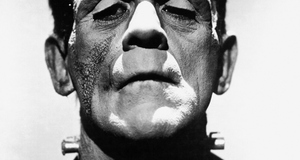
Here, Wollstonecraft mentions the futility of imagination, since the female mind can play tricks on itself. Indeed, Maria exacerbates her situation at home by placing too much confidence in her husband. Maria’s “fancy enlarged the boundary of his heart. Fatal error!” (75). In this instance, her feminine imagination leads Maria into greater heartache and suffering when her “fancying” her husband a better man proves wholly untrue and unfounded. At the same time, Wollstonecraft owns, women must rely on their imaginations. Otherwise, their husbands render them completely mindless. In Maria’s letter to her daughter, she warns that men often turn to “profligate women,” because such women prove wholly physically-minded. In her letter, she describes “the men who do not allow them [women] to have minds, because mind would be an impediment to gross enjoyment” (79). Wollstonecraft portrays the willingness of men to reduce women to physical objects without a mind. Maria combats such a notion in occupying her mind, even with mere “fancies.” Indeed, Wollstonecraft often praises the effects of imagination: “Imagination! who can paint thy power; or reflect the evanescent tints of hope fostered by thee? A despondent gloom had long obscured Maria’s horizon – now the sun broke forth, the rainbow appeared, and every prospect was fair” (35). The love developing between Maria and Darnford only serves to facilitate “fancying,” and Maria, Darnford and Jemima find themselves transported by their feelings and imagined happiness. While Wollstonecraft admits that “they even chid themselves for such apparent insensibility; still the world contained not three happier beings” (35). Maria and Darnford remain well aware of their imprisoned states and even hear the cries of their fellow madhouse residents; nevertheless, all of them indulge their imaginations, choosing a temporary, happier, albeit fake reality over the true state of their situations. Such an occurrence reflects once again Wollstonecraft’s ambivalence towards imagination. While fancying can lead to a complete denial of reality, it can nevertheless foster happiness and true joy. Thus, Wollstonecraft endorses female reliance on imagination, acknowledging that women have no other outlet. She condemns the men who remove the minds of women, and champions the notion of female intelligence. Wollstonecraft emphasizes the unfairness of reality, the fact that men can use their minds in the workforce and beyond, but can effectively eliminate the female mind, debasing women into mere objects. In fact, Maria declares in her letter, “I allowed myself to be duped by Mr. Venables’ shallow pretences, and hypocritical professions” (91). Mr. Venables employs his mind in concocting lies with which to “dupe” his wife. Maria finds herself ensnared by his false professions, a cycle in which many women find themselves and which only increases male notions of female stupidity. Ultimately, Wollstonecraft encourages women to use their minds, even if only for imagining and fancying, and denounces males who use their minds for the purpose of reducing the female mind. Barbauld and Shelley adopt a similar perspective in their respective works; however, they emphasize the fruits of female imagination in the realms of poetry and writing and depict the ways in which male ambition and imagination in the scientific arena quite often lead to destruction. Barbauld takes a more subtle approach than Shelley, but the same themes emerge nevertheless. In her rather tongue-in-cheek poem, “To the Poor,” Barbauld tells the poor to become comfortable in their situations, because they can expect no relief in this life; they must wait for their rewards in heaven. Towards the end of the poem, Barbauld becomes somewhat bolder in proclaiming, “Nor deem the Lord above, like Lords below” (line 18). Barbauld places the brunt of the blame for the plight of the poor on aristocratic men. The rich men hold all the power, and render the poor, especially poor women, utterly powerless and paralyzed in their social class. She castigates a male aristocratic society that prevents any social mobility. In her final line, “Nor fear the God whom priests and kings have made,” Barbauld suggests that the actual God proves much kinder than the organized politics which men have created. In her poem, “Washing-Day,” Barbauld seems to change her own approach, as well as her advice to the poor concerning social immobility. While people are meant to read “To the Poor” sarcastically, Barbauld never provides a solid solution as to how to deal with social immobility and oppression by a male aristocracy. However, in “Washing-Day,” rather than advising the poor to wait for heaven, Barbauld gives women an “out,” so to speak, in the form of imagination. From the onset, Barbauld mocks male pretentiousness; indeed, the poem takes the form of a mock-heroic poem as she pokes fun at Milton’s invocation of a muse and inflated tone apparent throughout Paradise Lost. Barbauld tries to burst Milton’s “bubble” through her own supplication of a muse to “sing the dreaded Washing-day” (8). She approaches the arrival of washing-day with a mock serious tone, mimicking Milton’s solemn and lofty tone regarding the Fall of Man. Washing-day turns into a day to fear; black clouds mark its advent and “Nor pleasant smile, nor quaint device of mirth, / E’er visited that day” (15-16). Barbauld effectively laughs in Milton’s face; her poem demands attention, just as Milton’s Paradise Lost did. She writes with a strong sense of poetic authority and approaches the act of washing laundry as seriously as Milton approaches the act of Eve tasting the forbidden fruit. Through her own employment of lofty language, Barbauld scoffs at Milton’s arrogant male ambition. She belittles Milton and raises her own female work, making a statement that she as a female poet can write just as bombastically about laundry as he does about the Fall. In this poem, Barbauld taunts male ambition and imagination in the literary field. Even with her ever apparent sarcasm, however, Barbauld does not minimize the difficult labor which washing-day requires of women. Rather, Barbauld points to the dreaded nature of the day, and indeed, later hints at the grueling, physical nature of washing laundry. At the end of her poem, the speaker imagines a way to transcend Washing-Day. She recalls blowing bubbles as a child: “Sometimes through hollow bowl / Of pipe amused we blew, and sent aloft / The floating bubbles” (79-81). Essentially, the speaker makes use of her imagination and turns to child-like games to distract her from work. Much like the imagination manifests the power to take Maria away from her reality in the insane asylum, imagination allows the speaker to transcend the physical toughness of washing-day. Yet the bubbles prove more than mere distractions or childish games, at least for Barbauld. Initially, the women seem amused at the bubbles; however, they were “little dreaming then / To see, Montgolfier, thy silken ball / Ride buoyant through the clouds, - so near approach / The sports of children and the toils of men” (81-84). A footnote concerning Montgolfier informs readers that “In 1783, in France, the Montgolfier brothers launched the first hot-air balloon” (126). Female imagination in the form of bubbles meets head-on with the male scientific imagination behind the invention of hot air balloons. Of course, while the females use their imaginations to escape tough physical labor, the men use their imaginations to construct better military technology in the form of a hot air balloon. Barbauld likens the “toils of men” to the “sports of children” knowing full well the extreme differences between the two. Children, like the women, use their imaginations for harmless fun, while men use their imaginations to construct better scientific technology. Of course, Barbauld strongly hints at the destructive nature of male scientific endeavors. Like Wollstonecraft, Barbauld points to the frightening nature of male imagination, as it seeks more power to use against other people, like the poor or peoples of different nations. She additionally stresses the arrogance of science itself, since it consistently aims to defeat physical boundaries for malicious reasons. Females, on the other hand, like Maria and the washing women, transcend physical boundaries to escape from pain and to achieve happier states of mind. Nevertheless, Barbauld ends her poem on a more positive note, emphasizing the bubble of imagination which poetry itself represents. She holds that “Earth, air, and sky, and ocean hath its bubbles, / And verse is one of them, - this most of all” (85-86). Barbauld acknowledges the bubbles which different facets of nature create. She additionally acknowledges the literal bubble of the hot air balloon which males create. However, she deems poetry the highest pursuit out of all the various kinds of bubbles. In her last line, her word “this” can refer to either “verse” in general or her own poem “Washing-Day.” Either way, she considers poetry, a work of art, as the most imaginative “bubble” of them all. However, in bursting Milton’s “bubble” of Paradise Lost and his inflated notion of himself, she champions female forms of poetic imagination over male forms, which tend towards arrogance and conceit. Mary Shelley, like Barbauld, exhibits no tolerance for scientific imagination, especially since science often adopts unnatural means to arrive at an end. Even early in her novel, Shelley highlights Frankenstein’s imaginative obsession with creation. Once Frankenstein first becomes “capable of bestowing animation upon lifeless matter,” he begins to long for even more power: the power to create a being in its entirety. Certainly, such an aim requires much imagination; indeed, Frankenstein becomes an artist in his own right as he fashions a being out of lifeless body parts and imparts upon it a human form. Initially, Frankenstein appears somewhat overwhelmed by his project, but not due to any moral or ethical dilemmas. Rather, he worries about whether or not he can actually fashion dead body parts into a living human body: “I doubted at first whether I should attempt the creation of a being like myself, or one of simpler organization; but my imagination was too much exalted by my first success to permit me to doubt of my ability to give life to an animal as complex and wonderful as man” (38). Initially daunted by such a task, Frankenstein comforts himself, and his imagination propels him forward. However, Shelley emphasizes the utter male arrogance behind Frankenstein’s imagination. In fact, she often stresses the unnatural methods which Frankenstein undertakes in the creation of his “monster.” Shelley narrates that Frankenstein “collected bones from charnel-houses and disturbed, with profane fingers, the tremendous secrets of the human frame” (39). Through her diction, Shelley highlights the very unnatural activities which Frankenstein’s imagination leads him to undertake. Frankenstein eventually realizes this and tells Walton of the dangers of arrogant knowledge and “how much happier that man is who believes his native town to be the world, than he who aspires to become greater than his nature will allow” (38). Like Barbauld, Shelley shows how male scientists step out of their bounds, step even out of nature, in order to achieve their goals. Moreover, as Frankenstein delves deeper into his work, his “eyes were insensible to the charms of nature” (39). Frankenstein can no longer exist as a natural human being after he creates an unnatural being in an unnatural way. Shelley upholds the far more innocent imagination of Elizabeth, Frankenstein’s “more than sister” (21). While Frankenstein desires to possess knowledge of the “hidden laws of nature,” Elizabeth “busied herself with the aerial creations of the poets; and in the majestic and wondrous scenes which surrounded our Swiss home” (22). Elizabeth preoccupies herself with the works of poets, and Shelley encourages such activities. She draws a striking contrast between Frankenstein’s unnatural lust for knowledge beyond his nature and Elizabeth’s contentedness to remain at home and indulge in the “bubbles” of the poets. Elizabeth does not employ her imagination to escape her environment; rather, unlike Maria and the washing women, she uses her imagination to supplement the natural beauty of her Swiss home. While her fancies prove innocent, Frankenstein, from the beginning, entertains dark, unnatural thoughts of surpassing natural human boundaries. Unfortunately, once Frankenstein begins his project, he can find no way “out” of his obsessive endeavor. His imagination effectively traps him: “I could not tear my thoughts from my employment, loathsome in itself, but which had taken an irresistible hold of my imagination” (40). Frankenstein now finds himself slave to his imagination. In fact, his imaginative creation, the monster, effectively haunts him the rest of his life, killing those to whom he feels closest. Initially, Frankenstein describes “the variety of feelings which bore me onwards, like a hurricane, in the first enthusiasm of success” (38). Like Maria, then, Frankenstein seems driven by a multitude of emotions. However, while Maria’s first tentative feelings of love facilitate the creation of a happy environment, even in an insane asylum, Frankenstein’s feelings propel him towards his greatest unhappiness and ultimately, his demise. Shelley marks Frankenstein’s downfall in his imagining that “a new species would bless me as its creator and source; many happy and excellent natures would owe their being to me” (38). Not only does Frankenstein wish to create, but he wishes to be the sole parent. In effect, he removes women from the process of reproduction; his scientific imagination leaves no room for female participation in the creation of progeny. Instead, Frankenstein undergoes “midnight labours” to give birth to his own creation and refuses to allow women a chance to give natural childbirth. (39). Instead of procreating with Elizabeth, Frankenstein creates his monster alone, frequently scavenging from graves for various body parts. Essentially, he attempts to create unnaturally what the female body sustains naturally: human life. Frankenstein’s imagination effectively consumes him; he cannot escape his own mind. In fact, later in the novel, upon his creation asking for “a creature of another sex,” Frankenstein imagines that the monsters will procreate and denies the female monster an existence based on his unfounded notion (125). As he creates the female monster, he thinks to himself, “Even if they were to leave Europe and inhabit the deserts of the new world, yet one of the first results of those sympathies for which the demon thirsted would be children, and a race of devils would be propagated upon the earth” (144). Frankenstein imagines that the monsters will procreate, even though he does not even need to give the female monster the biological parts with which to sustain a fetus. Frankenstein’s imagination runs amok and he destroys the female monster due to his unrealistic imaginings. Once again, Shelley emphasizes how male scientific imagining often results in death and destruction, while female fancies prove relatively harmless. Ultimately, Shelley punishes Frankenstein and the male ego in removing his one chance at happiness with Elizabeth and in ensuring his death at the end of the novel. Frankenstein’s last words haunt Walton and the reader alike: “Seek happiness in tranquility and avoid ambition, even if it be only the apparently innocent one of distinguishing yourself in science and discoveries” (193). Shelley condemns once and for all a male science which removes any female participation in reproduction, much like Wollstonecraft condemns males who remove intellect and any form of a mind from females, and like Barbauld discourages a scientific endeavor used for warfare and destruction. Interestingly, Shelley likens herself to the creator figure of Frankenstein in her introduction, and compares the fruit of her imagination, her novel, to Frankenstein’s monster. Shelley proclaims, “I bid my hideous progeny go forth and prosper” (xxvi). However, while Frankenstein’s monster, due to early mistreatment, causes Frankenstein more pain and suffering, Shelley’s monster, her strange fabrication of the mind, calls attention to the overambitious goals of science and thus, does good work in the world. Her novel, however many horrors it contains, seeks to expose deleterious masculine imagination. In calling it “hideous,” she actually points to the hideousness of modern scientific endeavors, which seek endless power and knowledge, knowledge perhaps beyond the nature and scope of mankind. Overall, Wollstonecraft, Barbauld, and Shelley all encourage females to engage their imaginations. While Wollstonecraft views imagination as the only alternative for women whose minds have no place in the world next to men’s own minds, she nevertheless acknowledges the power of the female imagination to transcend the horrors of reality. Barbauld takes Wollstonecraft’s thoughts a step further in appreciating female imagination in the literary field, while simultaneously mocking male pretentiousness in both literary and scientific endeavors. Finally, Shelley, perhaps more daringly than the other two female artists, outright condemns scientists who seek to unnaturally and arrogantly achieve far too ambitious goals without considering the consequences. In particular, Shelley dislikes the lack of female involvement in the field of science and the attempt of male scientists to usurp the powers of the feminine body when they barely allow females a mind. Through their respective works, all three writers destroy the male’s sense of ego, upholding instead the powers of the female mind. Overall, all three seem fascinated by feminine intelligence and imagination, and their thought-provoking works of art prove that females have much to offer the world, especially in the fields of literature, politics, and science. ReferencesBarbauld, Anna Letitia. “To the Poor.” Eighteenth-Century Women Writers Course Reader. Ed. Alison Hurley. Charlottesville, VA: The Copy Shop, Fall 2009. 125. Barbauld, Anna Letitia. “Washing-Day.” Eighteenth-Century Women Writers Course Reader. Ed. Alison Hurley. Charlottesville, VA: The Copy Shop, Fall 2009. 125-126. Shelley, Mary. Frankenstein. New York: Signet Classics, 2000. 22-198. Wollstonecraft, Mary. Maria, or The Wrongs of Woman. New York: W.W. Norton & Company, Inc., 1994. 14-91. 
From the Inquiries Journal Blog   Monthly Newsletter SignupThe newsletter highlights recent selections from the journal and useful tips from our blog. Suggested Reading from Inquiries Journal
Inquiries Journal provides undergraduate and graduate students around the world a platform for the wide dissemination of academic work over a range of core disciplines. Representing the work of students from hundreds of institutions around the globe, Inquiries Journal's large database of academic articles is completely free. Learn more | Blog | Submit Follow IJ


Latest in Literature |