Grassroots in San Cristobal de las Casas: Sna Jtz'Ibajom and Zapatistas
By
2009, Vol. 1 No. 11 | pg. 1/1
IN THIS ARTICLE
KEYWORDS
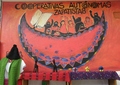
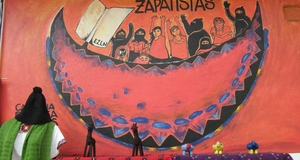
The performativity of ritual, theatre, and spectacle give credence to all three being viewed as a type of social action. Not only do these representations involve enactments, as such, they also involve social interaction among participants. There is an intersection between art and ritual, both as a formalized practice. This paper argues that in grassroots theatre the intersection occurs within community representation. The enactment is thus similar to other rituals and ritual-like traditions, such as commemorations, that involve creating or invoking a sense of community. In representations of culture, various factors are significant in the understanding or interpretation of performance, obviously including both symbolism and organization (Bell, Van Gennep, Turner, Geertz) . Likewise, these factors involve the visual. It is possible to speak of a cultural point of view in any representation, including ones involving language and/or spectacle. With regards to social memory, Connerton writes: "Concerning social memory in particular, we may note that images of the past commonly legitimate a present social order. It is an implicit rule that participants in any social order must presuppose a shared memory." (Connerton, 3)The group Sna Jtz’Ibajom, or the Writers’ Collective, is a locally based grassroots theatre group that began in 1981 in San Cristóbal de las Casas, Chiapas, Mexico. The Writer’s Collective (also known as The Writers’ House) performs and enacts grassroots productions that represent localized, regional traditions and, at the same time, create a sense of community within ritualistic space and practice. When viewed within the sphere of social action, Sna Jtz’Ibajom share common objectives with the Zapatista movement of Chiapas, and within its own history shows how art mirrors sociopolitical realities and performance holds ritual value during cultural revival. Historical BackgroundThe Writers’ Collective started as part of community effort to promote and protect Mayan heritage in the area of San Cristóbal. As became general public knowledge with the Zapatista movement and the communiqués to the world from Subcomandante Marcos: "Surrounding San Cristóbal is a mutitude of Mayan townships, each distinguished by its own dress style and language or dialect." (Frischman, 214) Frischman (Duke, 1981) attributes the formation of the Collective to renewed interest in Taotzil/ Tzeltal culture and Mayan heritage. He also traces this cultural revival among the people of San Cristóbal in part to contact with the Harvard Chiapas Project. This project spans the years 1957- 1975 and involved the work of anthropologists and archaeologists, graduate students, and locals aiding in translation and research. Basically, what has been identified with the Writers’ Collective was a community effort and ties into other types of social action in this area during the last decade, most notably the Zapatista movement and the formation of separate autonomous states within the region of Chiapas. As reported in Frischman, a group of local families (Perez-Perez, Lopez-Mendez, and De la Torre Lopez) formed the original Sociedad Cultural Indígena de Chiapas (Chiapas Indigenous Cultural Society) in 1981. (217) This was possible with the financial aid from outsiders, specifically from Cultural Survival, Inc. When viewed chronologically, as described above, the efforts of various organizations helped to foment what became a grassroots movement that eventually resulted in international recognition. Currently, information on The Origin of Corn/ El Orígen del Maíz, one of the more recent plays created by The Mayan Writers’ Collective (or “Sna Jtz’Ibajom”), can be found on the internet. This play was produced with the aid of Ralph Lee (artistic director) and Robert Laughlin (anthropologist). The group now travels to various venues as part of its artistic representation. According to the La Jolla Playhouse website, The Origin of Corn: "Is the story of a young man named Pedro, whose town is in need of food. The gods appear to Pedro, offering him the opportunity to help his town in the form of magical corn seeds. However, when Pedro tells a lie, the corn is turned to stone. Pedro must learn the lessons of truth and teamwork before all is made right." (Website) It is interesting to trace the establishment and progression of this particular group and its art in relation to the other events, namely social action in Chiapas within the last decade. When studying ritual as social action, or simply as social, analysis of metasystems are necessary, as expounded in Mauss: "Mauss argued that a total social phenomenon such as gift-giving can be analyzed in its totality and essence only through a specifically sociological method of analysis, that is, the study of dynamic metasystems that include legal, economic, religious institutions as well as persons in their sense of themselves as individuals and as a group." (Bell, 50) Grassroots performance is connected to grassroots movements, and although the Zapatistas gained international media attention quickly, their initial formation as a movement was local. On October 12, 1992, “thousands of indigenous people, many from the Lacandón rain forest, took over the city of San Cristóbal de Las Casas that was the principal site of colonial domination.” (Nash, XVII) In this sense the Writers’ Collective and Frischman’s article are almost artifacts of transitionary time, when radical shifts in culture and social life were occurring in Chiapas. Abercrombie, in analyzing the rituals of a formerly colonized people in the Andes, states, “...it may be the case that all ritual may be regarded as an instrumentality of history, a veritable historical engine.” (20) How grassroots performance can be viewed in a similar light and analyzed as ritual is developed later. The example of the Writers’ Collective shows that distinctions can be made between large spectacle and ritual performances, and small grassroots productions that convey specific cultural content. In Ritual Theory, Ritual Practice, Catherine Bell states, "Cultural performances are the ways in which the cultural content of a tradition is organized and transmitted on particular occasions through specific media." (39) The works of Sna Jtz’Ibajom are cultural performances that relate cultural history in a time of postmodernism. One very obvious reason this can be seen as an example of cultural revival, is a revival in the official use of a native language--Tzotzil and Tzeltal Mayan languages. These languages are used in some of the performances themselves, and the languages were taught to participants and community members as part of the Collective’s literacy project. The Tzotzil School awarded a diploma to graduates who studied and completed the language course that states “La lengua materna es cultura” (“The mother tongue is culture”). This objective parallels the happenings in larger social movements of Chiapas. The Zapatista movement is also a cultural revival movement. During a dialogue between Zapatistas and the Mexican Government in November, 1995, the following was proclaimed by the Fifth Group: "Silence has translated to injustice and has been the germ of conflicts for Mexicans; this has been particularly prejudicial for indigenous pueblos throughout the country. Their language, the center of a universe of thought, is silenced: their isolation is both effect and cause of poverty; from it stems impunity, impeding awareness by the rest of society of the conditions of life and problems of indigenous pueblos. The dialogue here is proving that we Mexicans can acknowledge our differences and overcome our conflicts through a peaceful road. May it never again require an armed uprising as the condition for dialogue and tolerance becoming the instruments of relations among Mexicans." (Nash, 119) With regard to social action is Chiapas, the question is not so much about the use of ritual language (as in the spoken word), as it is about a revival of the use of the language itself with the public, legal, and mainstream areas of social life. It is possible to use the example of the Writers’ Collective to view grassroots theatre as a type of ritual of the oppressed. Although the enactments are not religious, per se, they incorporate elements of an indigenous perspective that was also a culture of the oppressed in this region due to colonialism and domination of an imperial power. To fully understand the desire to form a community of artists and give life to community representation, one must see these representations in the context of the larger sociopolitical scene. Like in the initial marches and subversive action, San Cristóbal de las Casas became the site for other social action with the advent of the Zapatista struggle for autonomy. For example, on Jan. 20, 1995 the General Executive Council of the Autonomous Regions of Chiapas signed the following in San Cristóbal: "Autonomy is the basic condition and necessary for the life of a pueblo. Without autonomy no pueblo can exist. Without our autonomy, the indigenous pueblos will disappear." (Expreso, February 1995) [Nash, 131] The results of such efforts as that of the Writer’s Collective may in fact demonstrate the effects of a type of social action as basic as grassroots theatre and show how performance as promoting culture can instigate other social action, similar to traditional agit-prop theatre in the Western World. It is also helpful to consider the history of this artistic movement from an economic perspective: "The goal then is to form homegrown producers and consumers of Mayan cultural narratives (written and dramatized), and also to control the circuits of distribution of these products." (Fr., 219) One may see this in comparison to other widely recognized performance culture. As the product involves labor, it is also attributed value according to the local consumers of that culture. Grassroots productions limit profit making in terms of international capitalistic markets. Community theatre, however, will thrive when commonly recognized as legitimate and purposeful. The PerformancesThere are and have been a number of ways that the grassroots cultural group (Writers’ Collective, Sna Jtz’Ibajom) has been organized to include schooling; cultural projects; and actual theatre productions, including use of puppets. Five major productions of the group include: El haragán and el zopilote (The Loafer and The Buzzard, 1989), ?A poco hay cimarrones? (Who Believes in Spooks?, 1990), Herencia fatal, drama Tzotzil (Fatal Inheritance, A Tzotzil Drama, 1991), (Dinastía de jaguares (Dynasty of Jaguars, 1992), and !Vámonos al paraíso! (Let’s Go to Paradise!, 1993). Of these five, Frischmann writes, "The first three are based on elements of the Tzotil and Tzeltal oral traditions; the fourth, on written sources (Mayan and non-Mayan); and the most recent, on both oral and written sources." (223) The most recent production, as promoted on the internet, is The Origin of Corn. Each of these plays present a number of symbols, representations of hierarchies, and cultural legends/conflicts of significance. Many of them reflect a colonial history and history of enculturation. They also reflect Mayan roots, as keeping with the stated objectives of the group. The play Who Believes in Spooks? provides clues to the colonial past of the region in the element of its “supernatural protagonist (Hikal, phonetically j’ik’al).” It has been theorized that this character, based on stories from oral tradition, represents the figure of a runaway slave, offering clues about a local culture during time of empire. (225) Dynasty of Jaguars has been called an “epic drama” and is organized in three acts to represent several time periods: a time of “mythical origins”, the Classic Mayan period, and the pre-Spanish Conquest. (232) It includes elements of the text Popol Vuh. (232) The use of space and methods of production are significant within the performance and its structure. Frischmann notes that some of the performances have been part of larger festivities or have traveled to other locations. (The most recent production, Origin of Corn, was performed within the U.S.) The fact that Sna Jtz’Ibajom became a sort of traveling troupe re-emphasizes their message of community representation. Additionally, the productions are very much collective creations themselves. Originally, the performances took place in such communal areas as the local plaza of San Cristóbal de las Casas. Of this use of space, Frischmann writes: "To my initial surprise, particularly dramatic moments elicited great excitement and laughter! Several times, a physical wave of emotion swept through the entire crowd...That day at Chamula any neat dividing line between stage drama and social drama seemed to be nonexistent for the indigenous audience." (223) Frischmann’s article points to the significance of use of social space in the enactments that are also ritualistic. The body as instrument, the very embodiment of ritual, is achieved within the live performance that is unifying a community through symbols and social action. Bell’s Practice TheoryIn Ritual Theory, Ritual Practice, Bell speaks of “nonritual activity and various degrees of nearly-but-not-quite-ritual behavior.” (69) As addressed earlier, performance of any kind can be ritualistic in its enactment. The work of Sna Jtz’Ibajom began as a cultural project that grew out of and resulted in cultural revival. Paralleling other happenings of the time, it sought to instigate social action, preserve a common cultural heritage, and promote awareness. The Zapatista movement in Chiapas has involved ritual practice as part of it social action, at times manifestations of EZLN’s stated mission. (Nash) Nash notes how the linguistic patterns in EZLA statements reflect the Mayan language (even in the translation) decisively absent of clichés. Of one jungle communiqué, she writes: "The repeated references to what the heart says reflects a belief that true language— batzil k’op— issues from the heart. Diviner-curers gain access to the language of the heart of patients by means of pulsing them. This is done by holding a thumb over the throbbing pulse in the wrist of the patient while they utter provocative questions. When the pulse leaps, the curers who listen and feel— the verb, awayi, is the same for both verbs— know where the problem lies. This rhetoric resonates among the poor of Mexico and the world audience it is reaching."(134) The use of the native language lends an air of ritual to social action particularly when the language is not mainstream or is a second/other language. Towards drawing conclusions to the points of analysis addressed in this paper, it is useful to use the delineations outlined by Bell with regard to ritual practice. Practice for Bell is a way to view activity: "To focus on the act itself practice must be taken as a nonsynthetic and irreducible term for human activity. Practice is (1) situational; (2) strategic; (3) embedded in a misrecognition of what it is in fact doing; and (4) able to reproduce or reconfigure a vision of order of power in the world, or what I will call ‘redemptive hegemony.’" (81) As far as being situational, Bell is largely referring to history and historical consciousness. Although Bell speaks of “‘improvisation’” (82) when explaining how ritual practice is strategic, she highlights features of practice being “a ceaseless play of situationally effective schemes, tactics, and strategies...” (82) Any live performance incorporates elements of this, and if there are specific ritualistic objectives to the performance (such as creating a sense of community in grassroots theatre), then certainly the activity is partially improvisational. Bell’s third point— that ritual practice is a “misrecognition”-- seems an odd word choice; however, she attributes the superficial absurdity to a necessary understanding or, "An appreciation of the dynamics of misrecognition as such [that] goes back to the Marxist argument that a society could not exist 'unless it disguised to itself the real basis of that existence.'" (82) It is useful to consider this truism when identifying the repercussions of the grassroots efforts of Sna Jtz’Ibajom. Social action in the political world usually reflects people’s vision of reality, and equally the art mirrors the reality of the social world. This is following Cartesian logic to a certain extent. And it would be useful to consider a Zen-like blur of traditional categories to understand the social action in Chiapas during the last several decades. As peace activist, zen monk, and theorist Thich Nhat Hanh reminds us (those making history in the present) “I am, therefore I think.” Bell’s fourth point, “redemptive hegemony”, is based upon analyzing the reason behind what she calls “the will to act”. (83) Her term “redemptive hegemony” is a synthesis of the terms “redemptive process” (from Kenelm Burridge) and “hegemony” (from Antonio Gramsci). She concludes that, "A lived ‘ordering’ of power means that hegemony is neither singular nor monolithic; to be at all it must be reproduced, renewed, and even resisted in an enormous variety of practices." (83) She considers these constructs, both redemption and hegemony to synthesize the following about ritual practice: "Although awkward, the term ‘redemptive hegemony’ denotes the way in which reality is experienced as a natural weave of constraint and possibility, the fabric of day-to-day dispositions and decisions experienced as a field for strategic action." (84) Bell’s delineation of ritual practice is not only applicable to the example of Sna Jtz’Ibajom (in the sense of community theatre being ritualistic), it elucidates how social action in Chiapas has functioned in recent decades. Taking Bell’s principle of “redemptive hegemony,” some significant comparisons and contrasts are made between the artistic expression of Sna Jtz’Ibajom and the traditional protest and revolutionary action of the Zapatista movement and the EZLN. Further, when considering the differences of purpose between these two types of social action— in fact the differences in their objectives— , it is possible to decipher the reason behind violence that can accompany revolutionary action. On a superficial level, as mentioned earlier, both movements sought similar goals in promoting Mayan culture and heritage. However, one group was working peacefully with the support of the PRI and other groups who were part of a relatively stabilized world order. Sna Jtz’Ibajom was a cultural revival movement that was acceptable, in a manner of speaking, to the status quo. The Zapatistas, however, opposed the PRI and called for a complete revision of regional democracy-- one that guaranteed regional/cultural autonomy. Nash concludes in her recently published book, Mayan Visions: "In order to achieve cultural rehabilitation, indigenous people are rejecting the indigenista ideology of the PRI, which they criticize as an ideology that co-opts elements of indigenous culture only in order to create hegemonic control over them. They are, at the same time, reinventing the meaning of pluriethnic governance in terms that they claim are more related to ancient Mayan practices." (133) This contrast in objectives (between theatre and revolutionary action) can be found in the language of statements made by both groups. When Sna Jtz’Ibajom (Cultura de los Indios Mayas A.C. [The Writers’ House, Mayan Indian Culture, Inc.]) became a recognized legal nonprofit, they had stated the following objectives: "Reinforce the maternal language, in both oral and written form, and the written manifestations of the Tzeltal and Tzotzil cultures. Promote bilingual education giving preference to the mother tongue, with adequate learning materieals. Make known the essential aspects of autochthonous culture to the Spanish-speaking Mexicans so that they may appreciate and not denigrate it. Support the literary, dramatic, and audiovisual creations of the Indians--who have a great treasure of histories, traditions, and legends--through literary workshops and adequate translations." (Sna Jtz-Ibajom promotional materials) (Fr. 217-8) This statement makes clear the “redemptive hegemony” in Sna Jtz-ibajom productions is grassroots in nature— of specific culture, true, but localized. Of the larger purpose of Sna Jzt’Ibajom, Frischmann has written: "The writers’ appeal— and the work which they have carried out to date in literacy, writing, publishing, and theatre— constitute an attempt to (re)gain a decisive degree of cultural control over the written and oral expressions of their own cultural elements. On one hand, they seek to reassume control of that which is theirs (autonomous cultural elements); and on the other hand, to appropriate for their own use those elements/ practices which are not part of their present-day culture due to historical processes of deculturation and domination." (Fr., 218) The objectives of Sna Jzt’ Ibajom are ones that promote social action and awareness and it is not surprising that such a project would in turn foment social action in a larger sociopolitical sphere. It is relevant to this discussion of social action as ritual, and redemptive hegemony, to view both movements chronologically. In many ways, the actions of Sna Jtz’Ibajom can be seen as precursors to the Zapatista movement, just as the work of the Harvard Chiapas Project may be seen as having opened doors for the people of Chiapas. Obviously, the Zapatistas trace many of their objectives to Emilio Zapata and the original Mexican Zapatistas. Nash states: "The demands of the neo-Zapatistas reflect the roots of the movement in Zapata’s Plan de Ayala, promulgated in 1911, and the subsequent Zapatista Agrarian Law of 1915, drafted by radical intellectuals who joined the movement." (123) It is arguable, however, that these other purely cultural projects helped to instigate the social action that later engulfed Chiapas. There is a famous moment in the Zapatista movement that Nash has called “Dialogue in the Cathedral” that occurred on March 8, 1994. During this time, the EZLN came up with a number of demands upon the Mexican Govenment. Nash has summarized these in four points, abbreviated below: 1. Autonomy of indigenous villages, with the right to use their own language in schools, public contracts, courts, and the media. As on step in the democratization of government and the recognition of pluriethnic groups, the Zapatistas proposed a decentralization of the government at every level, overcoming “presidentialism” as well as control by the federal district over the entire country...From the very beginning of the talks, subcomandante Marcos made it clear that the Zapatistas were not demanding a racially representative leadership. This in itself does not ensure responsiveness to the interests of indigenous people, as five hundred years of caciquismo proved. Rather, the desire was to have representatives who fulfilled the will of the people, rescuing democracy from co-optation by false leaders. 2. Redistribution of large landholding to the smallholding villages, and government support for those who work the land, including agricultural machinery,...Assurance of just prices for crops is a prerequisite for commercial production in the international market, since Mexican farmers now face competition from subsidized U.S. products. 3. Support for housing, health, education, recreation, communication, and other necessities for overcoming cultural marginalization. The Zapatistas demanded services equivalent to those accorded to other communities and towns throughout the republic, such as electricity, potable water, sewage, roads, telephone communication, recreational centers, and sports facilities. 4. Recognition of the rights of women and attention to their special medical needs, and support in gaining access to markets for their artisan production. Zapatistas are credited with raising the issues of women’s rights to national attention. (135) Although the objectives of the social action of Sna Jtz’Ibajom and the Zapatista movement may paralell each other in many ways, in the practice of “to reproduc[ing] or reconfigur[ing] a vision of the order of power in the world” (Bell’s redemptive hegemony) (83), the two differ greatly. It is, in fact, the practice of redemptive hegemony (as one element) that separate the two within the broad field of social action. The actions of one is acceptable to the status quo; the other is a struggle for independence and a rejection of the existing system. Violence that accompanies revolutionary action can also be analyzed within the field of social action and performativity. Joseph Roach has suggested that “violence is the performance of waste.” (41) Here he is bringing forth notions of “Bataillian ‘unproductive expenditure’.” He concludes that “violence is performative, for the simple reason that it must have an audience— even if that audience is only the victim, even if that audience is only God.” (41) This is not dissimilar to what was identified during the war in Bosnia as viewing genocide through “television eyes,” in part an intellectually reaction to perceived inactivity and ineffectiveness of peace efforts. In fact when analyzing revolutionary action, it is helpful to include violent activity in the realm of social action, as it stresses the interaction of all elements and metaforces at work. Violence or potential violence is another way sociopolitical movements in Chiapas can be distinguished. ConclusionThe work of analysis in this paper is reflective of other on-going processes in the wide, wide, world. Such revolutionary movements as that in Chiapas can create atmospheres that are difficult for research by outsiders, and much learning remains to be gained from knowledge that has come with such a large social movement. June Nash’s book proved to be a highly informative source about recent history making in San Cristóbal de las Casas. Sna Jtz’Ibajom is continues to be an operating unit of performance culture or cultural performance. There is incredible potential for research within this vein of studying the history of social action in Chiapas. Ritual theory is applicable to the analysis of grassroots theatre, as grassroots movements are cultural in nature and attempt to create community. The Writers’ Collective is an example of the micro- and the macro- intertwining and inter-relating. Comparing Sna Jzt’ Ibajom with larger, revolutionary movements creates a picture of history and culture at work within the field of social action and social drama. (V. Turner)
Abercrombie, Thomas A. Pathways of Memory and Power. Madison, Wisconsin: The Univ. of Wiconsin Press, 1998. Bell, Catherine. Ritual Theory, Ritual Practice. New York: Oxford University Press, 1992. Connerton, Paul. How Societies Remember. Cambridge: Cambridge University Press, 1989. Frischmann, Donald H. “New Mayan Theatre in Chiapas.” Negotiating Performance. Durham: Duke University Press, 1994. Hanh, Thich Nhat. Zen Keys. New York: Doubleday, 1995. Nash, June C. Mayan Visions. New York: Routeledge, 2001. Roach, Joseph. Cities of the Dead. New York: Columbia University Press, 1996. Turner, Victor. Dramas, Fields, and Metaphors. New York: Cornell University Press, 1994. Turner, Victor. The Ritual Process. New York: Aldine de Gruyter, 1995. Van Gennep, Arnold. The Rites of Passage. Chicago: University of Chicago Press, 1960. 
From the Inquiries Journal Blog   Related ReadingMonthly Newsletter SignupThe newsletter highlights recent selections from the journal and useful tips from our blog. Suggested Reading from Inquiries Journal
Inquiries Journal provides undergraduate and graduate students around the world a platform for the wide dissemination of academic work over a range of core disciplines. Representing the work of students from hundreds of institutions around the globe, Inquiries Journal's large database of academic articles is completely free. Learn more | Blog | Submit Follow IJ


Latest in Anthropology |