Rationalizing Sexual Tourism: How Some Countries Benefit from Selling Sex
By
2010, Vol. 2 No. 04 | pg. 1/2 | »
IN THIS ARTICLE
KEYWORDS
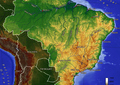
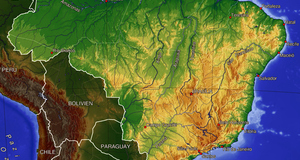
Brazil’s northeast coast has a perfect climate for a booming tourism industry. The beaches are unspoiled, the people are friendly, and the area required only a small amount of infrastructure development to create a haven for tourists. While not a formal part of this design, sexual tourism has been an integral part of this boom. Though organized prostitution (through brothels or pimping) is not legal in Brazil, individual prostitution for one’s own sake is legal. This gray area of law is not limited to Brazil, but is in fact prevalent in many countries around the world. As Arreola (1996) points out in his article Border-City Idee Fixe, prostitution is not considered legal in Mexico either but “tolerated” in zonas de tolerancia (tolerance zones) along U.S. and Mexican border towns from Tijuana to Brownsville, Texas. (363) According to the Brazilian Ministry of Tourism (2004), sexual tourism leads to child exploitation and human trafficking. Groups continue to fight against child prostitution fiercely in the Brazilian city of Fortaleza, but adult prostitution is still legal. Non-governmental organizations, the Brazilian government, churches and international groups are abundant throughout the city of Fortaleza and in 2006 and 2007 were willing to try and fix the problem of child prostitution, however adult prostitution was still not criminalized. In 2005, posters and pamphlets were placed in airports in over twenty Brazilian cities by the World Tourism Organization to combat sexual tourism involving children and teenagers. One-minute videos were played on television and aboard international flights. The Ministry of Tourism (2004) set aside US$1.09 million in its budget to push the campaign against child exploitation. This of course begs the question: If both non-governmental organizations and the Brazilian federal government blame sexual tourism for child exploitation and human trafficking, why is prostitution still legal? Sexual tourism has recently become a hot topic in political science research. Cities known for participation in sexual tourism range from Bangkok, Thailand to De Wallen, Amsterdam. In an increasingly globalized world, with the proliferation of the internet and growing access to international travel, sexual tourism is becoming more frequent. In the following analysis, while avoiding claims of sexual tourism being either good or bad, I examine the reasons a country might be supportive of such tourism, or at least not actively oppose it by making adult prostitution illegal. After collecting data through a series of in-depth interviews, short surveys in both Brazil and Mexico, and analyzing existing statistics, I infer that government support of sexual tourism stems from the belief that it provides stimulus to the economy. Rational choice theory is used as a framework for explaining this government support.Defining Sexual TourismSexual tourism involves travel across national or international borders in order to take part in a non-reproductive sexual encounter. The sexual encounter may be with an adult or minor, man, woman, transsexual or transvestite. It must involve an exchange of money or material goods for a sexual act. The area becomes gray when defining who is involved in sexual tourism as Meaney and Rye (2007) explain in their article The Pursuit of Sexual Pleasure. If a businessman meets a prostitute while in the city on a business trip, does he count as a sexual tourist? If a woman works as a hairdresser but has foreign “boyfriends” on the side, does she count as a prostitute? If a college student engages in a sexual activity with another college student from a different university while both are in Cancun during Spring Break, is this considered sexual tourism? Opperman (1999) agrees in his article Sex tourism that the tourist-prostitute relationship is complicated and colorful. Though many people may take part in a sexual encounter while traveling abroad, few would claim to be “sexual tourists.” (255) In Clancy’s (2002) article The Globalization of Sex tourism and Cuba: A Commodity Chains Approach, he says many travelers consider themselves the current boyfriend/girlfriend or “friend” of their sexual partner for the few weeks of their visit. Many tourists claim to be more of a situational sexual tourist who took advantage of an open situation or prefer to tell tales of “romance” encountered during their travels. (72) According to the Brazilian Federal Police (personal communication, June 29, 2007), only if a person enters the city with intent to engage in a sexual act with a local is he/she considered a sexual tourist. The Foundation of Children and Family in Fortaleza (Funci/PMF) (personal communication, July 10, 2007) claims there are two types of tourism: “good” tourism and “bad” tourism. Good tourism is the tourism that brings in conferences, family outings and tourists who want to experience the food and culture of the northeast of Brazil. Bad tourism is influenced by the media and tourist agencies and portrays the northeast of Brazil as a hot, sensual and exotic place to visit where the women are promiscuous. Bad tourism attracts pedophiles, sexual predators and those in pursuit of prostitutes. Little research has been conducted on “bad tourism”. Statistics do not exist in the area. The government officials I spoke with claimed the city did not keep statistics. Though no one would admit to me to being a sexual tourist in Brazil, American truck drivers on the Mexican border of Laredo, Texas spoke candidly. “Sure, we’re actual sex tourists. We come over here to Mexican for the sole purpose to have a good time with liquor and women. Some of the younger ones don’t have it figured out yet. They think the lovely, young Mexican girl sitting next to them is their girlfriend. As soon as he climbs back up in that tractor-trailer and takes off, she’s with another trucker. It doesn’t matter that he’ll be back next week or if he says he loves her, if he’s paying her bills or even if he marries her. She has to make money while he’s gone. I figure it’s a service I’m paying for. I don’t have much time off the road. They get paid and I get what I want. Everybody wins.” (Personal communication, April 20, 2008). Similar to adventure tourism in which a person travels to Africa solely for the purpose of participation in a safari, sexual tourism as defined by the research of this paper occurs when a man or woman travels to another locale, either foreign or within one's own country, for the sole purpose of sexual gratification with a local individual in exchange for money or goods. Sexual Tourism and Rational Choice TheoryMost research written on sexual tourism embodies a negative, one-sided argument. There are no benefits and nothing good can come of it. Child exploitation and human trafficking are used to prove the damage sexual tourism can bring to a country. Articles such as Graburn’s (1993) Tourism and Prostitution suggests the forced rape of a third world country by that of a first world country. Reinhardt’s (1989) German article compares sexual tourism to a new brand of colonialism. Overall’s (1992) article What’s Wrong with Prostitution? Evaluating Sex Work claims sex work is “defined by an intersection of capitalism and patriarchy.” (724) I found little research relating directly to Brazil. Articles on Cambodia, Thailand, the Philippines, Cuba, and the Caribbean were more prominent. Anthropologist Adriana Piscitelli (2002, 2005) and her exhaustive 20+ years of research following Brazilian and Argentinean prostitutes, who have married their European clients and moved to Europe, was the most in depth. The Brazilian reporter Eliane Trindade’s (2005) book, The Girls on the Corner: Diaries of dreams, hurts and adventures of six Brazilian adolescents, details six daily diaries of prostitutes caught up in sexual tourism. Opperman’s (1998) book Sex Tourism and Prostitution: Aspects of Leisure, Recreation and Work and his various academic articles such as Sex tourism printed in Annals of Tourism Research give clear explanations as to why the word sexual tourism is considered a grey term and not necessarily a synonym for prostitution. Taylor’s (2001) article Dollars are a Girl’s Best Friend? Female Tourists’ Sexual Behaviour in the Caribbean explains sexual tourism from the perspective of women as the sexual predator. The common theme of the articles portrays sexual tourism as harmful and villainous. Again I do not tackle this normative question, but rather I try to understand why it continues to flourish if it is such a bad thing. Thus I offer an alternative view of sexual tourism, suggesting that government officials actually support it because it helps to bring prosperity and economic wealth into an otherwise poor country. Other articles with similar ideas are Lie’s (1995) article The Transformation of Sexual Work in 20th –Century Korea. He explores international political economies involved in prostitution from sexual services provided during war to special districts set aside in border towns. El-Gawhary’s (1995) article Sex Tourism in Cairo says sexual tourism takes place in Cairo due to economic and diplomatic reasons. Truong’s (1990) book Sex, Money and Morality: Prostitution and Tourism in Southeast Asia looks at sexual labor as a way of producing surplus with the growth of capitalism. Examples are the services used by U.S. soldiers during the Vietnam War and the growth of tourism after the war. His book agrees with a point in Pettman’s (1997) article Body Politics: international sex tourism which emphasizes the complex issues buried beneath the sex tourism industry, such as economic policies, international relations, business ethics, racial discrimination, and corruption. (101) By bringing wealth to a suffering country, I am suggesting that support for sexual tourism is best understood through the lens rational choice theory. The rational choice theory (often used in the language of economics) states that human beings are rational beings, and will choose their rationalized behavior by using a cost benefit analysis. Choices will therefore be made in the person’s best interest, that which will benefit the person the most. Rational theorists also explain that as a nation, the state is responsible for maintaining order and preserving the common good by enforcing fit laws. I argue here that it is rational for governments and government officials to support sexual tourism. In order to survive economically, nations and officials allow prostitution and sexual tourism to continue without prosecution. MethodsFirst-hand field observation and interviews took place in Fortaleza, Ceara Brazil between the months of September- December 2005, July- August 2006 and July-August 2007. Observation and interviews were performed in local tourist hotspots and bars where sexual tourism was known to take place by city locals. Interviews and questionnaires were given to 30 prostitutes in the city of Fortaleza, Ceara Brazil through the Association of Prostitutes of Ceara. Three federal police officers, two civilian police officers, two legislative representatives, one member of the Senate of Ceara, three members of city council and eight non-governmental organizations were given one-on-one interviews. Various members of the public were given interviews and questionnaires throughout 2005-2007, including but not limited to an occupational therapist, radio announcers, local and University librarians, documentary film artists, a Federal government lawyer, University students, aldermen staff, bar tenders, neurologist technicians, local school teachers, security guards and domestic workers. Nine interviews were given to individual American truck drivers crossing the Mexican border to participate in sexual encounters with Mexican women in exchange for money in April of 2008 at Boy’s Town. Contacts were made during a 2005-2006 study abroad in Brazil and personal truck-driving contacts on the border of Laredo, Texas. Existing statistics and charts were used from the 2006 2nd Edition of the Secretary of Tourism of the State of Ceara’s Tourism Study. The DataBrazilian President Luiz Inacio Lula da Silva legalized prostitution; therefore, the law must be seen as preserving the common good. This would need to be interpreted economically, as socially it seems to have a negative impact. The Institute for Trade, Standards, and Sustainable Development (2005) explained in their article about U.S. drug patents that Brazil rejected $40 million in U.S. assistance for the fight against AIDS in May of 2005 due to strings attached by the U.S. government. Condemning prostitution was one of the stronger strings Brazil refused to cut. Pedro Chequer, the Brazilian Heath Ministry AIDS program director called the U.S. conditions “theological, fundamentalist, and Shiite.” (5) Women, homosexual men and children living in Brazil and Mexico compete in a male-dominated society. “Girls can work in a job in Mexico and make $50 a week. If they prostitute, they can make $50 an hour. They do it to support their kids or for quick money,” a 40-year-old truck driver told me. He was married to a former prostitute and arranged “tours” for other U.S. truckers by CB radio. (Personal communication, April 13, 2008.) “You know, sexual tourism is just a cover. The tour guide introduces you to Boy’s Town and you think you’re in paradise. You have all these beautiful women and drinks are pouring. They are the most beautiful women you’ve ever seen and they all want you. You can have as many as you want, two or three at a time if you feel like it. You wake up in the morning and you’ve blown your entire paycheck. After a couple times in Boy’s Town you start complaining about how much money you’re spending. That’s when they have you where they want you. The Mexican tour guide says he knows how you can make a quick buck. You just have to smuggle a few people over in your truck and you can make $1,000’s of dollars. Of course, everything is split between the bar and the girls. They’re all in it together.” (Personal communication, April 15, 2008.) “Smuggling people leads to smuggling drugs, contraband, weapons, terrorists, you name it. The more dangerous it is, the more money they’ll pay you.” (Personal communication, April 10, 2008.) Prostitution is a blurred area. Half of the women interviewed in Fortaleza saw themselves as business women selling sex to men who were easy to exploit. Many women did not want to be labeled as prostitutes in Brazil and were not involved in the Association of Prostitutes of Ceara, the local non-governmental organization who fought for prostitutes’ rights in the state. Most of the prostitutes interviewed in Fortaleza Brazil did not use prostitution as their sole means of income. The majority worked as hairdressers, waitresses, in retail, or were University students. They said they “dated” foreigners because the men were wealthy and generous and they had a chance of marrying the foreigner and leaving Brazil. The Federal Police said this makes it impossible to prove who is and is not prostituting. The police cannot prosecute. The tourist is not committing a crime. A civil police officer explained, “Sexual tourism is not a crime. No country has a law against it, only if caught with a minor can someone be prosecuted.” (Personal communication, August 27, 2007). A worker with the NGO Partners of the Americas with USAID (personal communication, July 29, 2007) said, “Sexual tourism exists because of poverty, globalization, and machismo. Why does the tourist come looking for sex with a slave when he could have a healthy sexual relationship with a companion? Why do the rich come looking to exploit the poor? These are the questions we should be focused on.” So, why do people visit Brazil? According to statistics taken from the Secretary of Tourism in the State of Ceara (2006), 48% of national and international tourists were influenced by comments of relatives and friends to visit Fortaleza in 2000. The media influenced over 11%, 18% were revisiting Fortaleza, and travel agencies influenced over 9%. During the period of 1995- 2000, the number of international tourists grew from 38,000 to 121,000, showing a 26% increase per year. In 2000, 62% of visitors had visited Fortaleza more than once and 98% expected to return. Between the years of 1996- 2003, Fortaleza moved in rank from number 11 to number 4 of principle cities visited by international tourists. Seeing the natural attractions of Fortaleza, Ceara was the number one reason for tourists to visit, followed by business and visiting relatives and friends between 1997-2005. Between 1997- 2005 money spent in bars and restaurants increased, as did money spent on entertainment and nightlife. During the time frame of 1996-2006 national tourists increased from 733,038 to 1,794,369 per year and international tourists increased from 40,209 to 268,124 tourists per year. Direct tourist receipts in Brazilian reals spent increased from R$486,000 million to R$2,300,000 million. Generated income from tourism in Fortaleza increased from R$651 million in 1995 to R$4,025,800 in 2005. Per capita spent on a daily basis increased from R$51,66 in 1995 to R$134, 07 in 2006. In 1997 over 60% of tourists entering Fortaleza were male. In 2006 59% were male. The men were mainly between the ages of 36 to 50 years old, traveling alone and married. In 2005 and 2006, the majority of international tourists in order were: Portuguese, Italian, Argentinean, American, Spanish and French. “Official numbers do not exist for tourists entering the city of Forteleza for sexual tourism purposes. “We know they exist and we know who they are, we just can’t prove it. We see them on the beach. The majority are European, especially Italians, Portuguese and German,” said a state senator of Ceara. (Personal communication, August 14, 2007). Various non-governmental organizations, one state representative and one state senator claimed that sexual tourism hurt the economy of the city of Fortaleza. They said families preferred to go to other cities for vacation because the city of Fortaleza had been tainted as a town of prostitution. Now many of the beaches that were booming only seven years ago were deserted except for tourists and prostitutes. It is impossible to prove if the “good” or “bad” tourism has caused Fortaleza to grow but these statistics show that tourism in Fortaleza has increased in all areas. “What we see is a spoiled image of our cities for those that are in search of actual tourist destinations. Paradoxically, the tourism in the state of Ceara, including the capitol Fortaleza is one of the sectors of the economy that has grown the most in the last 20 years,” said a senator of the state of Ceara. (Personal communication, August 14, 2007). This shows a flaw in the argument that sexual tourism damages the economy. Tourists have also discovered how to work the system in their favor. By law, if a man or woman has a child with a Brazilian, he/she is allowed to stay in the Country. Bars and restaurants on the beachfront of Fortaleza are owned by Portuguese, Italian and German men. Many owners are married to Brazilian women and have a Brazilian child. Foreigners open travel agencies or work by Internet, often times inviting “friends” to visit and rent out apartments they own. When asked who benefited from sexual tourism, the majority of locals from Fortaleza said the tourist agencies, hotels or prostitutes, if anyone at all benefited from sexual tourism. A lawyer from the federal police department (personal communication, August 3, 2007) said, “Only the hotels are really gaining money.” Two aldermen from city council claimed sexual tourism did not exist in Brazil at all. Those claiming sexual tourism did not bring money into the city were politicians, or non-governmental organizations active in the fight against human trafficking and child sexual exploitation. The wealthier and more educated the community member, the more he/she claimed sexual tourism did bring money into the city but did not necessarily help the city grow. The more involved the person was in the sexual tourism industry, the longer the list they gave. “In one form or another, the city has always survived on sexual tourism. Of course it brings money into the city, all the way to the taxi driver and restaurant,” said a working transvestite. (Personal communication, June 20, 2007).Continued on Next Page » 
From the Inquiries Journal Blog   Monthly Newsletter SignupThe newsletter highlights recent selections from the journal and useful tips from our blog. Suggested Reading from Inquiries Journal
Inquiries Journal provides undergraduate and graduate students around the world a platform for the wide dissemination of academic work over a range of core disciplines. Representing the work of students from hundreds of institutions around the globe, Inquiries Journal's large database of academic articles is completely free. Learn more | Blog | Submit Follow IJ


Latest in International Affairs |