Opinion:Stepping Back from the Brink: Working to Stop and Reverse the Ecological Damage Caused by Modern Industry
By
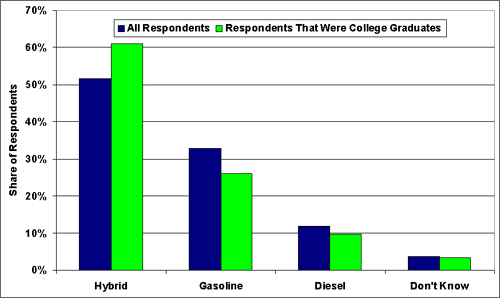
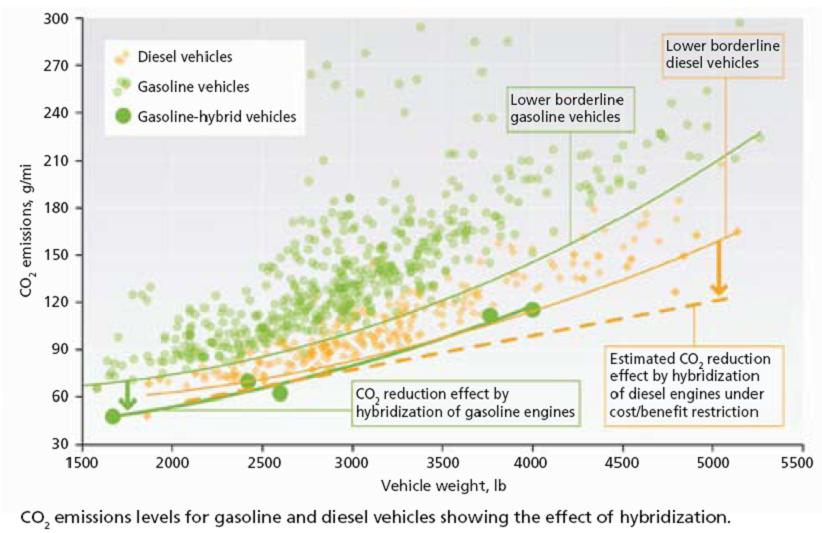
2010, Vol. 2 No. 03 | pg. 1/1 In recent years, it has become clear through scientific investigation and public opinion that the current state of environmental degradation and ongoing damage are a practice that cannot be carried into future generations if mankind wishes to maintain a healthy, habitable planet in which to advance and thrive. Because our ‘methods of damage,’ or ways in which industrial development and human progression have marred our environment, have been an ongoing and multi-faceted process, it only makes sense that the stoppage and reversal of such a process be sustained and multi-faceted as well. The first steps toward becoming a greener society lie within a necessary shift in thinking. If Americans, or others in the industrialized world, have no motive to switch to more environmentally friendly practices and products, they will not. Thus, it is essential to encourage society to possess a desire to become more eco-conscious for either personal or financial reasons; then, society itself will drive the environmental movement. The first step in the multi-faceted plan of ecological reform will be to educate the public of the current problems and instill an incentive or sense of conviction in people to become more environmentally friendly. Then, and only then, will the movement become self-perpetuating and driven by societal demands, which are the most important driving force behind a society’s customs and practices.In keeping with the theme of a continued, tiered approach to remediating previously held ideologies and ecologically damaging processes in the United States, the issue of US dependence upon the economically unstable, finite, and environmentally damaging resource of crude oil through the consumer automotive industry should be addressed as a first priority. The EPA said it well in their 2010 report, stating: “Every gallon of gasoline your vehicle burns puts about 20 pounds of CO2 into the atmosphere—the average vehicle emits around 6 to 9 tons of CO2 each year. Unlike other forms of vehicle pollution, CO2 emissions cannot be reduced by pollution control technologies. They can only be reduced by burning less fuel or by burning fuel that contains less carbon. One of the most important things you can do to reduce your contribution to climate change is to buy a vehicle with better fuel economy. The difference between 25 miles per gallon and 20 miles per gallon can prevent the emission of 10 tons of CO2 over a vehicle’s lifetime.”1 Figure 1 This in itself, however, will need to be a step-by-step process. Changing the way Americans think about automotive fuels and technologies will never happen overnight, and should not be approached as such. A first step in managing the pollution created by the US automotive industry, our single largest source of carbon dioxide emissions, needs to begin with optimizing the way we use the technology that currently exists. Current infrastructures, fuel technologies, and driving practices make an already damaging system worse, by using the resources it has inefficiently. Take, for example, the usage of clean diesel technologies in the consumer automotive industry. Many Americans carry the stigma of labeling diesel-powered vehicles as loud, dirty, and unrefined machines. This is supported in Figure 2, displaying trends in consumer interest in emerging technologies. It is evident based on the high ranking of gasoline-hybrid technology and low ranking of clean diesel technology that people simply are not nearly as interested in diesel as an option as they are in hybrids. This persists despite the fact diesels have been proven to be nearly if not equally efficient, carry less of a price premium, and deliver a more normal driving experience. In decades past, the belief that diesel powered vehicles were inferior in performance, cleanliness, and reliability would not have been far from the truth. However due to scientific advances in filtration, additives such as urea, and diesel refinement, diesel fuel can now be implemented as a clean burning, low emitting fuel which is much more efficient than gasoline. As stated by the EPA in their 2010 Fuel Economy Guide, “Diesel-powered vehicles typically get 30-35% more miles per gallon than comparable vehicles by gasoline. Diesel engines are inherently more energy efficient, and diesel fuel contains 10% more energy per gallon than gasoline. In addition, new advances in diesel engine technology have improved performance, reduced engine noise and fuel odor, and decreased emissions of harmful air pollutants. Ultra-low sulfur diesel fuels also help reduce emissions from these vehicles.”1 Figure 2 Across the United Kingdom and most of Europe, the consumer automotive industry is dominated by diesel powered vehicles. Gasoline is reserved for only the most elite performance vehicles. Take, for example, the Volkswagen Jetta TDI, or the BMW 335d. These are both extremely well engineered, dependable, and efficient vehicles, which because of their diesel engines, attain mile-per-gallon ratings comparable to and often exceeding modern gasoline-electric hybrids such as the Toyota Prius. Additionally, as shown in Figure 3, the average CO2 emissions are accordingly lower for clean diesel vehicles than comparable gasoline vehicles, bolstering the argument for their usage and serving to counter the notion that diesel power trains are dirty unsophisticated machines. Rationally, diesel powered vehicles like these are the norm in the UK and across Europe, but because of American traditions and ways of thinking, they barely turn a profit in US automotive markets. For example, an August 2007 survey conducted by the US Department of energy asked respondents to, “Assume that a HYBRID vehicle and a clean DIESEL vehicle both would cost $3,000 more than a comparable GASOLINE vehicle and both would reduce your annual fuel use by 30%. Which of the following would you choose for your NEXT NEW vehicle purchase?" (Choices were gasoline, diesel, or hybrid). Only 12% of all respondents indicated that they would purchase a diesel vehicle under these conditions. Over half of the respondents said they would choose a hybrid vehicle for their next new vehicle purchase. Over 60% of those with a college education would choose a hybrid vehicle.”6 Clearly, breaking down Americans’ fear of diesel vehicles will be a major hurdle in the first steps of this proposed plan, however it will be one of the only such obstacles. This is a major opportunity to begin the wave of change toward greener automotive technologies in the US. Infrastructure, vehicles, and a proven track record of reliability already exist in the US to facilitate a switch over to diesel fuel powered vehicles. This switch would optimize the efficiency of the systems and methods we already have in place almost painlessly, and would serve as a first step in a movement toward completely new, sustainable automotive technologies. A plan such as this would require a great deal of governmental guidance and oversight to urge both people and industry to make the changes necessary to attain set goals to ensure the process does not stall. This would mean that the US Department of Energy, Environmental Protection Agency, and Department of Transportation would all need to work collaboratively to help speed along the transition to utilizing our current systems more efficiently and eventually the implementation of entirely new, non-polluting fuels and/or methods of transport. Additionally, government jurisdiction would be necessary in the process to enforce new guidelines and goals established, to guarantee increases in efficiency in industry and automotive design and production are taking place, and to impose fines if such benchmarks are not met. Figure 3 The next step in the process of reform would be to explore, research, and develop alternative fuel and energy sources to replace petroleum completely in the automotive world. While ongoing research has been taking place for a number of years in private companies and industry, a much stronger push in the research and development of renewable and sustainable fuel/power sources is needed in order to see real results in the near future. Additionally, because almost all of the current research and development in hybrid and alternative fuel technology is funded by private automotive companies, who are facing great economic hardships and sales concerns, the amount of support for said programs has been very limited. Furthermore, the companies that are currently doing the research and development on the fuels and technologies that could literally change the environmental world have reason to stifle and delay the results and developments of such research, as a widespread shift in what people are buying and using for transport could cut greatly into a company’s profits if pioneered by a competing company or if the company is not prepared to remain on the cutting edge of new technology and trends. Because of such competitive disinterest in these emerging technologies and fuel sources, it will be necessary for their exploration and research to be headed and managed by a governmental program and funded with tax dollars. This may be hard for the public to accept at first, however with time and proper education and awareness movements, society will accept it as something essential to our future progress. Additionally, the age-old practice of candidate selection and the polluter industrial complex colonization of the state, as discussed in Dr. Faber’s lecture and notes Colonization of the State by the Polluter-Industrial Complex, needs to be fervently disallowed and attacked at any opportunity. “There are essentially five political processes which cumulatively enable the capitalist class in general, and the polluter-industrial complex in particular, to wield power over the state apparatus and underlying population. These five processes are called the candidate selection process, political appointee process, the special-interest (lobbying) process, the policy-making process, and the ideological process. The processes constitute a network of mechanisms that establish and maintain corporate domination of the state.”3 The political leaders and decision makers spearheading this effort, and government in general need be completely objective without bias from competitive industries or causes, to make the best and most educated decisions on what is best for the country. It is apparent that simply switching US automotive industry over to diesel fuel is not a long-term answer to reducing our dependence on foreign oil, however it is not meant to be. Changing over to diesel fuels for our petroleum and hybrid powered vehicles would greatly increase the average fuel economy and help reduce the carbon emissions, which serve as the largest single contributor to global climate change, while more feasible alternative fuels and technologies are researched and developed. What separates this plan of attack is that, unlike other more radical proposed solutions, a step-by-step does not force people to accept an entirely different methodology to which they perform everyday tasks. By slowly modifying the way people do things, while simultaneously educating them why such changes are being made, the shift is much more easily accepted by the masses. Additionally, much like Dr. Faber’s work Environment Under Fire2 and the accompanying video on the ecological advances of Nicaragua, once one segment of the population becomes invested in the movement, it will serve as a role model for the rest of society. No one solution is likely to be the answer to the crisis we have created in our environment today. However, the very least we can do is minimize the damage we are continuing to do to the earth and use the technologies and practices we already have the most efficient way we can, until newer and better fuels and infrastructure are developed. The multi-staged plan of attack discussed thus far is really only the beginning of a major social movement toward a greener environment and lifestyle for all of America. While necessary to foster and protect in its early stages, once taken hold such a movement will help to challenge and change antiquated ways of thinking and reward green innovation and practices within America. References2010 Fuel Economy Guide. (n.d.). US Department of Energy. Retrieved from http://www.fueleconomy.gov/feg/FEG2010.pdf Faber, D. (n.d.). Environment Under Fire. New York: Monthly Review Press. (Original work published 1993) Faber, D. (11/14/2006). Colonization of the State by the Polluter-Industrial Complex. In Environment and Society. Tutor, C. (2008, June). Report: Backup assist, blind spot detection hot; clean diesel not [Web log post]. Retrieved from Autoblog: http://www.autoblog.com/2008/06/24/report-backup-assist-blind-spot-detection-hot-clean-diesel-no/ Zuberi, B. (n.d.). Diesel Goes Hybrid? April 2007. Retrieved from http://bznotes.wordpress.com/2007/04/13/diesel-goes-hybrid/ Fact #485: September 3, 2007 Engine Preferences. (n.d.). US Department of Energy. Retrieved from http://www1.eere.energy.gov/vehiclesandfuels/facts/2007_fcvt_fotw485.html 
From the Inquiries Journal Blog   Monthly Newsletter SignupThe newsletter highlights recent selections from the journal and useful tips from our blog. Suggested Reading from Inquiries Journal
Inquiries Journal provides undergraduate and graduate students around the world a platform for the wide dissemination of academic work over a range of core disciplines. Representing the work of students from hundreds of institutions around the globe, Inquiries Journal's large database of academic articles is completely free. Learn more | Blog | Submit Follow IJ


Latest in Environmental Studies |