Innovation or Desperation: David Bowie's "Little Wonder"
By
2010, Vol. 2 No. 02 | pg. 1/2 | »
KEYWORDS:
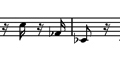
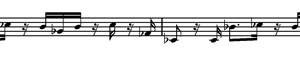
Despite releasing twenty-two albums in the nearly thirty years between his debut in 1967 and the commercially rejected No. 1 Outside, the general opinion of David Bowie in 1996 was that, though a living legend, he had not recorded anything worthwhile since his 1980 album Scary Monster. Bowie’s most recent output had been panned as a heady concept album. The industry and its consumers thought that David Bowie left his best work behind when he closed the door on his alter egos, such as Ziggy Stardust and Aladdin Sane, which made him an icon in the 70s. It seemed certain that whatever followed the failure of No.1 Outside would make or break Bowie as a commercial artist. That is when “The Thin White Duke” released Earthling. By the release of this album in 1997, “jungle” music and its corresponding rave scene was declining both in the US and in Europe. Some onlookers believed Bowie’s use of this passing fad for this important album was a sign of age1. It may have looked as if he was out of touch and grasping at relevance by latching on to the back end of the rave movement2. However, what had been lacking in the albums of the previous seventeen years was not a unique point of view. Rather, Bowie lacked a hit track to bring him to a younger audience of consumers who did not remember his body of work of the 1970s. The first twelve seconds of the track present four even 44 measures in which much of the track’s plan is already laid out. The percussion here is a drum loop3 striking beats one and two evenly, then coming in for an 8th on the second half of the third beat. That acts as the front book end that surrounds the two sixteenths that comprise beat four. Another eighth finishes the measure. This loop provides the foundation for nearly the entire track as it reappears throughout the piece. On top of this loop is synthesizer work. The sound is highly distorted and probably originated as a guitar. An ascending triad is played, each successive pitch getting two full beats, each beat of which is broken down into one beat and two eighths, before being completed on the downbeat on the following measure. Guitarist Reeves Gabrels plays an ascending sweep, sounding almost like paper tearing, which separates the two statements of the music just described. For all of that explanation, one can identify both that there is a very regular, simple meter at work as well as strict four bar periods. Square periodization and meter are always welcome by most listeners because it is easy to conceptualize and, frankly, easy to dance to. However, the layering of material keeps it from being boring and this introduction’s brevity keeps its regularity from becoming stale or overly repetitive. At 00:13, the sonic fabric changes. The keyboard takes over as the dominant instrument and is set to a transparent, hollow and slightly ringing sound. This new sound is characterized by a fast attack and a short yet proportionality long decay4. This begins both the main progression of the piece and David Bowie’s vocals. Both of these are simple and diatonic, sounding rather like a nursery rhyme but for the nonsense lyrics5. This section maintains the periodic timing of the introduction as well as the drum loop. The syllabic text declamation furthers this present, though not initially audible, strict organization. The second verse follows directly on the heels of the first. The only difference between the two is that the repeated text that comprises the second half of every verse is overdubbed in the second verse6. The change of timbre that occurs from the introduction’s distorted guitar to the verse’s keyboard and vocal clarity allows the listener to catch the text as it goes by and, more importantly, to get the melody stuck in their heads. It is the melody that is the key in this section and its hypnotic circularity hooks the listener into the fold of Bowie’s sonic landscape. After an interlude consisting of a repetition of the first two measures of the introduction from 00:38 to 00:44, the third and fourth verses of the text are presented exactly as the first two had been. Another statement of the introductory material presents itself before the new material to follow gets its first hearing. It seems as if the presentation of the verses is as much a loop as the drum loop that lays its foundation. As such, Bowie has taken the loop, which is a feature of all techno and rave music, and turned it into a piece of the song’s form. Therefore, Bowie has turned a simple and salient feature of the genre and made it an integral part of his composition process. At 1:16, the next section of the piece begins with another even, four measure period. The first measure contains two guitars playing a somewhat syncopated riff in unison. One guitar has more of a metallic ping to the sound as it receives paired down amplification. The other is amplified in a way that emphasizes the ringing effect and thicker texture created by the distortion. The two guitars are treated differently to allow clear pitch and the distortion sound that has been previously cultivated for the guitar to work simultaneously and harmoniously. This riff is the foundation of this segment in much the same way as the drum loop had been in the opening section. The second measure of this material is a “solo” sample of a train whistle. It is in the relative silence surrounding the whistle sample that the low pitched and quiet drum foundation can be heard7. This foundation sounds like sped up and regularized locomotive wheel samples that provide the effect of even sixteenth notes throughout the measure. This subtly maintains the forward momentum that has been built despite the shift in material. 1:28 has an ascending drum riff in the same timbre as that of the original drum loop8 that leads into the lift of key at 1:29. Though the material of 1:16 to 1:28 is repeated, the key shifts up a whole step. They key change gives the material a brighter and happier color. “The key change” has become cliché and, therefore, something of a joke in pop music. However, it must be remembered that the key change has been used so much for the simple reason that it works. It draws the listener in and, when used at the right time, can take the listener to another place. Bowie has done just that between 1:28 and 1:29. He has used this clichéd pop tool as a step to take “Little Wonder” to its next place. From 1:29 the material that leads up to the pivot is varied. Besides the new, higher key, the locomotive sample that served as the drum line is replaced with the loop that grounded the first third of the piece. Additionally, the guitar riff’s tune rounds off. These subtle changes set against continuity of material and timbre seamlessly transition between the first and second sections of the song. The listener is aurally prepared for what is next without having to stop to assess the sounds; one does not even have to stop dancing. Between 1:40 and 1:41, the meter shifts into half time. While the feeling of 4 is still strong, the beat has expanded. As Bowie croons “Sending me so far away, so far away…,” 44 changes to 42. This is not the only change. The piece takes on more rock language than techno language at this point. The drum loop is dropped in favor of a standard drum kit.9 The sixteenth note undercurrent that had been providing forward momentum is maintained, now with a tambourine rather than the locomotive sample. Bowie still plays with the concepts of techno by keeping the steam whistle sample. More interestingly, he toys with the definition of technology in the vocals of this section. While he still dominates the vocals, Bowie amplifies himself by adding more voices.10 The individual voices of the added singers are not heard in their own right. They are there to provide a different color to Bowie’s own vocals and to give a ringing effect. Bowie has used more natural elements (natural being those that could be used in a live performance) to provide effects that could potentially have been achieved with the synthesized equipment that was clearly at his disposal.Continued on Next Page » 
From the Inquiries Journal Blog   Related ReadingMonthly Newsletter SignupThe newsletter highlights recent selections from the journal and useful tips from our blog. Suggested Reading from Inquiries Journal
Inquiries Journal provides undergraduate and graduate students around the world a platform for the wide dissemination of academic work over a range of core disciplines. Representing the work of students from hundreds of institutions around the globe, Inquiries Journal's large database of academic articles is completely free. Learn more | Blog | Submit Follow IJ


Latest in Music |