Featured Article:Race, Class, and Oppression: Solutions for Active Learning and Literacy in the Classroom
By
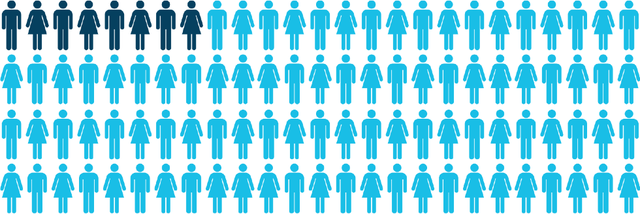
2010, Vol. 2 No. 01 | pg. 1/2 | » Oppression tends to exist in compartmentalized, clearly labeled categories of race, social class, gender, or sexual preference. While these rigidly defined categories may have been applied to allow for rational discussion of problems and solutions, the truth is that they are inherently oppressive themselves. Hatt-Echeverria and Urrieta (2003) indicate that the oppression of class and race tend to intersect, creating a grey area of overlapping categorizations. They further assert that this “compartmentalization of oppression arises from imperialistic and institutionalized motivation to quantify, order, and label the world in order to ‘know’ it and, consequently, control it” (p. 39). Such is the case with the relationship between classism and racism. The two “-isms” are closely related, as racial and socio-economic lines intersect. Berliner (2006), in his research and discussion on poverty in urban schools, found that minority groups who live in urban areas are strongly represented in the census numbers reflecting groups experiencing extreme poverty. There exists a strong correlation between poverty and race, which directly contributes to the achievement gap that exists among minority students in urban public schools and their dominantly Caucasian, suburban counterparts. This correlation results in a shift of power and privilege to the dominant race/culture, and the marginalization of many students, first by social class, and secondarily by race.The strong correlation between poverty and race directly contributes to the achievement gap that exists between minority students and their dominantly Caucasian counterparts. The result is a shift of power and privilege to the dominant group and the marginalization of many students, first by social class, and secondarily by race. Hatt-Echeverria and Urrieta (2003) discuss the conceptual framework termed the “matrix of domination,” which identifies how the stratified power structure is organized, and how power and privilege are circulated among individuals with varying relationships with that power structure (p. 39). Those relationships can differ based on the individual identity of the person affected. Essentially, an African American female student may be affected or influenced differently by an oppressive force than a Latino male. While both students may be struggling with systemic oppression in the form of poverty, they each would be influenced differently by it within the contexts of their own gender and race. Thus, the individual’s place in the “matrix” is determined by his or her own personal backgrounds and experiences. This is an important idea to understand for the teacher. It is important to see through the systemically oppressive categories that have been put in place, and the assumptions they create and support. Recognizing each student as an individual is the first step in rising above the paradigms created by such labeling. A teacher who views his or her class through the lens created by racist or classist stereotypes serves only to perpetuate the oppression that is already in place. Only 8% of kids growing up in low-income communities graduate college by the age of 24.
Of those who grow up in high-income communities, 80% graduate college by the same age.
Paolo Freire (1970) discusses the nature of oppression, and the problems that might impact strategies to counteract it. He discusses the nature of the existence of the oppressed, and the catch-22 that it represents. Over generations, this situation manifests itself in the oppressed people or person as a struggle over their dual desire for, and fear of freedom. It is known that authentic existence and therefore respect and education cannot exist without freedom, but that freedom itself is, at times, innately feared by the oppressed because of their internalization of the oppressive system itself. The aforementioned dilemma must be taken into consideration in the education of these individuals. Dewey’s (1989) concept of “the influence of tradition” also indicates the duality of this issue, in a way similar to Freire’s catch-22 approach: “On one hand, it leads to effort to perpetuate and strengthen the conditions which brought it into existence. But, on the other hand, a tradition may result in habits that obstruct observation of what is actually going on” (p. 48). As teachers, we must recognize the ramifications of this tradition of oppression, and not be blinded by the habits that might accompany it. Good and Brophy (2003) also touch on this, though in a more tangible manner. It is true, as they indicate, that interactions between teacher and students could be impacted by race. Teachers might feel a sense of hostility or rejection of minority students, or even rate those students less favorably than their classmates. The teacher must be sensitive to the diversity found in the classroom, and foster a learning environment that incorporates that diversity. This begins with an awareness of the differences amongst students, as well as the differences between the teacher and the students. The solution offered by Freire is authentic dialogue. From an educational literacy standpoint, this dialogue must be genuine, and not a “false charity” (p. 48) as described by Freire. Forging mutual understanding and respect is paramount, and introducing learning materials that would be more easily related to by marginalized students is a good place to start in engaging those students in the learning process. Since part of that dilemma is the struggle for identity as “spectators or actors” (p. 48), it is vital to encourage the student to take an active role in their education, and break through whatever cultural paradigms they may have internalized through tradition. Socio-economic stratification in American society creates clear dividing lines between the “haves” and the “have-nots.” Spradlin and Parsons (2008) point out that class distinctions are incredibly powerful determinants of the quality of schooling an individual receives as well as how that individual might interact with peers and society as a whole. In terms of oppressive force, the lack of opportunities for impoverished students can be the most stifling, with a direct impact on the student’s educational attainment. The negative impact becomes institutionalized when public schools enter the system as a social microcosm, implementing “the prejudice, oppression, and discrimination evident in larger society” (p. 12). The disadvantage perpetuated by this oppression can influence a student’s motivation to succeed in school, and has been shown to negatively impact academic performance and levels of self-esteem. In many urban school settings, the racial impact of socio-economic status is reflected in the academic performance of minority students in those schools as well as in the sense of hopelessness that often accompanies it. In the classroom, the teacher’s greatest challenge is to instill hope. If a sense of hope can be fostered, and a plan for the future developed, an at-risk student may be able to find the motivation to succeed in school and work to better their prospects for a better life. Jonathan Kozol (2008) conducted interviews with students in several New York City high schools that exposed hopelessness. Through his narrative, it is clear that the students’ plans for the future following high school are uncertain. Only one out the seven students interviewed, in one case, indicated they had plans to go to college. The other students expressed their frustration and anger through obscenities and sarcasm. It is unclear how a student could strive to succeed academically if they have no hope of a positive future result, given their current circumstances. “All but one reported that they had attended segregated schools like this since kindergarten” (p. 146). Kozol’s interaction with the students cements the fact that race and class lines follow one another very closely, to the point of re-segregation in the cases of many inner-city schools. Hursh (2008) echoes this finding, pointing out that many urban school districts are predominantly comprised of a minority student population, with less than 1% of students being white. The disparity in the diversity of urban school populations is matched by the growing achievement gap that exists between white students and students of color. The process begins early, during a child’s infant and toddler years. What Kozol (2008) refers to as a “governmentally administered diminishment of value in the children of the poor” begins with the lack of opportunities for children from low-income communities to attend pre-school (p. 49). Education and politics are intertwined, and it seems the best way to address this problem is through political involvement. Berliner (2006) asks a critical question of education reform policy that corresponds with Kozol’s findings: “Why do we put so much of our attention and resources into trying to fix what goes on inside low performing schools when the causes of low performance may reside outside of the school?" (p. 19).Continued on Next Page » 
From the Inquiries Journal Blog   Related ReadingMonthly Newsletter SignupThe newsletter highlights recent selections from the journal and useful tips from our blog. Suggested Reading from Inquiries Journal
Inquiries Journal provides undergraduate and graduate students around the world a platform for the wide dissemination of academic work over a range of core disciplines. Representing the work of students from hundreds of institutions around the globe, Inquiries Journal's large database of academic articles is completely free. Learn more | Blog | Submit Follow IJ


Latest in Education |